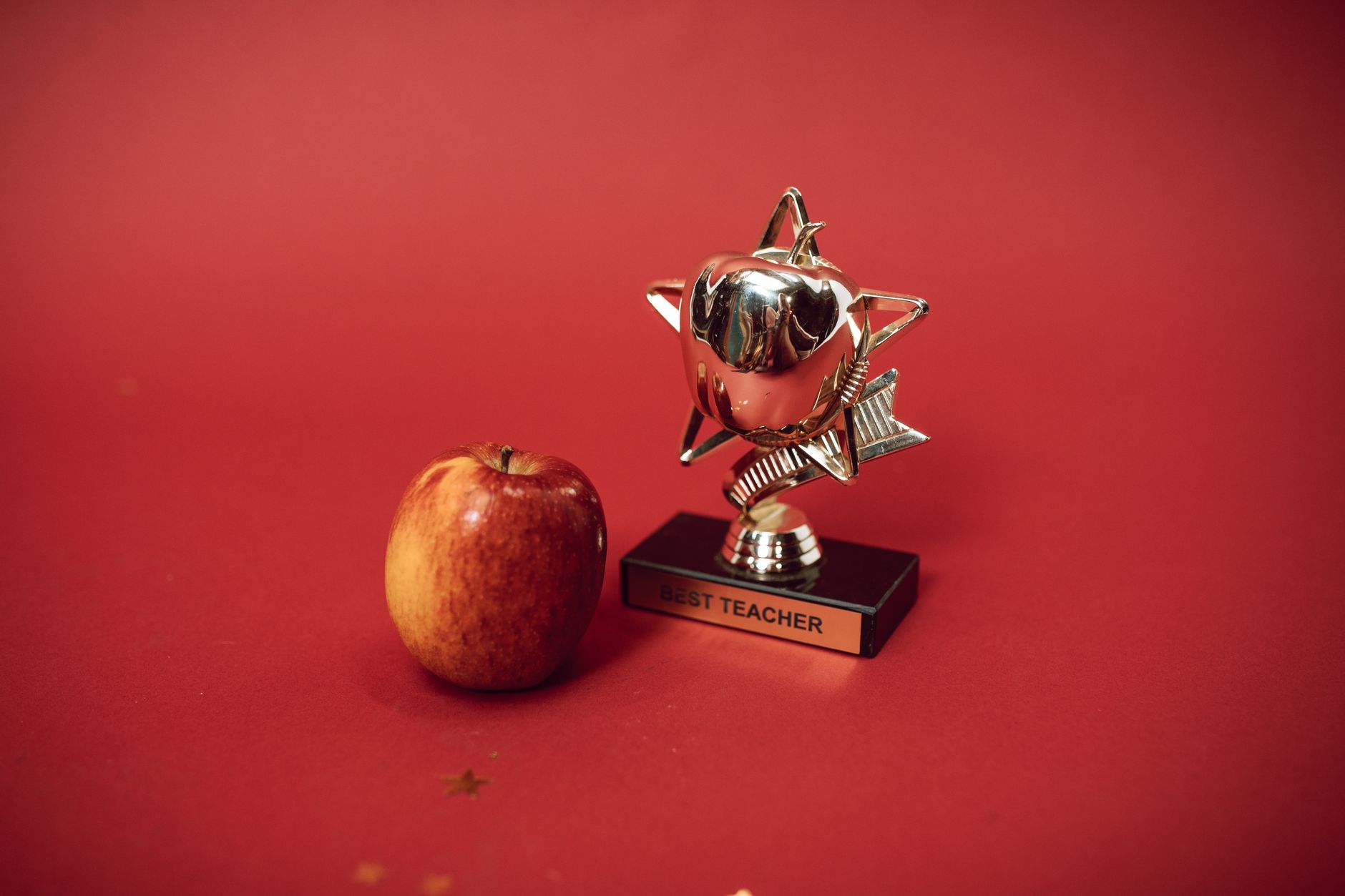
On September 5, 2026, President Droupadi Murmu will present the National Teachers’ Awards to a cohort of 82 educators drawn from schools, universities and government training institutes. The awards recognize 48 school teachers, 21 higher‑education faculty members and 13 trainers from the Union Ministry of Skill Development and Entrepreneurship for exemplary contributions to teaching, research and community service.
Diverse Achievements Across the Education Spectrum
Among the school‑level awardees, Haryana’s Anil Kaushik, popularly called the “Math Wizard,” has constructed a comprehensive mathematics learning environment. His campus houses a physical lab with more than 40 original models and a virtual counterpart divided into twelve sections, featuring thirty “Harbans puzzles.” Kaushik has also co‑authored textbooks on Vedic Mathematics and uploaded twenty‑two teaching modules to the national DIKSHA portal, expanding access to his methods nationwide.
In Rajasthan, government‑school teacher Divyendu Sen has taken deep‑space science to rural classrooms. He trains students to locate and track asteroids, while simultaneously developing low‑cost educational tools such as an AI‑enabled biology model, a virtual biology laboratory, and “Tree Talk,” a QR‑code‑based system that turns local flora into interactive learning resources.
Jaipur’s Government Girls Upper Primary School teacher Vartika Gulati replaces rote memorisation with everyday experimentation. She illustrates algebraic concepts using groundnuts and demonstrates geometric principles with kites. Her programme, “Prashno Se Vigyan” (Science through questions), encourages student‑led inquiry and has been cited as a model for inquiry‑based pedagogy.
In Odisha, Padaraj Nayak of Government High School, Alipingal, has guided his pupils to design and patent more than fifty prototypes, including a low‑cost automatic plate‑washing machine that earned a Government of India patent. His emphasis on hands‑on engineering has sparked a culture of invention among his students.
Munmun Bhattacherjee, teaching at the Government Middle School in Barmasia, Dhanbad, has overseen a dramatic turnaround in a vulnerable coal‑mining community. Aligning her work with the National Education Policy 2020 and NIPUN Bharat goals, she introduced affordable foundational literacy and numeracy tools, integrated children with special needs, conducted home‑visit outreach to curb dropouts, and steered learners toward state arts awards, NEET preparation and vocational independence.
In Maharashtra, Kavita Gitte, head teacher at Sane Guruji Nivasi Vidyalaya in Beed, has spent nearly three decades integrating children of migrant sugarcane workers into mainstream schooling through initiatives such as “Balrakshak” and “Shikshan Aaplya Dari.” A national softball and baseball coach, she has also mentored roughly 210 students to achieve state and national accolades in those sports.
Gujarat’s Nitinkumar transformed a resource‑limited tribal primary school in Vansda, Navsari, into a digital‑learning hub. He installed a 45‑computer IT lab, a seven‑dimensional VR/AR lab, an offline “Rangpur Server,” and a student‑run journalism studio called “R NEWS.” His “QR Code Book” project and “Touchable PDFs” reached over 112,000 students across Gujarat during the pandemic, demonstrating the scalability of low‑cost digital interventions.
Goa’s Mahadev Shinde, a pioneer of adaptive sports at the Gujarati Samaj Special School, coached the Indian floor‑hockey team to four gold medals and one bronze at the 2017 Special Olympics World Winter Games. He also served as a Bocce sports presenter at the 2023 World Games and has mentored 14 international‑level athletes who together secured 13 medals for India.
Innovation and Tradition in Higher Education
The university‑level awardees showcase a blend of cutting‑edge research and revival of Indian knowledge systems. Kirti Chandra Sahu of the Indian Institute of Technology Hyderabad has built a unique experimental facility that replicates atmospheric conditions to study raindrop shape and size distributions at various altitudes. His work promises more precise rainfall forecasts and could enhance climate‑modelling efforts.
Avlokita Agrawal of IIT Roorkee is recognised for her advocacy of Vaastu Shastra, underscoring the continued relevance of traditional architectural principles in contemporary academic discourse.
Vinay Chamola at the Birla Institute of Technology, Pilani, earned the award for designing courses in the Internet of Things and drone technology, and for establishing a hands‑on IoT Tinkering Lab that translates research into project‑based learning. He also leads an interdisciplinary “Shrimad Bhagavad Gita” course that, according to a Ministry spokesperson, has demonstrably improved student well‑being by integrating technical rigor with ethical and purpose‑driven study.
Ankuran Dutta, Head of the Department of Communications at Gauhati University, is honoured for founding Northeast India’s first community and web radio stations, thereby expanding participatory communication and cultural outreach in the region.
Shivani V., a faculty member at Karnataka Sanskrit University, Bengaluru, bridges classical Sanskrit scholarship with computational linguistics, artificial intelligence and digital humanities. Her research on a computational model of Paninian grammar has contributed to major initiatives such as Mahakosha, the National Language Translation Mission, Shastrakosha, Pythonskrit and Academic GPS, advancing the digitisation of Sanskrit knowledge.
National Recognition of Teaching Excellence
Collectively, the awardees embody the spirit of the National Teachers’ Awards: a celebration of educators who blend innovation, cultural heritage and community impact. The inclusion of proponents of Indian Knowledge Systems—spanning Vaastu Shastra, the Bhagavad Gita and Sanskrit‑AI integration—reflects the government’s emphasis on preserving traditional wisdom while fostering modern scientific inquiry.
By honoring teachers from remote villages, tribal schools, metropolitan universities and specialised sports programs, the ceremony underscores the breadth of India’s educational ecosystem. The awards also highlight how educators are aligning their work with national policy frameworks such as the NEP 2020 and NIPUN Bharat, ensuring that foundational literacy, numeracy and inclusive education remain central to the country’s development agenda.
As President Murmu prepares to confer the honors, the 82 recipients will join a distinguished lineage of teachers whose contributions have shaped learners across the nation. Their stories—ranging from asteroid hunting in Rajasthan to rain‑drop research in Hyderabad—illustrate the diverse pathways through which education can transform individuals and communities alike.






Be First to Comment