Union Home Minister Amit Shah addressed the 6th All India Rajbhasha Sammelan on September 14, 2026, urging the nation to adopt a form of cultural nationalism that foregrounds awareness of India’s heritage while allowing diverse linguistic voices to coexist under a single national sentiment.
Cultural nationalism and the mother‑tongue agenda
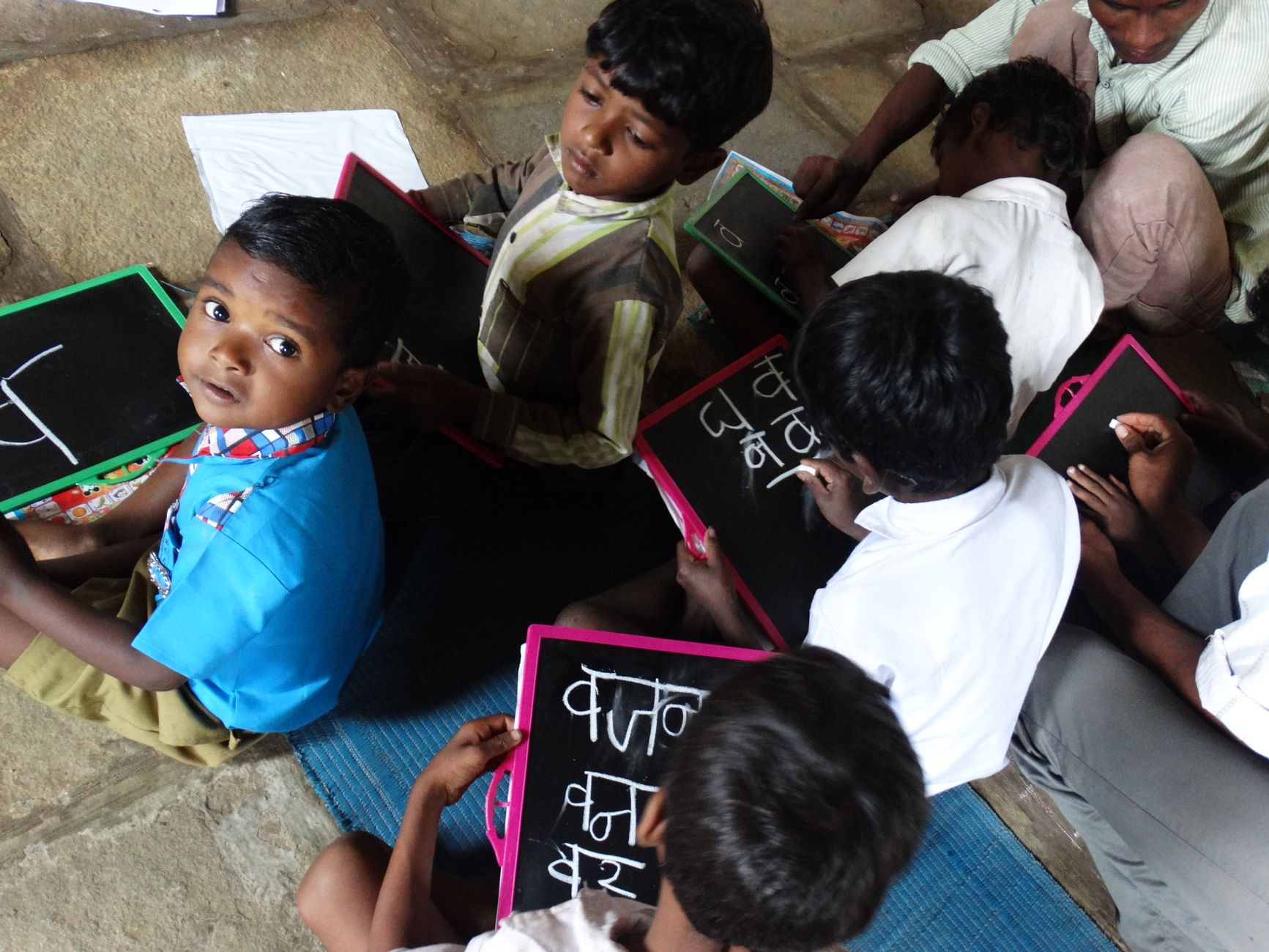
Shah defined cultural nationalism as the process of creating public consciousness about the country’s culture and history. He argued that political disagreements must be set aside to advance Indian languages, insisting that a child can truly understand the nation only through the language spoken at home. The minister linked this vision to Prime Minister Narendra Modi’s promise to liberate India from a “mindset of slavery,” a reference to the National Education Policy (NEP) that makes primary education in the mother tongue mandatory.
He recalled the historic contributions of Bal Gangadhar Tilak, noting that Tilak’s promotion of public Ganesh celebrations and the birth anniversary of Chhatrapati Shivaji Maharaj helped spread patriotic fervor beyond Maharashtra during the freedom struggle. Shah suggested that such cultural outreach exemplifies the power of language‑driven nationalism.
Expanding the Hindi lexicon
One of the centerpiece announcements was the growth of the “Hindi Shabd Sindhu,” a digital Hindi dictionary that began with 51,000 entries and now contains roughly eight lakh (800,000) words. Shah expressed confidence that the resource could become the world’s largest dictionary by 2029.
The expansion, he said, was achieved by incorporating more than 50,000 terms from regional languages such as Tamil, Telugu, Marathi, Gujarati, Bengali and Odia, thereby filling lexical gaps where Hindi previously lacked equivalents. This cross‑pollination, according to Shah, makes Hindi more adaptable and reinforces its role as a bridge among India’s many tongues rather than a competitor.
Shah highlighted Maharashtra’s multilingual fabric, listing Marathi, Konkani, Gujarati, Sindhi, Hindi, Kannada and Warli as languages spoken and developed in the state. He also noted that Prime Minister Modi has accorded Marathi the status of a classical language, underscoring the government’s willingness to recognize linguistic heritage.
Quoting Vinoba Bhave, Shah reminded the audience that Hindi enabled the Bhoodan‑Gramdan movement to reach the entire country. He added that his own proficiency in Hindi facilitated his work across the nation when assigned national‑level responsibilities.
Institutional tools and education reforms
The Rajbhasha department unveiled several new initiatives. A multilingual translation platform called “Bharati” and a dedicated “Bharatiya Bhasha Anubhag” were introduced to aid communication between the Centre and state representatives, with Shah inviting elected officials to correspond in Marathi, assured that translation support would be available.
Shah reiterated the government’s ambition to make Indian languages the medium of governance and scientific discourse, emphasizing that literature will be used to enrich them. He pointed out that candidates may now sit for civil services examinations such as the IAS and IPS in their mother tongue, while major competitive exams like JEE, NEET and undergraduate tests are already offered in 13 languages.
Regarding the NEP, Shah praised the mandate that makes primary education in the mother tongue compulsory and requires students to learn an additional Indian language. He warned that opponents of this provision are “committing a sin,” stressing the policy’s importance for national unity.
On the training front, more than five lakh (500,000) central government employees have undergone language courses. An AI‑driven tool named “Kanthasth 2.0” has been released for foreign users, containing over five crore (50 million) sentences. Additional learning resources, “Leela Rajbhasha” and “Leela Pravah,” were also highlighted.
The Rajbhasha Committee has prepared nine volumes of material, with five slated for dedication during the current Modi administration. Since 2019, the Rajbhasha conference has been taken to various states rather than being confined to Delhi, reflecting a broader outreach strategy.
Several publications were launched at the event, including a special issue of “Rajbhasha Bharati” focused on “Vande Mataram,” the book “Vande Mataram Ke 150 Adhyay,” and the digital “Hindi Shabd Sindhu” resource. Training modules for Hindi typing and shorthand were also introduced, and awards such as “Rajbhasha Kirti” and “Rajbhasha Gaurav” were presented to distinguished contributors.
Shah devoted a segment to “Vande Mataram,” noting that it took eight decades to restore the full version of the national song after it had been split for official use. He credited Prime Minister Modi for reinstating the complete rendition at government functions, describing the anthem as a catalyst for awakening Indian consciousness during the struggle for independence.
The minister also invoked the legacy of Chhatrapati Shivaji Maharaj, asserting that the ruler treated self‑rule, duty and language (Swaraj, Swadharma, Swabhasha) as inseparable, and gave Marathi a prominent place in administration. Shah cited Modi’s habit of delivering speeches in Hindi or other Indian languages at major international forums as further evidence of the government’s linguistic commitment.
Closing with a reference to Rabindranath Tagore’s lotus metaphor, Shah likened India’s cultural tapestry to a many‑petalled flower, each regional language forming a petal. He concluded that while languages may be many, the collective sentiment must remain Indian and the nation’s voice unified.






Be First to Comment