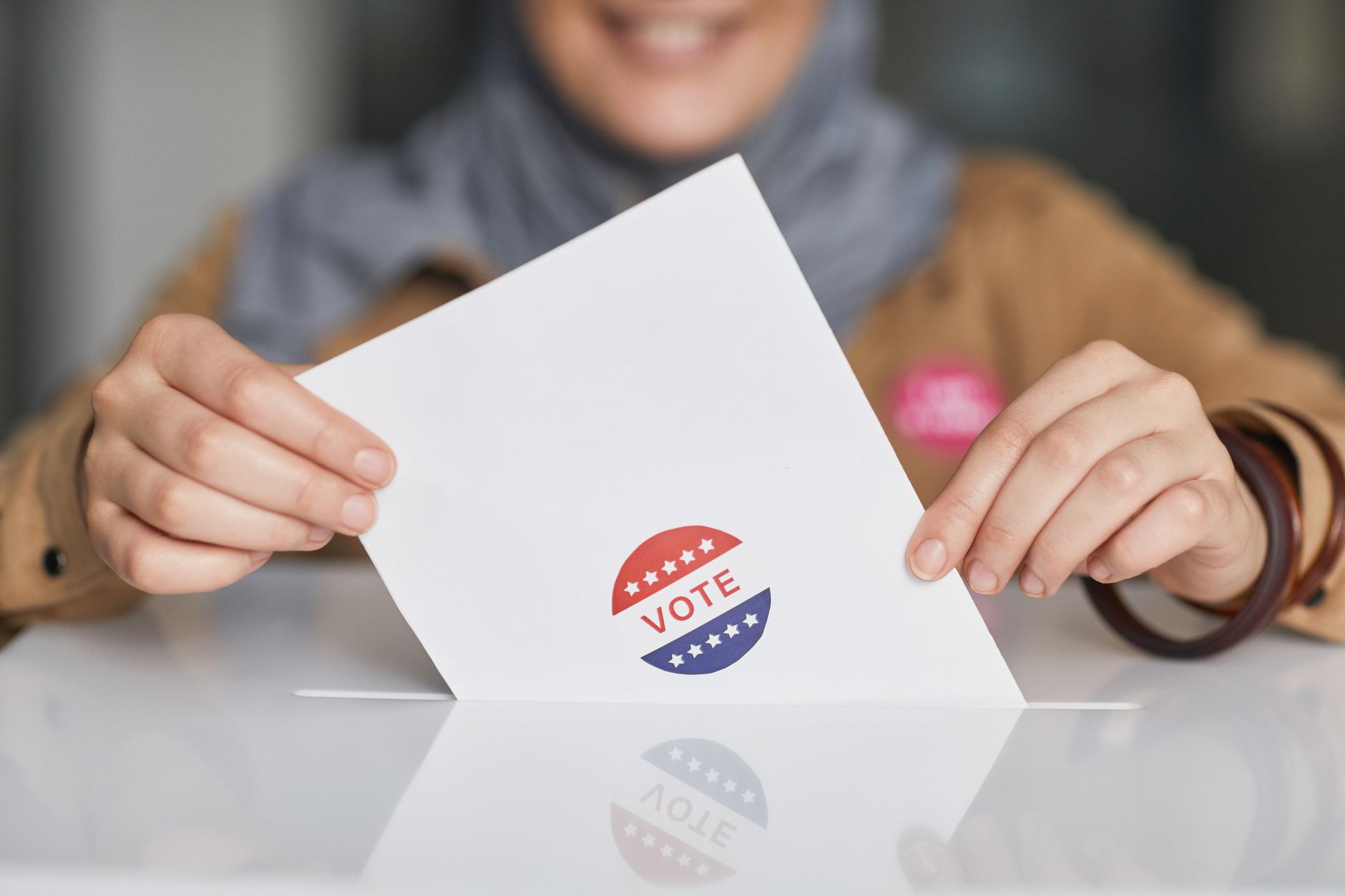
Nearly two months after campus‑wide protests led by Generation Z over education policy, examination irregularities and broader youth grievances, the Delhi University Students’ Union (DUSU) election delivered a result that reaffirmed the dominance of the Rashtriya Swayamsevak Sangh’s student wing, the Akhil Bharatiya Vidyarthi Parishad (ABVP). The organization secured three of the four central positions, while the National Students’ Union of India (NSUI) failed to win any.
Election outcome and key figures
ABVP’s Yash Dabas, a Gen Z student, was elected president, winning by a margin of 2,053 votes. He framed the victory as a “Gen Z verdict,” stating that the younger generation is aligned with the nation and with ABVP. The party’s other successes included Riya Chhawadi, who captured the secretary’s post with a lead of 6,781 votes, and Lakshya Raj Singh, who became joint secretary by 837 votes.
The sole post that broke the ABVP‑NSUI pattern was the vice‑presidency. Independent candidate Deepanshu Shokeen, a former NSUI member, defeated both the ABVP and NSUI contenders by a wide margin, receiving 30,615 votes. ABVP’s candidate Ishu Maurya garnered 16,910 votes, while NSUI’s Virr Chatrath, a Buddhist Studies student and son of Congress leader Manish Chatrath, obtained 4,313 votes.
Shokeen’s victory followed his exclusion from the NSUI ticket. He publicly thanked the university community on X (formerly Twitter) with a post that read “दिल से शुक्रिया DU 🙏🏻.” The episode sparked a broader discussion about ticket allocation within Congress‑affiliated bodies, with commentators likening NSUI’s handling of aspirants to the party’s historic challenges in managing multiple claimants.
Context of the protests and political reactions
The DUSU election took place against the backdrop of a wave of student protests that began in early 2026. Demonstrations focused on perceived irregularities in examinations, demands for better educational infrastructure, and a range of youth‑centred grievances. The protests entered national political discourse, prompting RSS chief Mohan Bhagwat to acknowledge the legitimacy of student dissent. Bhagwat described the grievances as genuine, affirmed the right to protest as democratic dialogue, and rejected the label of “anti‑national” for protesting students, calling them “our own people” and the country’s future.
Both ABVP and NSUI adapted their campaigns to the digital habits of Gen Z, employing reels, memes and AI‑driven social media content to reach voters. Despite these modern tactics, the election result mirrored earlier patterns of ABVP dominance in university politics.
Following the announcement, senior leaders of the Bharatiya Janata Party (BJP) framed the outcome as a validation of youth sentiment. Union minister Kiren Rijiju posted on X, “Voice of the Youth is Laud & Clear !!!” BJP president Nitin Nabin congratulated ABVP, describing the win as a reflection of the youth’s “continued faith in positive and constructive student politics” and linking it to the “Nation First” ethos and the vision of a “Viksit Bharat.” Former BJP president and Union minister J.P. Nadda echoed similar sentiments, praising the “unwavering faith” of the country’s youth in the “Nation First” ideology and noting that ABVP workers, inspired by Swami Vivekananda, would continue to promote patriotism, service and nation‑building.
Saurav Das of the Cockroach Janta Party (CJP) offered a more critical perspective, arguing that while the majority of students oppose the ruling dispensation, the fragmented opposition benefits the government. He highlighted Shokeen’s independent win as evidence of internal disarray within the opposition and warned that without unity, left‑leaning forces will remain marginal.
Historical performance and future implications
ABVP’s recent triumph continues a long‑standing trend of dominance in DUSU politics. The organization secured three of four central posts in 2016, 2018, 2019 and 2023, and repeated the feat in 2025 and 2026. The only years ABVP did not win a majority were 2017 and 2024, when the posts were split evenly with NSUI. Earlier, ABVP swept all four positions in 2014 and 2015. Prior to the early 2010s, NSUI was the prevailing force, winning all four central posts in 2005 and 2007 before the balance began shifting.
In the last two elections before 2026, NSUI managed only a single post each year, and this cycle it was entirely shut out of the central panel. The party’s inability to secure a ticket for Shokeen, who later ran as an independent, was contested by Amitabh Dubey of the Congress communication department. Dubey asserted on X that Shokeen had been offered the presidency ticket, which he declined, and that his subsequent independent vice‑presidential run was a personal choice.
The election outcome suggests that, despite the recent surge of youth‑led activism, traditional campus politics anchored in established student organizations remain resilient. ABVP’s interpretation of the result as a “Gen Z verdict” indicates an intention to align its narrative with the aspirations of younger voters, while the independent success of Deepanshu Shokeen may encourage other dissenting voices within or outside established party structures.
As Delhi University moves forward, the interplay between protest movements, party politics and student representation will likely shape the campus climate for the coming academic year. Observers will watch whether ABVP’s claim of a “Nation First” youth mandate translates into policy influence within the university, and whether NSUI and other opposition groups can reorganize to present a unified alternative in future elections.





Be First to Comment