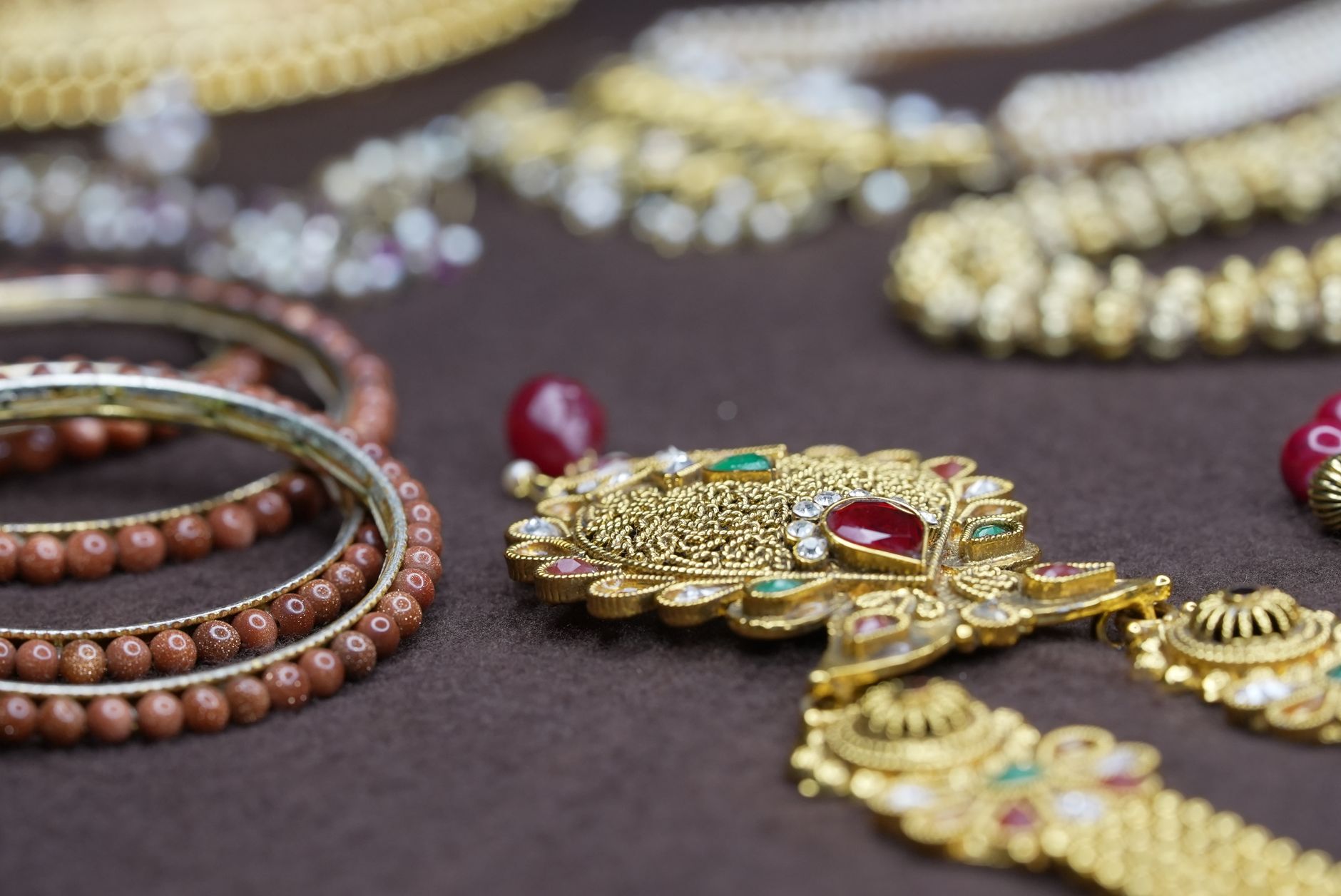
Gold and silver markets continued to slide on October 1, 2026, as traders awaited the United States jobs report and broader geopolitical uncertainty. In India, the price of 22‑karat gold jewellery fell modestly across the country’s major retail chains, marking the latest step in a monthly decline of roughly 8.5 % for gold, according to industry commentary.
Current retail gold prices across major Indian cities
All major jewellery retailers reported the same headline price for 22‑karat gold on the morning of October 1. Tanishq listed the metal at Rs 13,725 per gram in Delhi, Mumbai, Chennai, Kolkata, Trivandrum and Bengaluru. This represents a Rs 30 drop from the Rs 13,755 per gram price recorded on September 30.
Three other leading chains – Malabar Gold & Diamonds, Kalyan Jewellers and Joyalukkas – quoted a uniform price of Rs 13,680 per gram in each of the six cities. Their September 30 rates were Rs 13,710 per gram, indicating a Rs 30 reduction as well.
The consistency of pricing across brands and locations suggests that retailers are closely tracking the same market signals, likely driven by fluctuations in the global spot price of gold and the strength of the U.S. dollar.
Indicative rates from the Indian Bullion and Jewellers Association
The Indian Bullion and Jewellers Association (IBJA) published its indicative retail selling rates for both gold and silver on the same day. For fine gold of 999 purity, the association listed an AM rate of Rs 14,869 per gram, up from Rs 14,789 per gram on the September 30 PM rate. The 22‑karat benchmark was set at Rs 14,512 per gram, a modest increase from Rs 14,434 the previous day.
Lower‑karat gold also saw slight upticks: 20‑karat gold was quoted at Rs 13,233 per gram (versus Rs 13,162), 18‑karat at Rs 12,044 (versus Rs 11,979) and 14‑karat at Rs 9,590 (versus Rs 9,539). Silver of 999 purity was priced at Rs 221,954 per kilogram, compared with Rs 220,435 on September 30.
These IBJA figures, while higher than the retail prices quoted by individual stores, serve as a benchmark for the broader market and indicate that the underlying metal prices have edged upward despite the retail price dip.
Market outlook and factors influencing prices
Prithviraj Kothari, Managing Director of RiddiSiddhi Bullions Ltd. and President of the IBJA, described the current environment as “very much alive” with inflation concerns. He noted that gold and silver have each posted monthly losses—8.5 % for gold and 13.5 % for silver—as traders await the U.S. employment data.
Kothari highlighted that the U.S. dollar reached a three‑month high, buoyed by rising Treasury yields. At the same time, renewed uncertainty over cease‑fire negotiations in Iran has kept inflation expectations elevated. August Personal Consumption Expenditures (PCE) inflation came in at 3.4 %, below forecasts, reducing the probability of an October Federal Reserve rate hike to 38 %, while a December hike is now priced at 87 %.
From a technical perspective, Kothari said gold has broken a key support level at $4,250 and is now eyeing the $4,100 and $4,000 thresholds. Silver, meanwhile, has broken its head‑and‑shoulders neckline at $62.50, with the next targets identified at $60 and $57.
These macro‑economic dynamics—stronger dollar, mixed inflation data, and geopolitical tension—are feeding into the modest price adjustments seen in Indian jewellery stores. While the IBJA’s indicative rates have risen slightly, the retail price reductions reflect a cautious approach by retailers, likely aimed at maintaining sales volumes amid uncertain consumer sentiment.
Analysts will be watching the upcoming U.S. jobs report closely. A stronger-than‑expected employment figure could reinforce expectations of a Federal Reserve rate hike, further strengthening the dollar and putting additional downward pressure on gold prices. Conversely, weaker data could revive hopes for a pause in rate hikes, potentially stabilising or even lifting gold prices in the near term.
For Indian consumers, the current price levels mean that buying 22‑karat gold jewellery now is marginally cheaper than a week earlier, but the overall market remains volatile. Retailers such as Tanishq, Malabar Gold & Diamonds, Kalyan Jewellers and Joyalukkas are likely to continue adjusting prices in line with global spot movements and the evolving macro‑economic backdrop.
In summary, October 1 saw a uniform dip of Rs 30 per gram for 22‑karat gold across the nation’s leading jewellery chains, set against a backdrop of broader precious‑metal weakness, a strong U.S. dollar, and lingering geopolitical risk. The IBJA’s slightly higher indicative rates suggest that the underlying metal price is not falling as sharply as retail prices, underscoring the complex interplay between global markets and domestic retail pricing strategies.






Be First to Comment