The Reserve Bank of India (RBI) is convening its Monetary Policy Committee (MPC) from October 5 to October 7, marking the central bank’s first policy meeting after the U.S. Federal Reserve’s recent rate increase. Market participants anticipate that Sanjay Malhotra, the RBI’s chief monetary policy officer, will announce a 25‑basis‑point (bps) hike – the first rise in the policy repo rate in almost four years.
Analyst expectations and market pricing
Several analysts have signalled that the 25 bps move is already largely priced into Indian equity markets. VK Vijayakumar, Chief Investment Strategist at Geojit Investments, said the hike is “likely” and noted that “banks will benefit from the rate hike since rising floating rates will improve their margins.” Vaqarjaved Khan, Senior Fundamental Analyst at Angel One, echoed the view that the potential hike has been incorporated into domestic equities after recent inflation data and global yield movements. Khan added that “stock markets rarely react violently to well‑telegraphed policy decisions,” emphasizing that medium‑term market trajectories remain anchored to corporate earnings growth, operating margins and fundamental execution.
Despite the expectation of a modest increase, market pricing for the broader policy cycle remains divergent. While some participants are betting on steep cumulative hikes of up to 125 bps over the next year, Nomura has warned that the current cycle may be fundamentally different. The brokerage foresees a higher probability of a cumulative 50 bps increase, suggesting a more nuanced fine‑tuning approach rather than aggressive tightening.
Policy dilemma and external pressures
The RBI’s decision comes against a backdrop of a challenging macro environment. JM Financial highlighted a “trade‑off between front‑loading rate hikes versus risking imported inflation” driven by high crude‑oil prices and soaring bond yields. A rate rise would represent a departure from the RBI’s recent dovish signaling, even though domestic growth‑inflation dynamics do not, according to the same report, unequivocally warrant a hike at this juncture.
Tanvi Kanchan, Associate Director at Anand Rathi Shares & Stock Brokers, argued that the market is waiting more for guidance than for the rate move itself. She said, “If the RBI keeps its stance neutral and frames this as a pre‑emptive move against imported inflation, markets can live with it. A shift in stance that signals a cycle would be a different conversation.” Kanchan also pointed out that the eight‑week equity decline is being driven by forces outside India’s control: U.S. 10‑year Treasury yields above 5.25 %, Brent crude back above $100 a barrel, and a rupee hovering near 96 per dollar. According to her, these external variables are the primary reasons foreign investors are selling Indian equities, and a domestic rate hike does not alter that dynamic. If anything, a hike that supports the rupee could marginally slow capital outflows, while domestic investors have already absorbed much of the foreign selling, providing a cushion that prevents a rate decision from turning into a sell‑off.
Sectoral implications and investor focus
At the sector level, analysts expect the rate‑sensitive pockets of the market – real estate, automobiles and consumer durables – to feel the impact of higher borrowing costs. Kanchan noted that IT exporters could benefit from a weaker rupee, a scenario that often accompanies a rate rise. Khan added that while real estate and auto stocks might experience temporary sentiment volatility, especially during peak festive demand, corporate balance sheets across India are “far cleaner today than in prior tightening cycles.” For the banking sector, the analytical focus is expected to shift from rapid loan growth to defending net interest margins as deposit repricing catches up.
Angel One’s analyst cautioned investors to look beyond the headline rate move. He argued that the true market driver will be the MPC’s forward stance on systemic liquidity and the terminal rate path, concluding that “earnings durability, not monetary policy fine‑tuning, will ultimately dictate stock market directions.” Kanchan reinforced this view, urging investors not to make big calls on a single policy meeting, as energy prices and currency movements will set the direction for Indian equities.
Equity markets under pressure
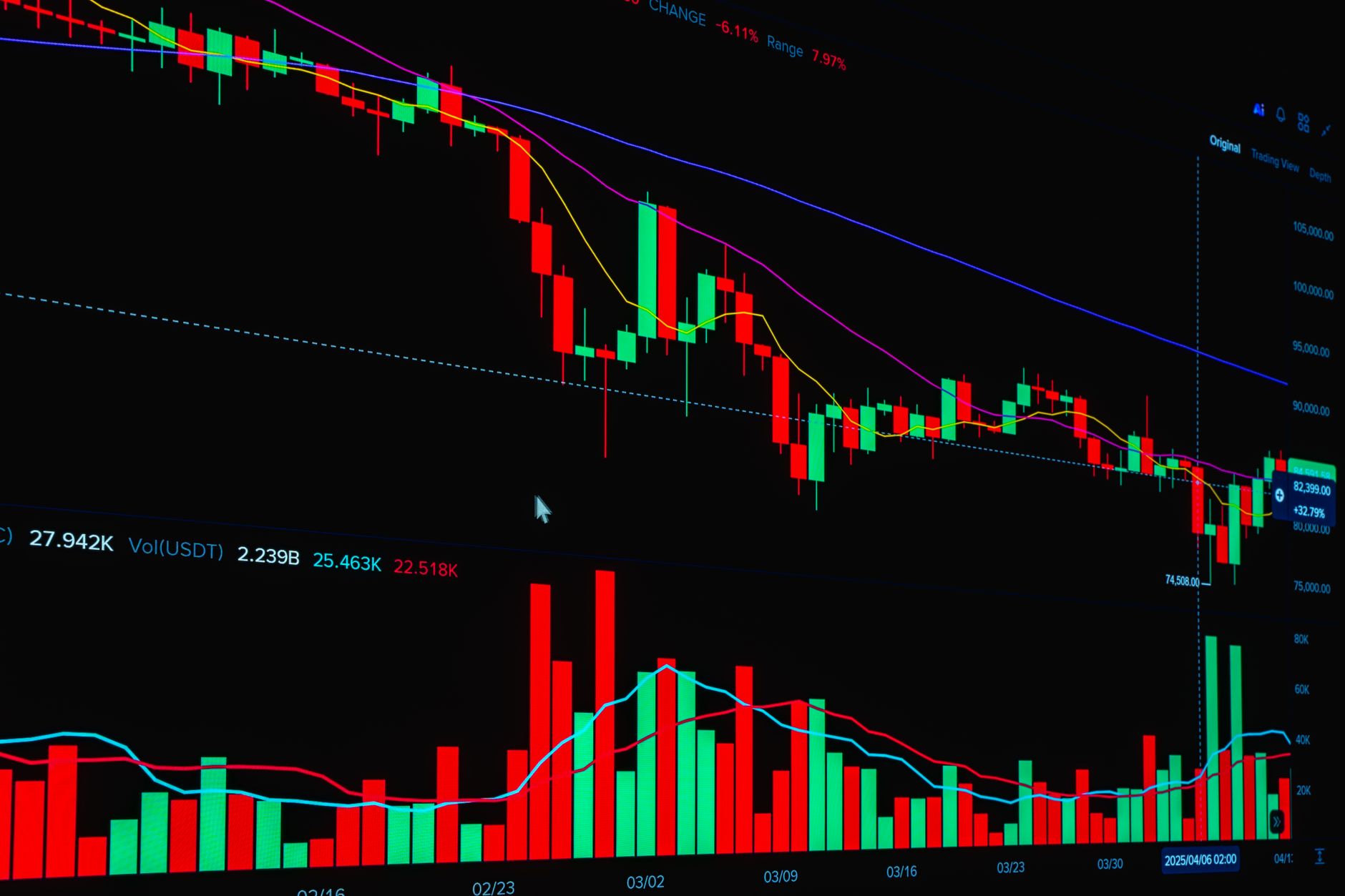
The broader market context underscores the urgency of the RBI’s decision. The Sensex and Nifty have each logged losses for eight consecutive weeks, a streak that surpasses those seen during the 2020 Covid‑19 crash and the 2008 global financial crisis. Over that period, the Sensex has fallen by 6,590 points and the Nifty by 2,149 points. The sell‑off has erased more than ₹26 lakh crore from the Bombay Stock Exchange’s total market capitalisation, pushing the aggregate value below ₹467 lakh crore.
Given this backdrop, analysts suggest that investors focus on corporate fundamentals and the RBI’s forward guidance rather than the immediate rate change. While banks may see margin improvement, rate‑sensitive sectors could face higher financing costs, and the broader market will continue to be shaped by external variables such as global bond yields, oil prices and the rupee’s exchange rate.
In summary, the RBI is expected to break a four‑year pause on rate hikes with a modest 25 bps increase, a move that many market participants have already priced in. The real test for Indian equities will be how the central bank frames its policy outlook amid persistent external pressures, and whether earnings growth can sustain market sentiment in the face of ongoing global headwinds.






Be First to Comment