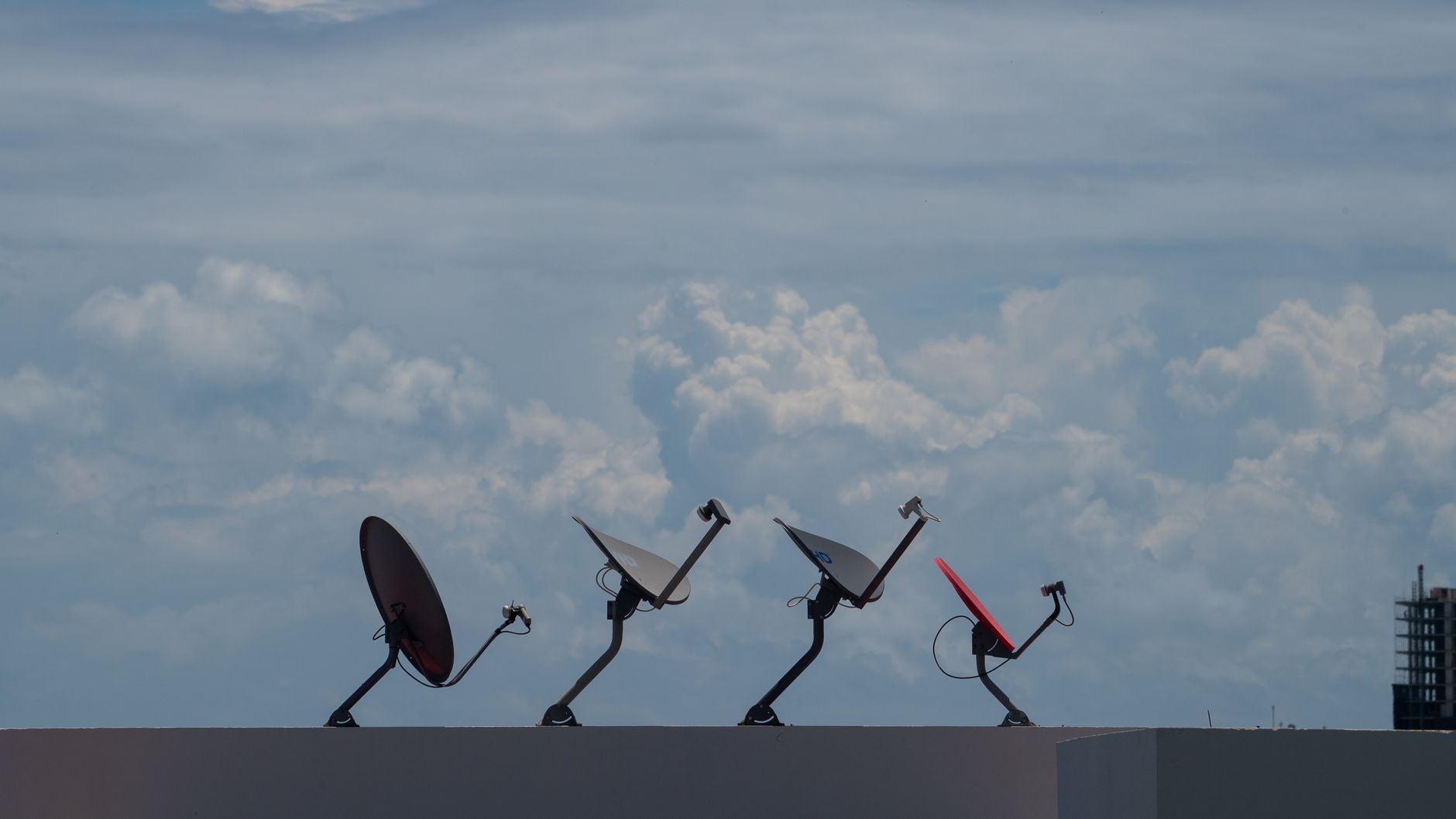
Elon Musk used his social‑media platform X on Friday to intensify accusations against Mukesh Ambani, the chairman of Reliance Industries, suggesting the Indian billionaire is preventing SpaceX’s Starlink satellite‑internet service from entering the market. Musk’s posts framed the issue as a monopolistic grip on India’s telecom sector, questioning whether Ambani is “the real boss of India.”
Musk’s public criticism
In a series of messages, Musk argued that Starlink could deliver broadband connectivity to parts of India that remain offline, giving children better learning opportunities and allowing small businesses to reach customers worldwide. He wrote, “Naturally, you would prefer to maintain your monopolistic exploitation of the great people of India, but would you nonetheless consider allowing Starlink to compete?” The remarks were directed at Ambani, whom Musk mockingly called the country’s “prime minister.”
Earlier in the week, Musk had alleged that unnamed “oligarchs” were obstructing Starlink’s launch to protect their own interests. The Ministry of Communications in India rejected that claim, stating that the nation’s regulatory framework for satellite communications is “fair and non‑discriminatory.” On Thursday, Musk followed up with a direct question to his followers: “Is Ambani the real boss of India?”
Regulatory context and competing interests
SpaceX has been pursuing a launch of its Starlink service in India for several years. Last year, the company signed distribution agreements with both Reliance Jio, the telecom arm of Ambani’s conglomerate, and Bharti Airtel, India’s second‑largest telecom operator. Those agreements were intended to enable Starlink to roll out once the necessary approvals were secured.
Despite obtaining key regulatory clearances, Starlink has not yet received final permission from New Delhi to commence commercial operations. In a Thursday statement, the Indian communications ministry explained that Starlink, along with two other licensed satellite operators, is undergoing security assessments that must be completed before spectrum can be allocated. The ministry emphasized that all three operators are at “broadly the same regulatory stage,” directly refuting Musk’s implication that Starlink is being singled out for special treatment.
Reliance Jio and Airtel are also preparing to launch their own satellite‑internet services. Jio has a joint venture with Luxembourg‑based SES, while Airtel holds a major stake in Eutelsat OneWeb, which is seeking to provide satellite connectivity across the country. The competition for satellite spectrum has been a point of contention; Musk’s company advocated for an administrative allocation process, whereas Jio preferred an auction. Ultimately, the Indian government chose the administrative route for Starlink’s spectrum.
Broader business challenges for Musk in India
India, home to over a billion internet users, represents a critical market for Musk’s ventures. However, the challenges extend beyond Starlink. Tesla, Musk’s electric‑vehicle manufacturer, entered the Indian market last year after prolonged anticipation but recorded only 699 vehicle registrations in its first twelve months, according to data cited by Electrek. High import duties nearly doubled the price of the Model Y in India compared with its U.S. price. Although Tesla reduced prices earlier this year, its vehicles remain considerably more expensive than in the United States.
The friction between Starlink and Reliance Jio over spectrum allocation highlights the broader tension between Musk’s ambitions and the entrenched interests of Indian business leaders. Reliance Industries owns India’s largest telecom operator and collaborates closely with Prime Minister Narendra Modi’s government on major infrastructure projects. This relationship adds a political dimension to Musk’s public criticisms.
India’s telecom minister, Jyotiraditya Scindia, responded to Musk’s allegations on Friday, reiterating that the country “does not allow a monopoly in any sector.” The minister’s statement underscored the government’s stance that the regulatory process is being applied uniformly to all satellite operators seeking spectrum.
As of now, Starlink’s launch remains in limbo. The pending security assessments and spectrum allocation process continue to delay the service’s commercial rollout, while Musk’s public campaign against Ambani adds a layer of corporate rivalry to an already complex regulatory environment.
Stakeholders across the Indian telecom landscape are watching the developments closely. If Starlink eventually receives approval, it could introduce a new source of competition for both Reliance Jio and Airtel, potentially reshaping broadband access in a country where many regions still lack reliable internet connectivity. Conversely, continued delays may reinforce the market dominance of existing operators, sustaining the status quo that Musk has publicly challenged.






Be First to Comment