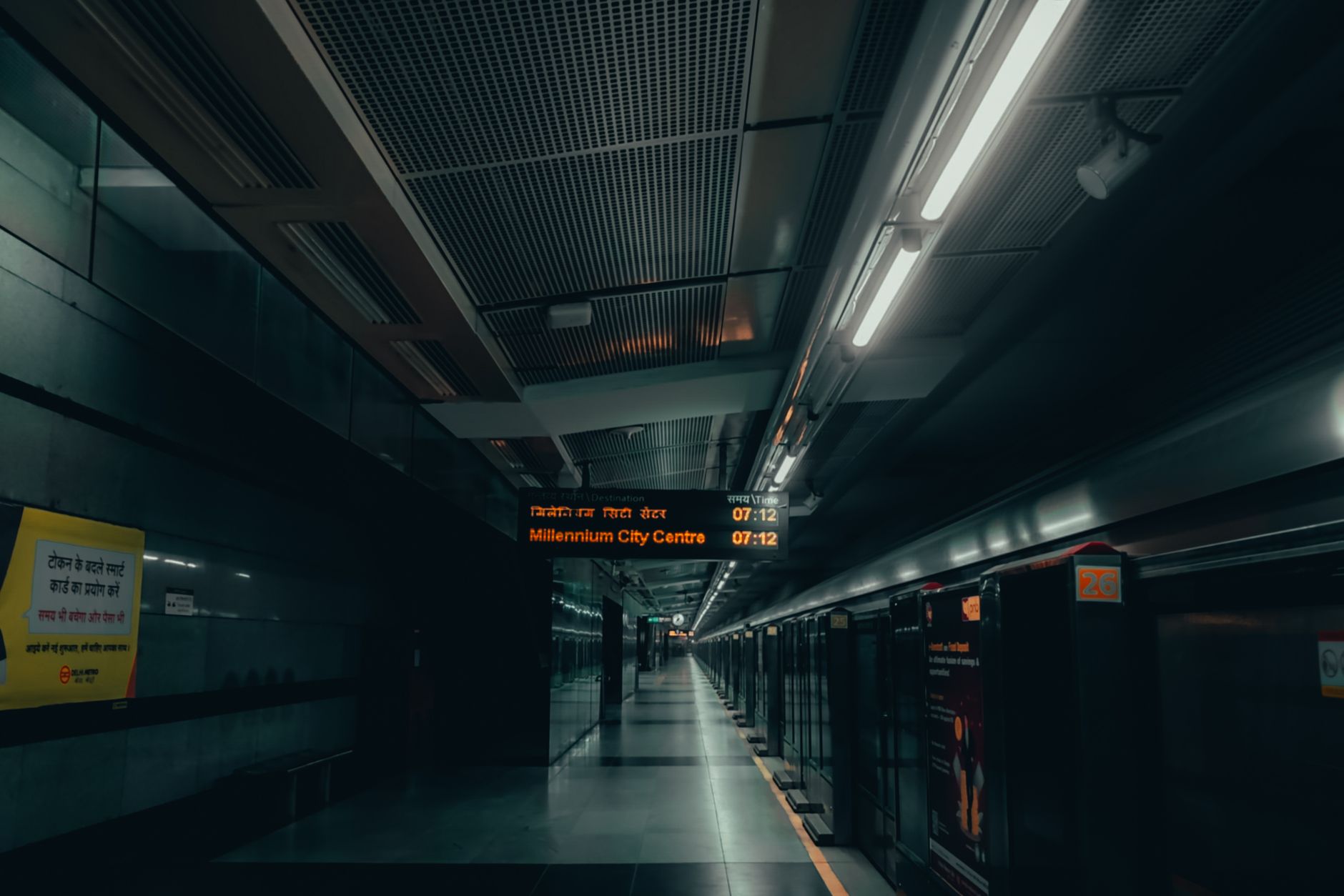
Advocate Shailendra Mani Tripathi has approached the Supreme Court with a contempt petition that accuses senior Delhi officials of flouting the apex court’s October 9 directive on public transport. The filing alleges that, despite a clear order that there be no outright ban on metro and railway services during the planned October 10 protests, authorities continued to shut down metro stations and cancel train services, thereby crippling public life in the capital.
Background of the Supreme Court order
The petition stems from the Supreme Court’s judgment in MA Baby v. Union of India, delivered on October 9 by a bench comprising Chief Justice of India Surya Kant, Justice Joymalya Bagchi and Justice V Mohana. The bench examined communications from the Delhi Police that instructed the Delhi Metro Rail Corporation (DMRC) to close 57 metro stations and also directed the cancellation of Mail and Express trains arriving at New Delhi and Hazrat Nizamuddin railway stations. While the court acknowledged the security concerns surrounding the October 10 protests announced by the Chief Justice of India and opposition parties, it deemed the blanket prohibitions “overreaching” and emphasized that no complete ban on essential public transport should be imposed. Instead, the court allowed authorities to regulate services in a proportional and transparent manner.
In response, the Delhi Police and the DMRC issued notices that closed a large number of stations and suspended several train services. The court’s clarification was intended to balance security considerations with the need to avoid undue hardship for commuters.
Petition details and alleged violations
Tripathi’s petition names Union Home Secretary Govind Mohan IAS, Delhi Police Commissioner Anurag Kumar IPS and DMRC Chairperson D Thara IAS as “contemnors” who have willfully ignored the Supreme Court’s instructions. The filing asserts that the officials maintained a “blanket shutdown across transit corridors” and failed to issue clear traffic advisories, thereby “severely crippled public life across the National Capital Territory.”
The petition provides specific observations made by Tripathi on the evening of October 9. He visited GTB Nagar and Vishwavidyalaya metro stations around 9:30 pm and found entry gates locked while exit was permitted only through manually regulated gates. At GTB Nagar, Gate No. 2 was reportedly locked, and Gates 1 and 3 were either closed or operating under restrictive exit‑only procedures. Tripathi recorded a video of the situation at GTB Nagar and indicated that the footage includes real‑time location data.
According to the filing, the DMRC announced on its official X (formerly Twitter) account that entry and exit at the affected stations would remain closed from 9 pm on October 9 until 6 pm on October 10, subject to review by security agencies. The petition notes that a subsequent DMRC update reduced the number of closed stations from 57 to 45, but the restrictions remained in place, contravening the Supreme Court’s directive for regulated, not prohibited, service.
Tripathi also visited the Jantar Mantar area at approximately 8:30 pm on October 9. He observed only police and paramilitary personnel, raising questions about the justification for continued blanket restrictions on metro access when the immediate security presence appeared limited.
Relief sought and procedural aspects
The contempt petition seeks an interim order directing the revocation of blanket prohibitory orders affecting metro and railway operations. It urges the court to mandate that transport services operate under a regulated schedule, with immediate public notice to commuters. The filing also requests that the respondents be held accountable for what the petitioner describes as “deliberate recalcitrance” and an “intentional attempt to bypass and undermine” the authority of the Supreme Court.
Legal representation for the petition is listed as Advocate on Record Chand Qureshi. The filing does not include any immediate response from the named officials or the DMRC.
The case revives a broader debate that emerged after the July Jantar Mantar student protests, during which Tripathi was also a petitioner seeking an independent probe into the violence that followed those demonstrations. The current petition therefore reflects ongoing concerns about the balance between law‑enforcement prerogatives and civil liberties in the context of large‑scale public demonstrations.
If the Supreme Court initiates contempt proceedings, the respondents could face penalties ranging from reprimand to more severe sanctions, depending on the court’s assessment of the alleged wilful disobedience. The outcome may also set a precedent for how future security‑related transport restrictions are framed and implemented in India’s capital.
As the legal process unfolds, commuters and civil‑society observers are likely to watch closely for any orders that restore regular metro and railway services, especially given the petition’s claim that the ongoing shutdowns have caused “hardship to commuters” and “severely crippled public life.”





Be First to Comment