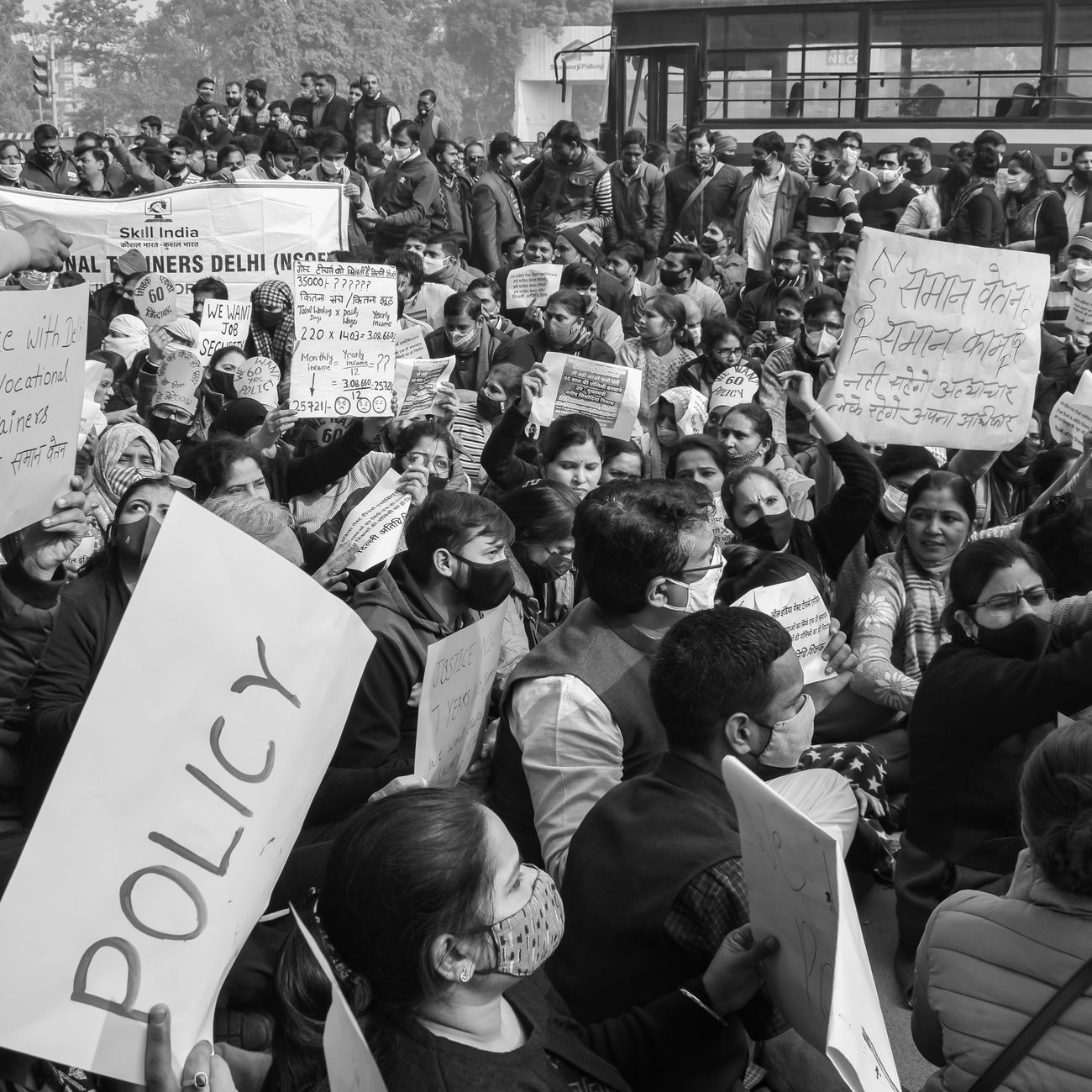
On October 16, 2026, a series of coordinated demonstrations swept major Indian cities under the banner “Lehra Do Tiranga” – a call to wave the national tricolour while demanding the resignation of Chief Election Commissioner (CEC) Gyanesh Kumar and the withdrawal of the Special Intensive Revision (SIR) of electoral rolls. The protests, organized by a coalition of student groups, farmers’ unions and opposition parties, met with a heavy police presence, a spate of First Information Reports (FIRs) and the detention of several activists.
Police action and legal filings in Delhi
In Delhi’s Connaught Place, police registered at least two FIRs for violating prohibitory orders under Section 163 of the Bharatiya Nyaya Sanhita (BNS). The orders, imposed to restrict gatherings in the area, were allegedly breached during the evening march on October 16. A police official confirmed the filings, noting that the prohibitory orders were part of the 163 BNSS framework applied to the location.
Earlier in the week, the Delhi Police had lodged a minimum of ten FIRs related to alleged assaults on protesters. The first of those FIRs was recorded on October 13 at the Connaught Place police station after videos of confrontations surfaced online. One suspect identified as “Gaurav” was arrested, while investigations continued to trace additional participants. CCTV footage is being examined to reconstruct the incidents.
Another case, registered on October 11 at Kamla Market police station, involved four arrests after a video showed individuals assaulting and harassing protesters, including a minor girl. The FIR cited Sections 115(2), 126(2) and 3(5) of the BNS, and police indicated that legal proceedings against the accused were underway.
Women protesters also gathered near the Bangla Sahib Gurudwara to highlight sexual harassment they faced during the demonstrations, adding a gender‑based dimension to the broader unrest.
Detentions, statements and counter‑protests
Among the high‑profile arrests, Cockroach Janata Party (CJP) leader Abhijeet Dipke was detained by police as security forces sealed off Central Park, the announced venue for the Delhi rally. The area remained out of bounds, and heavy security was maintained throughout the evening to prevent a large gathering.
Actor‑activist Prakash Raj, speaking after a protest meeting at Manaveeyam Veedhi, vowed that peaceful, nationwide protests against CEC Gyanesh Kumar and the SIR would continue despite police interventions. He recalled a brief tussle when police initially stopped the use of a microphone, after which the event was allowed to proceed. Raj invoked the legacies of Mahatma Gandhi, B. R. Ambedkar and Bhagat Singh, urging the youth to keep the struggle alive with “a smile and laughter” as symbols of resilience.
In the political arena, Rajya Sabha MP Kapil Sibal rebuked Union Minister Rajnath Singh’s accusation that the Congress party seeks a “Bangladesh‑style regime change.” Sibal posted on X that the demand for regime change comes from the people, not the opposition, and warned that it is “time to go” for the current government. The Congress party, meanwhile, reiterated that regime change in India must occur through elections and that its role is to “oppose, expose and depose.”
Parallel to the domestic unrest, Indian diaspora groups in London staged a counter‑protest in support of Prime Minister Narendra Modi, opposing demonstrations by the National Students’ Union of India (NSUI) and other Congress‑aligned groups outside the Indian High Commission. The London rally underscored the polarized nature of the debate, with supporters of the government confronting opposition‑led protests.
International reaction and administrative updates
Six U.S. Democratic lawmakers – Representatives Pramila Jayapal, Ilhan Omar, Jim McGovern, Rashida Tlaib, Eleanor Holmes Norton and Jesus Garcia – urged Secretary of State Marco Rubio to raise concerns with Indian officials about alleged excessive force during student protests, including those linked to the CJP. Their letter, dated October 16, cited a pattern of repression, wrongful detention and the use of surveillance photographers by Indian diplomatic missions in the United States. Rubio is scheduled to meet External Affairs Minister S. Jaishankar in Mumbai the following week.
In Karnataka, the Chief Electoral Officer reported that more than 99 % of hearings on notices issued under the SIR have been completed, leaving 19,365 hearings pending. Kalaburagi recorded the highest number of pending hearings (8,224), while Gadag had the fewest (10). These figures illustrate the administrative scale of the SIR process that protesters are demanding to halt.
Farmers’ organisations announced a march to Delhi slated for October 23, adding another layer to the mounting pressure on the election commission and the government. The march is expected to converge with ongoing anti‑CEC demonstrations, amplifying calls for electoral reforms.
The confluence of protests, police FIRs, detentions and political statements reflects a volatile moment in India’s democratic discourse. While authorities cite security concerns and legal provisions to manage public order, opposition leaders and civil society groups argue that the measures suppress legitimate dissent. The upcoming meeting between U.S. Secretary of State Rubio and Indian officials, along with the scheduled farmers’ march, suggests that the issue will remain in both domestic and international focus in the days ahead.





Be First to Comment