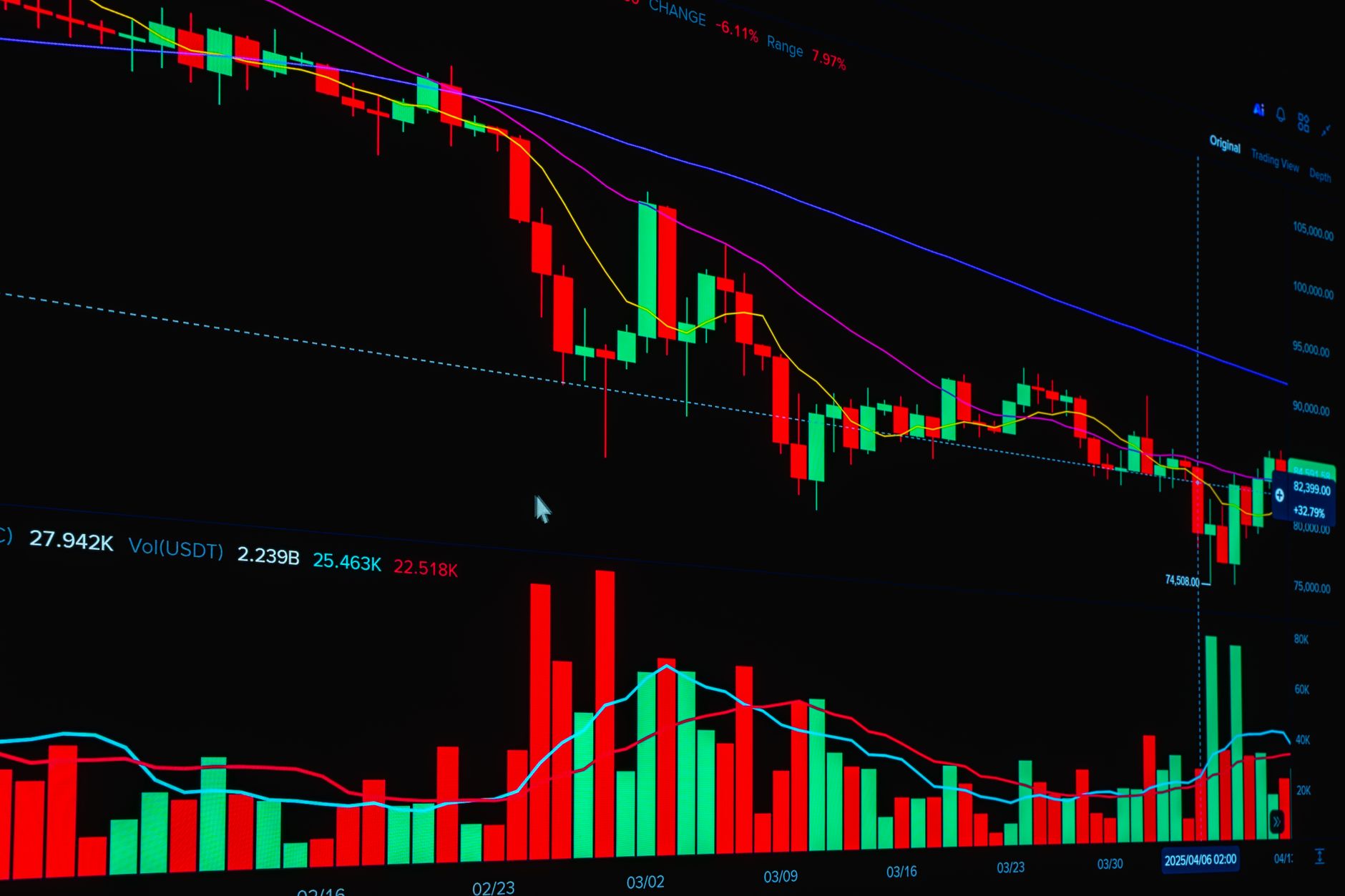
The Nifty 50 closed the week 2.4% lower at 22,600 after slipping in all four trading sessions of a holiday‑shortened week. The index touched an intra‑week low of 22,372 on Friday before ending the session. Parallel declines were recorded in related benchmarks: the Bank Nifty fell 2.8%, while the Nifty Midcap 100 and Nifty Smallcap 100 dropped 5.6% and 7.3% respectively, indicating that pressure extended beyond the large‑cap core.
Capital flows: FIIs sell, DIIs buy
Foreign Institutional Investors (FIIs) registered a net outflow of Rs 26,970 crore during the week. Although the amount is markedly lower than the Rs 89,910 crore that left the market in the preceding week, the continued weekly selling marks a tenth consecutive session of net foreign disinvestment.
Domestic Institutional Investors (DIIs) contrasted sharply with the foreign side, remaining net buyers for the tenth week in a row. DIIs purchased a total of Rs 1,09,420 crore, effectively absorbing a large share of the foreign outflows.
On a month‑to‑date basis, FIIs have sold a cumulative Rs 5,14,660 crore of equities, while DIIs have bought Rs 5,91,100 crore. The net domestic buying has provided a cushion, yet the broader market sentiment stayed under pressure because of concerns about rising crude oil prices, inflation expectations and the stance of major central banks.
Sectoral performance and technical outlook
Sectoral moves were uneven. Information technology emerged as the sole area of relative resilience, recovering from early session selling to finish the week largely unchanged, a recovery attributed to improving earnings visibility and renewed investor interest.
Conversely, consumer durables, metals and realty experienced heightened selling pressure as worries over input‑cost inflation and margin compression resurfaced. Analysts noted that stock‑specific and sector‑specific opportunities are likely to dominate the near term, with investors placing greater emphasis on earnings clarity and valuation comfort.
Technical analysis highlighted a weakening of the Nifty’s chart structure. Vatsal Bhuva, a technical analyst at LKP Securities, observed that the index fell below its 200‑week moving average on the weekly chart and also slipped under the 20‑day moving average on the daily chart. The formation of lower highs persisted, suggesting that the recent rally was more of a pullback than a genuine reversal. A hidden bearish divergence on the Relative Strength Index (RSI) further signaled the possibility of continued downside momentum.
Bhuva identified 22,200 as a pivotal support level; a decisive break below that figure could trigger an additional wave of selling. Immediate support sits near 22,500, while resistance is projected in the 22,700‑22,800 range. He advised traders to keep positions light, stay vigilant around these technical thresholds, and watch Brent crude prices—particularly any move above $110 a barrel—as a potential catalyst for further market weakness.
Drivers of future foreign flows
Several macro‑economic variables are expected to shape the direction of foreign capital in the coming weeks. Global monetary policy remains a primary factor, with market participants closely monitoring the United States Federal Reserve’s forthcoming FOMC decision, the Bank of Japan’s rate announcement, and the European Central Bank’s policy guidance.
Vinod Nair, Head of Research at Geojit Investments, linked rising crude oil prices to heightened inflation concerns and noted that higher domestic yields have placed renewed scrutiny on equity valuations. He pointed out that mid‑cap and small‑cap stocks bore the brunt of the correction, as valuation worries and the unwinding of leveraged positions accelerated losses, while large‑cap equities held up comparatively better.
Additional variables cited by analysts include upcoming U.S. GDP data, movements in Brent crude, developments in the U.S.–Iran and Russia–Ukraine geopolitical arenas, and the release of quarterly earnings reports. Nair also emphasized the interplay between geopolitical events, oil prices, the rupee and domestic inflation expectations, suggesting that foreign inflows may stay subdued until there is clearer guidance on the global macro outlook.
Domestically, the Index of Industrial Production (IIP) will provide a gauge of manufacturing activity, and progress in India‑U.S. trade negotiations, together with the breadth of corporate earnings, are expected to influence market direction.
Overall, while domestic institutional buying continues to offset a portion of foreign outflows, the sustained pressure on mid‑ and small‑cap segments, combined with elevated yields and external uncertainties, leaves the near‑term outlook for Indian equities cautious.






Be First to Comment