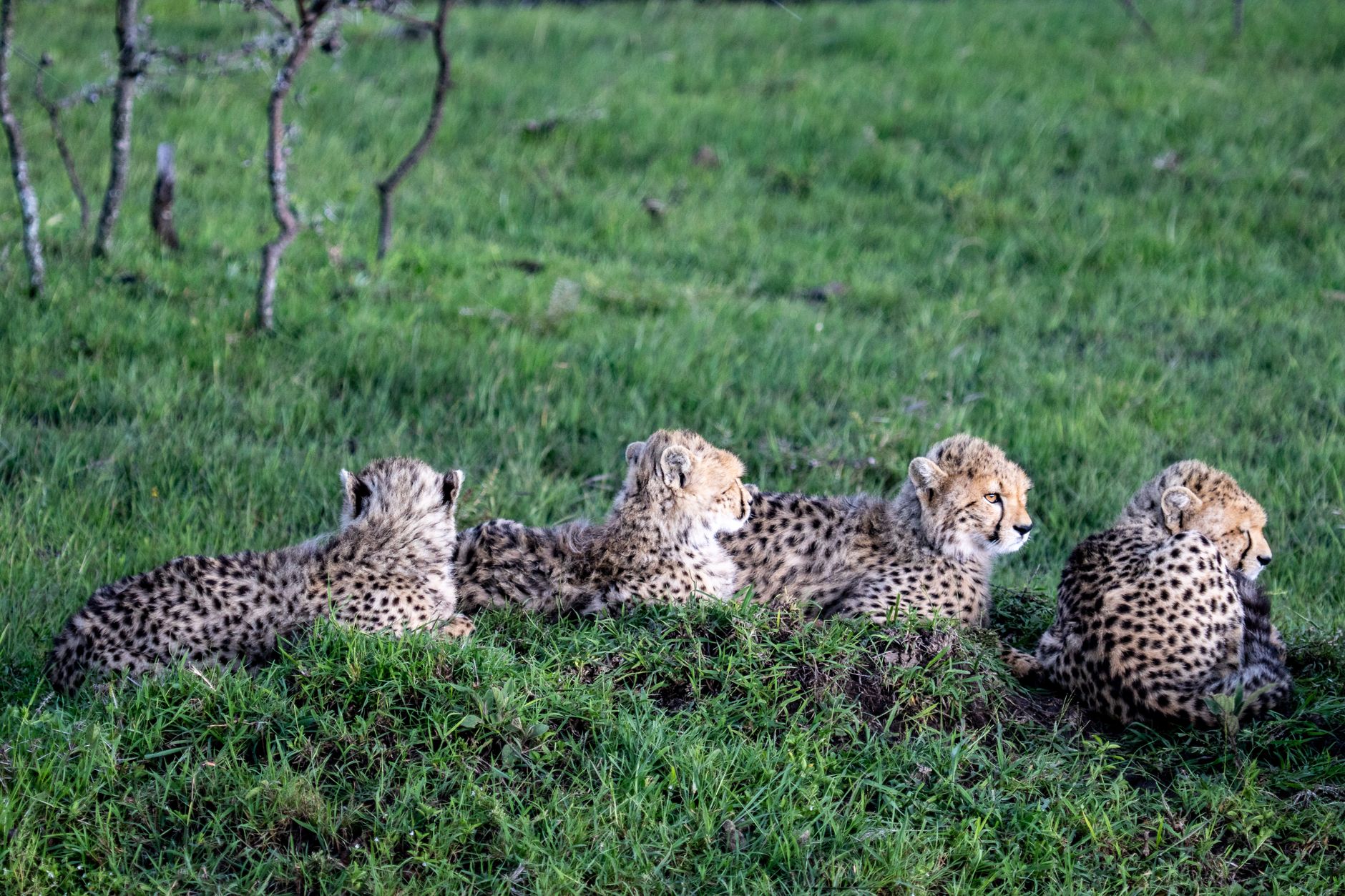
A male cheetah cub, 19 months old and identified as Nirva, was found injured in the Pahargarh range of Morena district, Madhya Pradesh, and subsequently transferred to Kuno National Park for treatment. The animal succumbed to its injuries on Tuesday morning, officials said, after veterinary examinations confirmed that the wounds were caused by firearm pellets rather than the initially reported blunt trauma.
Incident and Veterinary Findings
Veterinary doctor Shibha Javre detailed the diagnostic process, noting that radiographic scans showed several metallic foreign objects lodged in the cub’s lumbar region. The pellets were located in the first lumbar vertebra (L1), in the space between the first lumbar and thirteenth thoracic vertebrae, and ventrally to the thirteenth thoracic vertebra. Additional foreign bodies were identified beneath the skin near the left shoulder and within the parenchyma of the right lung. During emergency surgery, five firearm pellets were extracted from the animal’s body. Despite the surgical intervention, the cheetah did not survive.
Following the initial rescue, the cub was moved to the Department of Veterinary Surgery and Radiology at the National Dairy Development Board’s Veterinary University in Jabalpur for a more comprehensive assessment. A subsequent CT scan revealed that the metallic fragments had caused damage across multiple systems, including internal organs, the musculoskeletal framework, and the nervous system. The chief wildlife warden, Samita Rajora, emphasized that intensive treatment efforts were made but were ultimately insufficient to save the animal.
Investigation and Response
In response to the fatal incident, the Madhya Pradesh state government established a Special Task Force composed of forest officials and police officers to conduct a detailed inquiry. Preliminary findings suggest that the cheetah was shot by a villager, although investigators have not ruled out the involvement of a poacher. A local forest official, who declined to be named, recounted that two cheetahs, one of which was the Nirva cub, entered a house on the outskirts of Bamori village and killed two calves that were tethered in a courtyard. The distressing noises awakened Somlavir Singh and his wife, who were staying in a makeshift shelter nearby. They raised an alarm, prompting other villagers to respond. Later that day, the injured cub was located in the forested area of the Pahargarh range.
Wildlife activist Ajay Dubey has called for a Central Bureau of Investigation (CBI) probe, arguing that the incident exposes shortcomings in the current protection measures for the cheetah population. Dubey highlighted that the cheetah was shot despite monitoring by eighteen dedicated teams and noted that the shooting occurred only three months after a poaching ring targeting leopards was dismantled in the same region. He contended that the case warrants a higher‑level investigation because it involves an international wildlife reintroduction project.
Implications for India’s Cheetah Conservation
The death of the Nirva cub brings the total number of cheetahs in India to 58, according to official counts. The population distribution includes 52 individuals in Kuno National Park, four in Gandhi Sagar Wildlife Sanctuary, and two in Veerangana Durgavati Tiger Reserve. The loss underscores the vulnerability of the species, especially when individuals stray beyond the protected boundaries of the park. Authorities and conservationists have expressed concern that the incident may signal gaps in the monitoring and rapid response mechanisms designed to safeguard the reintroduced cheetahs.
Conservationists stress that the successful reintroduction of cheetahs, originally part of an international project, depends on robust anti‑poaching measures, community engagement, and clear protocols for handling human‑wildlife conflict. The recent fatality, combined with prior incidents involving livestock predation, has reignited debate over compensation schemes for affected villagers and the need for enhanced awareness programs. The Special Task Force’s findings are expected to shape future policy decisions, including possible revisions to the perimeter management of Kuno National Park and the allocation of additional resources for on‑ground surveillance.
As the investigation proceeds, the wildlife community awaits recommendations that could strengthen protection for the small but growing cheetah population in India. The incident serves as a stark reminder that the challenges of rewilding apex predators extend beyond habitat restoration, encompassing complex socio‑ecological dynamics that require coordinated action from government agencies, local communities, and conservation NGOs.






Be First to Comment