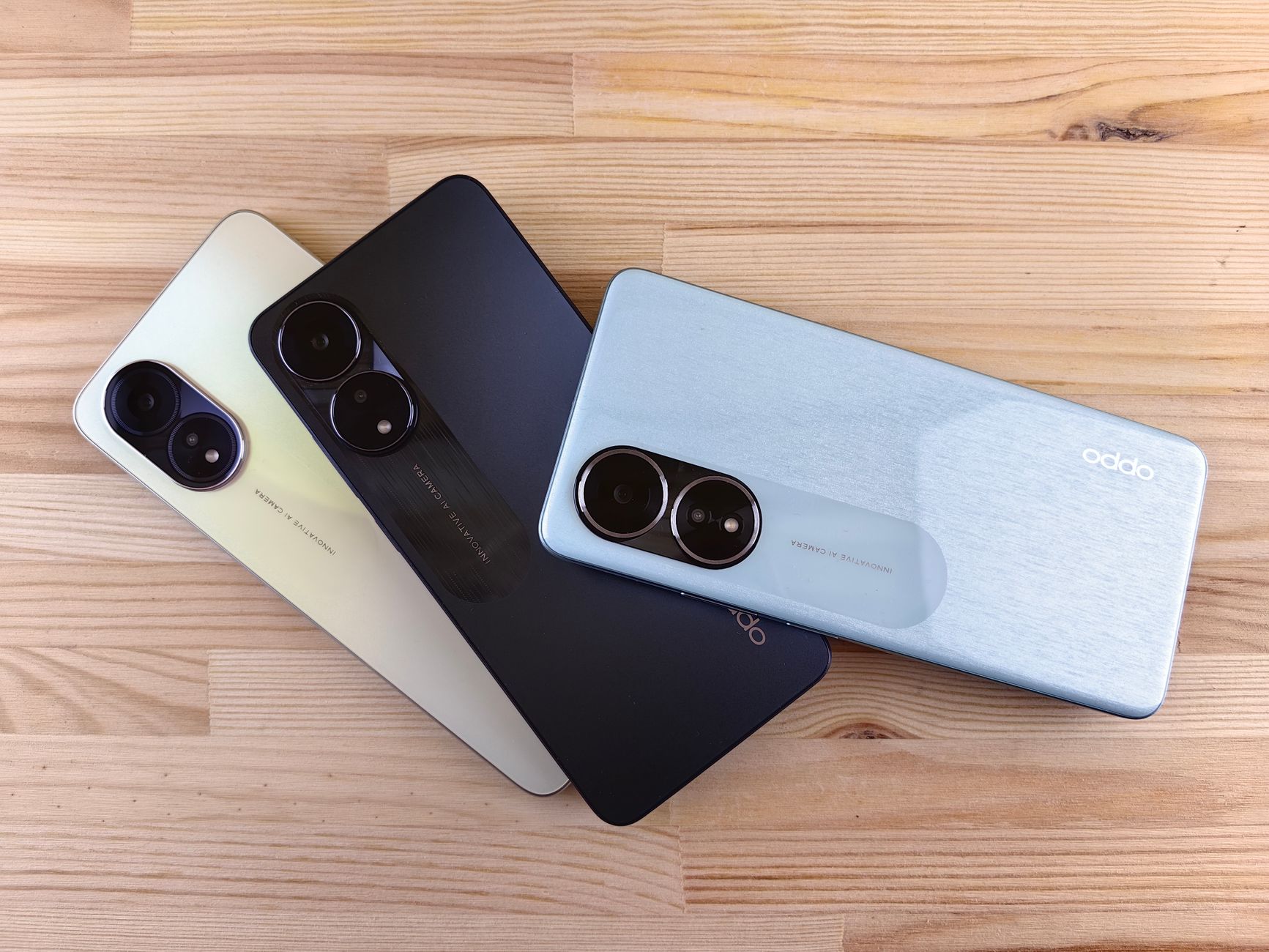
Oppo introduced two flagship models on 21 October 2026 – the standard Find X10 and the larger Find X10 Pro Max. The Pro Max version attracted the most attention, receiving the Editors’ Choice award from GSMArena for its outstanding battery performance, a triple 200 MP camera system and a bright 144 Hz LTPO OLED display. At the same time, reviewers highlighted a high launch price, slower‑than‑expected charging and average stereo speakers as notable drawbacks.
Design, display and hardware specifications
The Find X10 Pro Max features a 6.78‑inch LTPO OLED panel with a resolution of 1,272 × 2,772 pixels. The screen can refresh up to 144 Hz, an improvement over the 120 Hz panel on the previous generation. Laboratory testing recorded a peak brightness of 2,337 nits in auto mode with a 75 % white fill, while a 10 % fill pushed the display to roughly 3,500 nits – close to Oppo’s claimed 3,600‑nit peak. Minimum brightness drops to 1 nit and PWM dimming runs at 3,840 Hz, a rate that reduces eye‑strain for sensitive users. Bezels measure 1.15 mm on the Pro Max, compared with 0.99 mm on the smaller Find X10.
Both models share the same charging architecture and display refresh rate, but differ in chipset, size and camera hardware. The standard Find X10 is powered by MediaTek’s 3 nm Dimensity 9600M, while the Pro Max steps up to the 2 nm Dimensity 9600 Pro – MediaTek’s first 2 nm silicon. The Pro Max is equipped with a 12 GB RAM and 512 GB storage configuration, whereas the base model ships with 12 GB RAM and 256 GB storage.
Performance, battery life and charging
In benchmark testing, the Dimensity 9600 Pro delivered Geekbench 6 scores of 3,370 (single‑core) and 10,614 (multi‑core), and Geekbench 7 scores of 2,563 and 9,657 respectively. AnTuTu v11 and v12 placed the device at 4,128,150 and 4,278,288 points. Graphics performance reached 7,314 on 3DMark Wild Life Extreme and 14,649 on the Solar Bay ray‑tracing test, positioning the phone among the top‑tier Android devices.
Despite the strong raw numbers, GSMArena reported noticeable CPU and GPU throttling during sustained workloads, with performance dropping to roughly 50‑60 % of peak levels in thermal stress tests. By contrast, Beebom’s review of the smaller Find X10 praised its thermal management, suggesting that the difference stems from the larger 2 nm chip and distinct cooling solution in the Pro Max.
Battery endurance is the Pro Max’s most compelling selling point. The device carries an 8,000 mAh cell for markets outside Europe, Australia and New Zealand, where a reduced 7,150 mAh battery is used – a roughly 10 % capacity cut. GSMArena’s lab‑based Active Use Score logged 25 hours 24 minutes of usage on the 8,000 mAh version, placing the phone at the top of its battery chart and ahead of the vivo X300 Ultra. The standard Find X10 achieved more than 8.5 hours of screen‑on time in Beebom’s testing.
Charging speed fell short of expectations. Both wired 80 W SuperVOOC and 50 W wireless AirVOOC charging were supported, yet a full charge required 1 hour 10 minutes. The battery reached 29 % after 15 minutes and 52 % after 30 minutes, prompting GSMArena to label the charging rate as “considerably slower” than the Find X9 Pro and behind competing flagships.
Camera system, software and market positioning
The Pro Max’s rear camera suite comprises three 200 MP sensors. The primary sensor is a Samsung ISOCELL HPC 1/1.3‑inch unit with an f/1.5 lens and optical image stabilization (OIS). The telephoto module uses a 200 MP ISOCELL HP5 sensor at a 70 mm (3×) focal length with f/2.1 and OIS, while the ultrawide lens is another 200 MP HP5 sensor at 13 mm and f/2.2. All three lenses can record 8K video at 30 fps and 4K at 120 fps. A 50 MP front‑facing sensor with an 18 mm lens replaces the 21 mm lens of the previous generation.
GSMArena’s photographic assessment was largely positive. Default 26 MP images from the main camera displayed strong dynamic range, though detail consistency varied. The 3× telephoto produced sharper results than the primary lens, and the ultrawide was described as “sharp by ultrawide standards.” Low‑light performance showed a modest edge over earlier competitors, and night‑video capture stood out with Dolby Vision support at 4K 120 fps and 8K 30 fps, plus an open‑gate mode that utilizes the full sensor at 60 fps.
Oppo offers an optional Hasselblad teleconverter that adds 3.28× optical magnification, delivering a 230 mm equivalent focal length. The accessory replaces the hardware Quick Button present on earlier models, a change noted by the reviewer.
Software runs ColorOS 17 atop Android 17, featuring Oppo’s “Living Flow Design” for smoother animations. Integrated AI tools include an AI Agent that leverages Gemini, Perplexity and ChatGPT models, AI scam‑call detection and a photo‑editing suite called Mind Pilot. Both GSMArena and Beebom praised the interface for its modern look and fluid performance.
Oppo promises five major OS upgrades and six years of security patches, a commitment that falls short of Samsung’s longer‑term support for its Galaxy S26 Ultra, according to GSMArena’s comparison. Some reviewers also mentioned pre‑installed third‑party apps, though the exact list was not confirmed.
Pricing places the Pro Max in the “Ultra” bracket. In Europe, the 12 GB/512 GB configuration costs roughly €1,500, while the standard Find X10 starts at about €1,000. The UK sees a £390 price jump between the two models, and in India the Pro Max is priced about ₹60,000 higher, with the base Find X10 listed at ₹1,39,999. GSMArena noted that the Find X10 Pro Max’s price rivals the Xiaomi 17 Ultra, which is approximately €700 cheaper, and the Samsung Galaxy S26 Ultra, which offers comparable pricing but better software updates and faster charging.
Speakers were a shared weakness across both devices. The stereo pair measured –28.8 LUFS, classified as “Average,” and reviewers described the audio as flat with limited bass and depth. This shortfall was consistent in both the Pro Max and the smaller Find X10.
In summary, the Oppo Find X10 Pro Max delivers class‑leading battery endurance, a versatile triple‑200 MP camera system and a bright, high‑refresh‑rate display, earning it an Editors’ Choice accolade. However, the high launch price, slower charging performance and modest speaker output may deter buyers who prioritize those aspects, especially when comparable alternatives such as the Xiaomi 17 Ultra and Samsung Galaxy S26 Ultra are available at lower cost or with stronger software support.






Be First to Comment