Hours before the pre‑order window opened on November 1, 2026, former Zomato chief executive Deepinder Goyal posted on X that his new Temple forehead‑mounted wearable could track heart rate with greater precision than several leading devices, including the Apple Watch. The claim was quickly echoed by Indian outlets The CSR Journal and NewsBytes, which framed the statement as a head‑mounted tracker beating wrist‑based wearables.
What the Claim Entails
Goyal’s post did not specify a particular Apple Watch model. The CSR Journal’s headline mentioned “superior heart‑rate accuracy over the Apple Watch Series,” while NewsBytes described the device as outperforming wrist‑based trackers during high‑intensity workouts. The emphasis on vigorous exercise matters because optical sensors on the wrist typically lose accuracy when the arm moves rapidly, a problem Goyal attributes to Temple’s placement on the forehead.
The timing of the post—just before the booking window opened—suggests a marketing angle as well as a technical statement. While the timing does not invalidate the claim, it means the assertion remains a company claim until an independent party reproduces the result.
Pricing, Pre‑Order Terms and Delivery Timeline
Business Today reported that the first batch of Temple devices is priced at ₹85,000, roughly $1,000 based on earlier conversion rates. NDTV Profit and ET Now echoed the same figure, noting that the device is made to order with an estimated three‑month delivery after purchase. Early‑access invitations reportedly include a lifetime subscription to the service.
Earlier coverage by ThePrint had projected a price range of ₹75,000‑₹80,000 and a launch before the end of 2026 with a limited rollout. The final price of ₹85,000 therefore represents a premium for a first‑generation product from a new company. The made‑to‑order model and three‑month wait also mean that independent reviewers will not have units in hand until well into 2027, unless the company provides early hardware samples.
How the Forehead Sensor Works
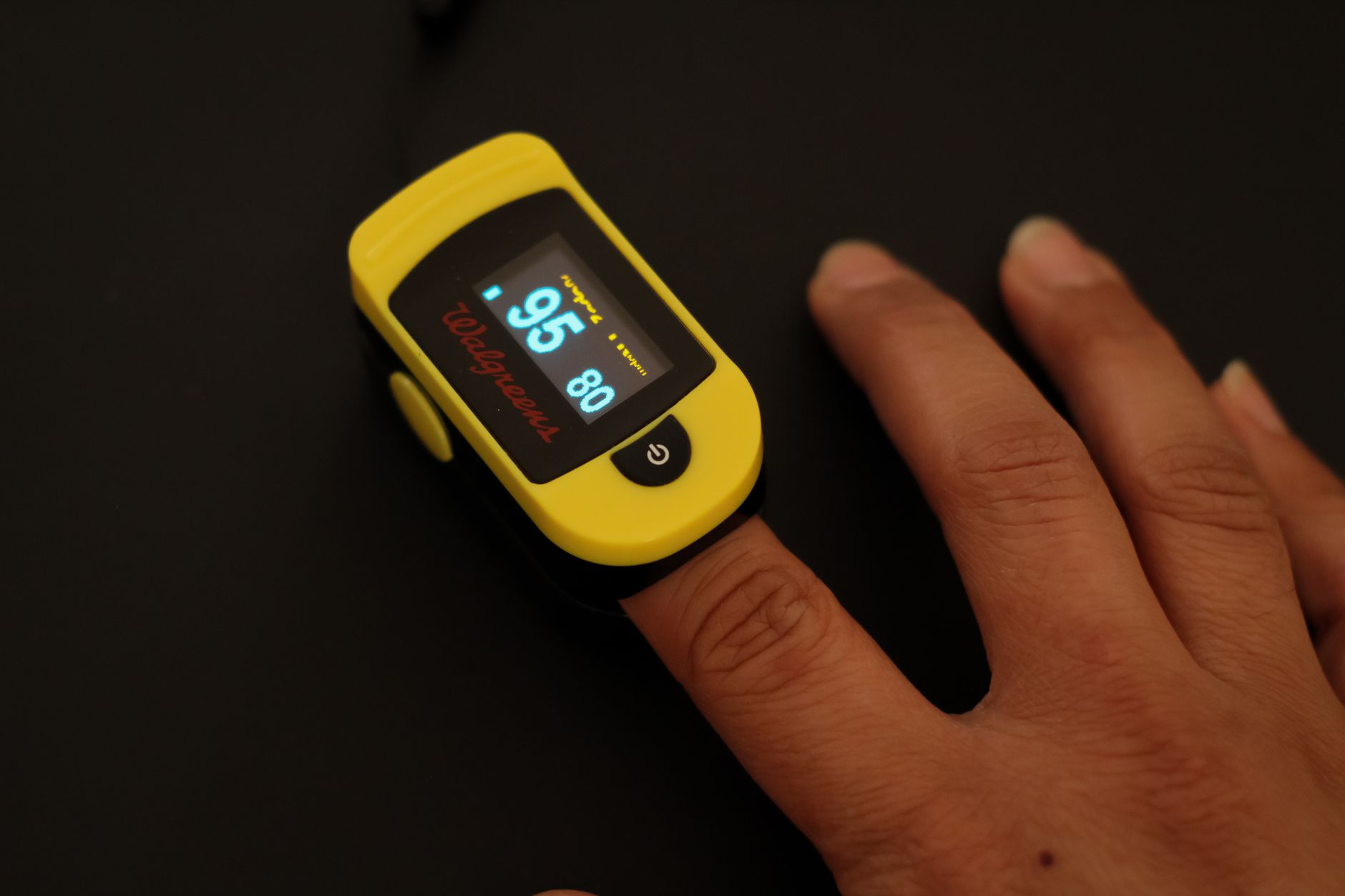
Most consumer wearables estimate heart rate using photoplethysmography (PPG), a technique that shines light into the skin and measures the reflected signal to detect blood pulsations. Wrist‑based PPG struggles during activities such as running, rowing or racket sports because arm swing and strap movement introduce motion artefacts that can mimic a pulse.
Temple’s design places the PPG sensor on the forehead, a site that remains comparatively steady during most motions. The concept is not novel; clinical pulse‑oximeters already use reflective sensors on the forehead. Goyal’s explanation, as reported, credits this steadier mounting point for the purported performance gain. While a steadier location can reduce motion noise, other factors—such as sweat, adhesive contact quality, and impacts to the head—introduce their own challenges.
Primary Purpose of the Device
According to ThePrint, Temple was originally built to measure “BrainFlow,” a proxy for cerebral blood flow, and “Entropy,” described as the body’s real‑time “cost of being alive,” reflecting metabolic and sympathetic demand. The device adheres to the temple with replaceable grips that last several days.
Digital Health News highlighted that Temple is an experimental research tool funded through Continue Research, Goyal’s personal research initiative, with Goyal investing $25 million of his own money. The device was demonstrated on a YouTube podcast with host Raj Shamani, after which Goyal publicly explained its functions.
The heart‑rate claim therefore appears as an add‑on to a product whose core value proposition is brain‑flow monitoring. Whether a signal originally intended for cerebral measurements can reliably yield accurate beats‑per‑minute data depends on the company’s processing algorithms, a detail not disclosed in the public material.
Published Validation Numbers
ThePrint reported correlation coefficients of 0.84‑0.91 between Temple’s BrainFlow signal and near‑infrared spectroscopy, and about 0.8 against transcranial Doppler measurements during exercise. These figures pertain to cerebral‑blood‑flow validation, not heart‑rate accuracy, and the source does not link them to beats‑per‑minute error metrics.
Temple also carries a disclaimer stating that it is not a medical instrument and that its data should not replace professional assessment. The disclaimer notes that accuracy does not match clinical equipment, a caveat that sits uneasily next to the claim of beating the Apple Watch—though Apple’s own sensors are marketed as consumer‑grade rather than clinical‑grade.
Evidence Presented So Far
The only concrete evidence tied to the heart‑rate claim is a single badminton match test. Reports say three devices were compared: Temple’s head‑mounted tracker, a Polar heart‑rate monitor, and an unnamed screenless wrist fitness tracker. Temple’s readings reportedly aligned closely with the Polar device, which uses a chest strap to capture the heart’s electrical signal and is commonly treated as a field standard for exercise testing.
However, the test description lacks crucial details: there is no disclosed sample size, no beats‑per‑minute error figure, no information on data dropouts, and no identification of the wrist tracker model. Moreover, the Apple Watch was not part of the test, meaning the headline comparison to Apple rests on inference rather than direct measurement.
How Apple Watch Heart‑Rate Tracking Has Performed in Independent Studies
Independent research on Apple Watch heart‑rate sensors exists but focuses on older hardware. A 2017 study in *Sports Medicine International Open* evaluated Apple Watch Sport (Series 0) against a Polar S810i chest strap in 21 healthy men. Correlations were 0.97 for walking, 0.92‑0.93 for jogging, and 0.81‑0.86 for running, with mean biases of 0, 1 and 2 beats per minute respectively. The study also noted a rise in missing values during higher‑intensity effort, with 20‑40 % of readings absent in the first minute of hard effort.
A 2019 paper in *JMIR mHealth and uHealth* examined a first‑generation Apple Watch Sport 42 mm in 40 patients with cardiovascular disease, using ECG as the gold standard. Mean absolute percentage error was 10.69 % at rest, 9.20 % at moderate effort and 6.33 % at maximal effort. The authors deemed the accuracy clinically acceptable and observed improvement with increasing intensity.
Both studies involved Apple Watch models that are several generations older than the current lineup, which now incorporates refined sensors and software algorithms. Nonetheless, the research highlights the inherent challenges of wrist‑based PPG during vigorous motion—a weakness Goyal claims Temple overcomes.
What a Fair Independent Test Would Require
A credible verification of Temple’s claim would need a controlled protocol that compares the device against a recognized reference, such as a chest‑strap monitor or ECG, across a range of activities and intensities. The test should report sample size, statistical error metrics (e.g., mean absolute error, bias), and the proportion of valid readings at each intensity level. Including the Apple Watch model(s) under evaluation would be essential to substantiate the headline comparison.
Because Temple is made to order with a three‑month lead time, independent labs will likely need to wait until late 2027 before obtaining units, unless the company provides early samples. Until such data appear, the claim remains unverified by third parties.
Conclusion
Deepinder Goyal’s Temple wearable markets a forehead‑mounted sensor that, according to his X post, tracks heart rate more precisely than the Apple Watch, especially during high‑intensity exercise. The device is priced at ₹85,000, ships three months after purchase, and was originally designed to monitor cerebral blood flow rather than heart rate.
Publicly available evidence includes a single badminton‑match comparison against a Polar chest strap and correlation data for brain‑flow metrics. No independent laboratory has yet tested the heart‑rate claim, and the Apple Watch was not part of the reported test. Existing independent studies on older Apple Watch models show high correlation with chest straps but also reveal missing data during vigorous activity.
Until a rigorous, peer‑reviewed study is published, the claim remains a company statement pending external validation.






Be First to Comment