Google is positioning its forthcoming Android XR smart glasses as a privacy‑first alternative to other wearable cameras that have drawn criticism for enabling covert recording. In a detailed post shared by Android XR Vice President and General Manager Shahram Izadi, the company outlined a suite of technical and hardware measures designed to protect both bystanders and the wearer when the device is used for Gemini‑powered queries.
Automatic face redaction for every capture
According to Izadi, the glasses will automatically redact or blur any human faces that appear in the camera’s field of view before the image is transmitted to Google’s Gemini AI for analysis. The feature activates whenever a user initiates a Gemini request—whether that is a question about the surrounding environment, a translation of text on a menu, or an object‑identification query. If other people happen to be in the shot, their faces are obscured prior to processing.
The same redaction applies to the wearer. Google explains that pointing the glasses at a mirror, or directly at one’s own face while taking a photo or video, will result in the wearer’s face being blurred before the data reaches Gemini. In addition, Google states that images and videos captured for Gemini queries will not be retained in the service’s history log, nor will they be repurposed for AI training, ad personalization, or targeted advertising.
Restrictions on third‑party apps and hardware indicators
Beyond software‑level blurring, Google is imposing strict limits on how third‑party applications can use the glasses’ camera. Play Store apps designed for Android XR will be prohibited from employing real‑time facial recognition or from live‑streaming video. Only native Google applications will retain access to the camera, allowing the company to enforce its privacy safeguards uniformly.
Developers will also be barred from disabling or tampering with a front‑facing privacy LED indicator. The indicator lights up whenever the glasses are recording, providing a visual cue to people nearby. Google has built anti‑tampering logic into the indicator: if the light is covered or otherwise disabled, the camera will stop recording. Each pair of glasses will also feature a dedicated physical switch that lets users instantly power the device off when it is not in use.
Hardware specifications, pricing and availability
The first wave of Android XR smart glasses is being produced by Samsung in partnership with fashion brands Warby Parker and Gentle Monster. The hardware includes a front‑facing 12‑megapixel ultrawide camera, built‑in speakers, a microphone, and a battery that delivers up to nine hours of continuous use. The battery can be recharged multiple times using a charging case that accompanies the glasses.
Compatibility extends to Google Pixel phones and Samsung Galaxy devices that run Android 17 or One UI 9, as well as to iPhone models. Pre‑orders have already opened, with a base price of $395. Shipping is slated to begin on December 10, 2026, in the United States and South Korea.
Context within the broader smart‑glasses market
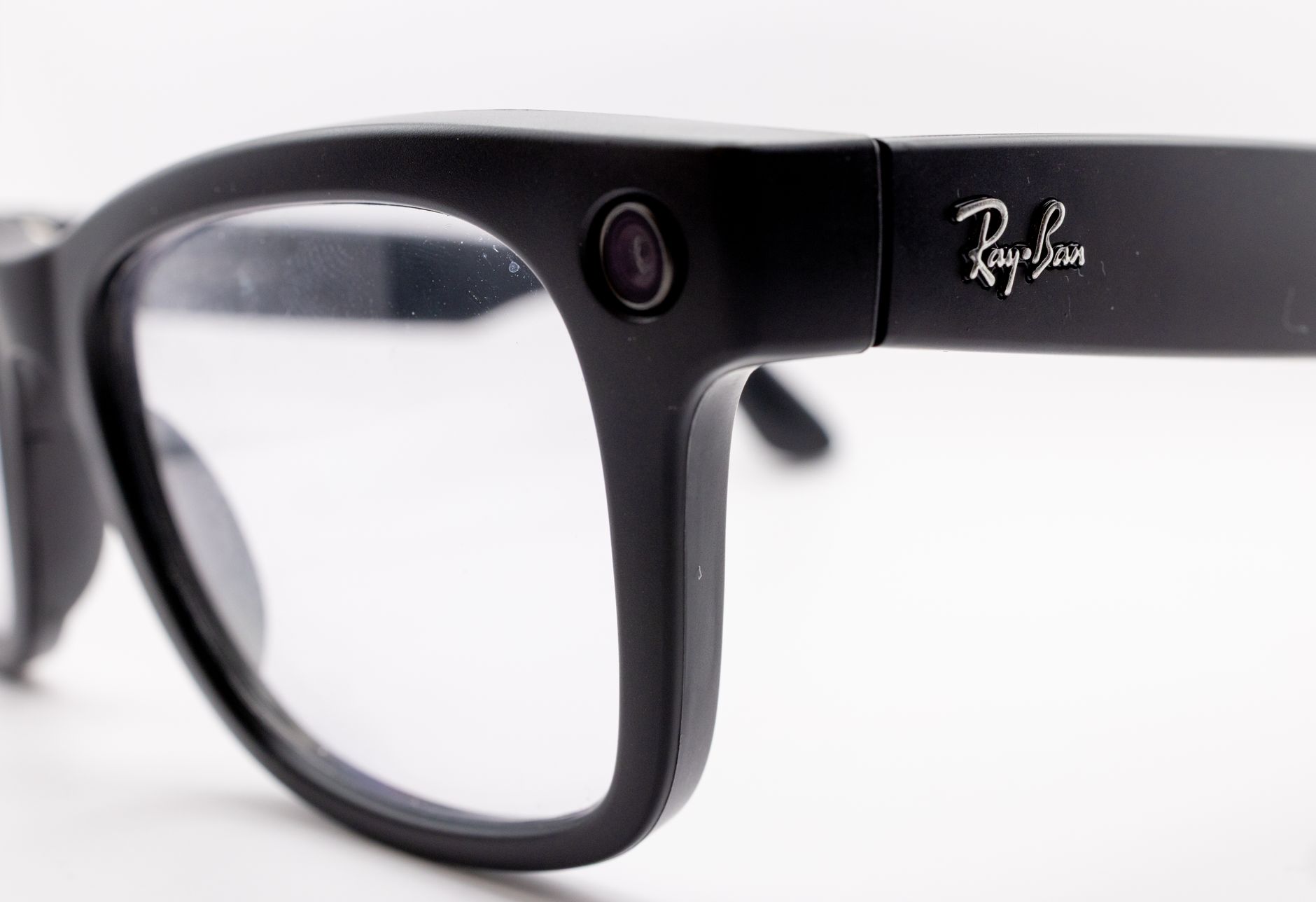
The privacy focus comes after other manufacturers have faced public backlash. Meta’s Ray‑Ban smart glasses, for example, have been dubbed “perv glasses” by critics who worry about clandestine recording. A notable incident involved a Harvard student who modified Meta’s Ray‑Ban device to perform real‑time facial recognition, demonstrating how wearable cameras can be repurposed for surveillance.
Google’s measures aim to address those concerns by ensuring that facial data is never exposed to external servers without first being obscured. While the company did not claim the system is completely foolproof, the combination of automatic blurring, prohibition of third‑party live‑streaming, and hardware‑level safeguards represents a more comprehensive approach than many earlier attempts.
Industry observers will be watching how effectively these protections work in practice, especially as developers begin creating native experiences for the Android XR platform. If the privacy mechanisms hold up, Google’s glasses could set a new benchmark for responsible design in the emerging wearables market.






Be First to Comment