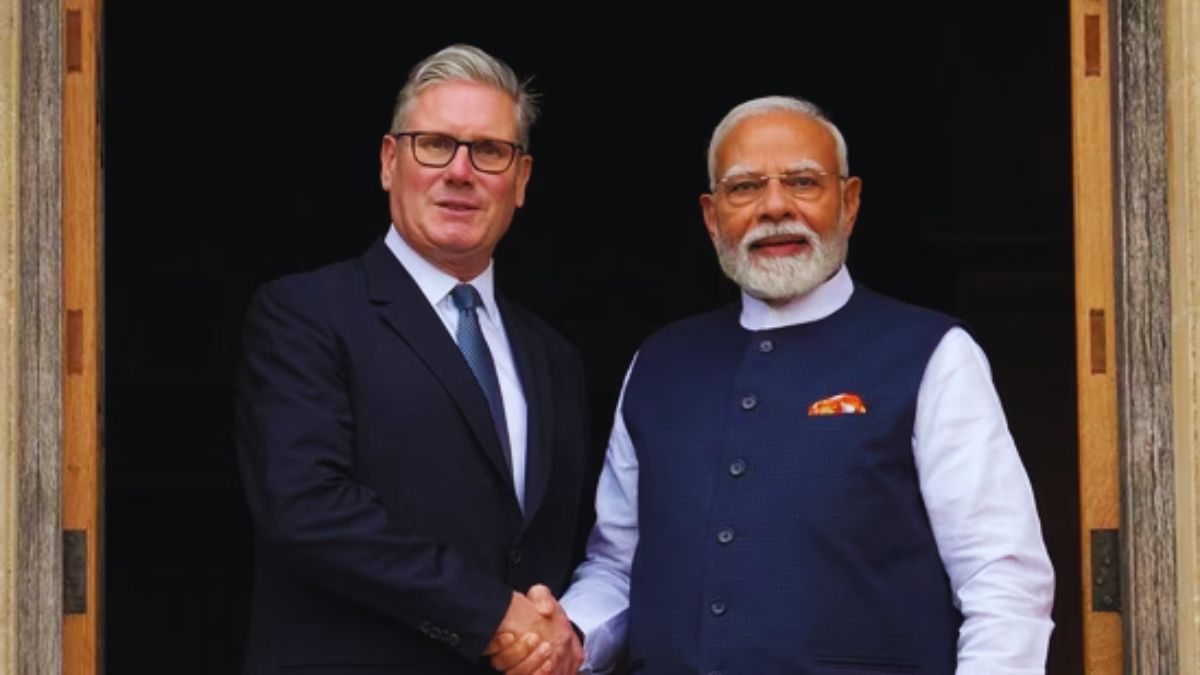
India UK trade deal 2025, US tariffs on Indian goods: India and the US have concluded a week-long round of trade negotiations earlier this month to finalize an interim trade deal seen as crucial for New Delhi to skirt reciprocal tariffs ahead of the August 1 deadline.
The India-UK trade deal is significant in more ways than one: for London, it is perhaps the most significant deal after Brexit, while for New Delhi, this is the first big trade pact with a major Western nation after the broad-based European Free Trade Association (EFTA) deal signed last year.
The just concluded UK deal will now lay the template for the negotiations that India is currently tending to, with the European Union, and, more importantly, offer cues to India’s negotiation stance in the most consequential deal: the one with the United States. Unlike the UK deal, the negotiations with the US are clearly rushed. But then, India could face tariffs of up to 26% if both countries fail to reach an agreement by a repeatedly changing deadline.
With the FTA (Free Trade Agreement) bilateral deal between the UK and India sealed through on July 24, a series of stocks and sectors are poised to benefit from the reduction, and elimination of tariffs, in some cases – Textile, automotive, Pharmaceutical, Agri & Marine and Gems & Jewellery segment. The Indian PM Narendra Modi and UK equivalent, Keir Stamer signing the CETA (Comprehensive Economic and Trade Agreement) after rounds of negotiations showcases the growing bond between two countries on matters of strategic alliance, trade, economy and strengthening partnership.
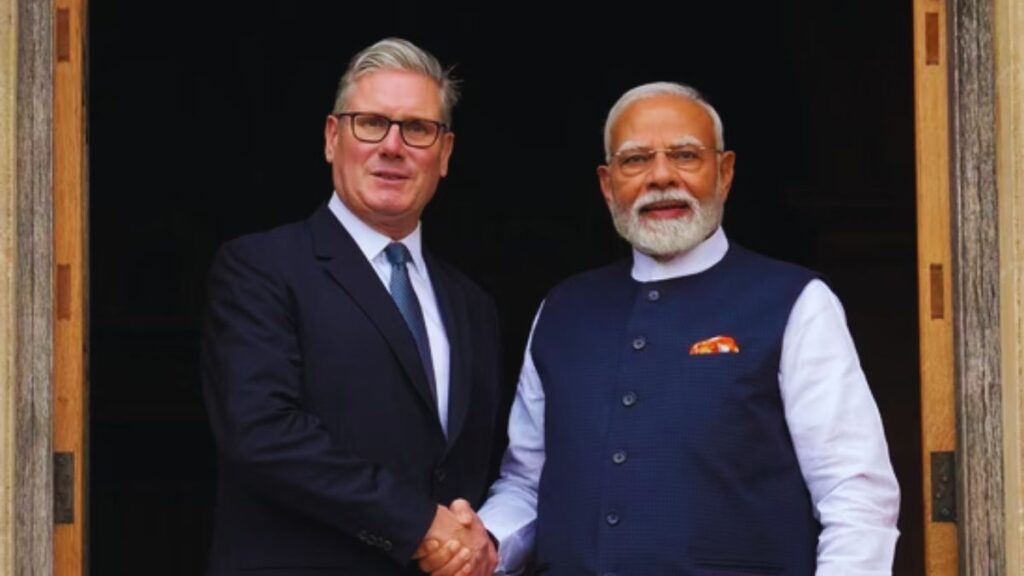
India-UK Deal 08 Key Takeaways
- India has excluded several high-sensitivity agricultural products from any trade tariff concessions – dairy, seeds, whey, apples, walnuts etc. The UK too had excluded various meat products and egg-based items, among others, from discussions.
- After the UK deal, India’s average tariff on British products is projected to drop from 15 per cent to 3 per cent.
- With the UK, India has shown accommodation in certain areas that the other side has pushed for. For instance, India will first halve the duty on Scotch whisky from the UK to 75 per cent and then to 40 per cent over 10 years, a key demand from the British government.
- As per the UK deal, India will lower the import duties on British cars over a period of 15 years to just 10% from more than 100 per cent for luxury cars. However, the reduced rate of tariff will apply only to 10,000 units, which will rise to 19,000 in the fifth year.
- The concession framework with the UK is designed to provide market access to British exporters mostly on large engine-size ICE vehicles and high price range EVs, while trying to protect the segments of India’s automotive industry pertaining to mid and small size engine capacity.
- India has pushed hard with the UK, in labor-intensive sectors. For textiles, the country has faced substantial tariff barriers into the UK, which is India’s third-largest export destination for textiles and garments, the tariffs will now come down from 9 per cent to zero after the deal.
- In addition, India’s government has shown some degree of realistic imagery, by opening up segments of imports that are in areas where the country has been weak or those goods are needed as intermediate goods.
- An annual quota of 1800 for temporary entry of traditional chefs, classical musicians, and yoga instructors will largely serve as open-ended communication, given that no binding commitment has been made on broader visa categories, including business visitors or IT professionals.






Be First to Comment