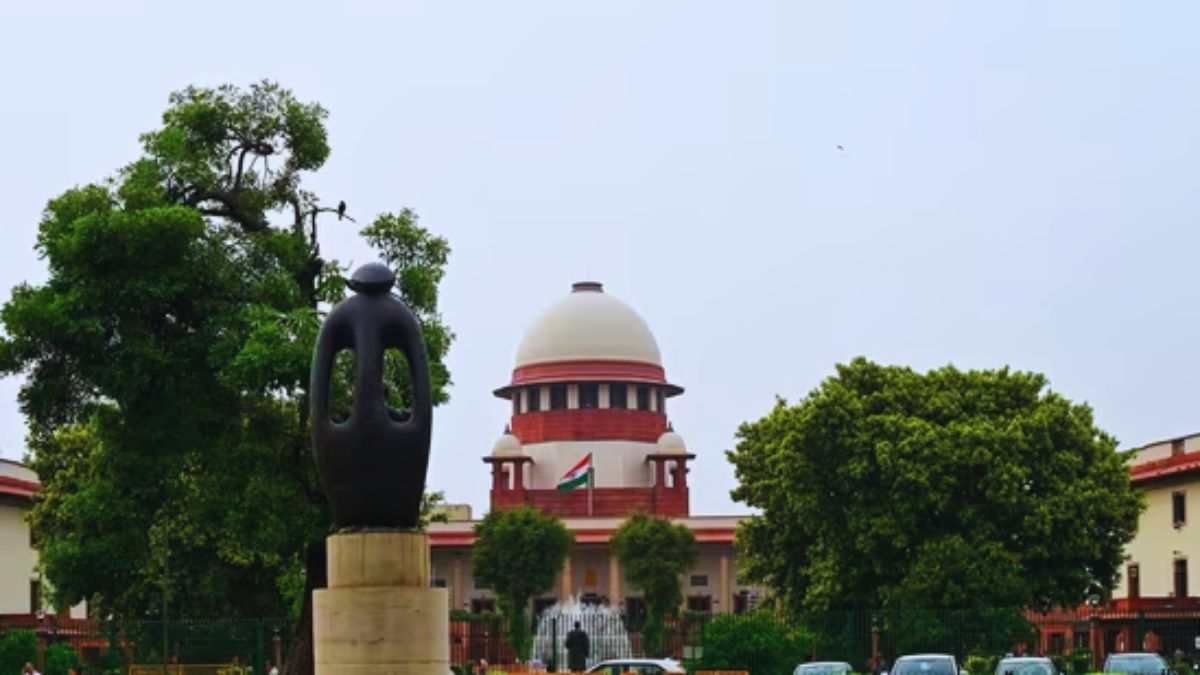
The Landmark Supreme Court Ruling: Commute Accidents Now Considered ‘In the Course of Employment’
The Supreme Court ruled that employees can claim compensation for commuting accidents under the Employees’ Compensation Act, 1923. The Hon’ble Supreme Court of India, in a significant judgment, has ruled that accidents occurring while commuting to and from the office will now be treated as ‘employment-related incidents’, thereby making them eligible for compensation and workplace-related benefits.
The employees and their families will be entitled to compensation under the Employees’ Compensation Act, 1923, not just for accidents occurring during the course of work but also for mishaps while commuting to and from their place of employment. That is, if a worker meets with an accident during a routine and timely commute to or from the workplace, it may qualify as employment-related for compensation purposes.
In a significant verdict broadening the scope of workers’ rights and social welfare protection, a bench of Justices Manoj Misra and KV Viswanathan interpreted the phrase “accident arising out of and in the course of employment” in Section 3 of EC Act to include commuting accidents, provided a clear nexus is established between the time, place and circumstances of the accident and the employment.
Case Reference:
The judgment came in a case involving late Shahu Sampatrao Jadhavar, who worked as a watchman at a sugar factory in Maharashtra. His shift on April 22, 2003, was scheduled from 3 AM to 11 AM. While commuting to work in the early hours, his motorcycle met with a fatal accident around 5 km from the factory. He ultimately left behind his widow, four children, and his mother.
A claim under EC Act was allowed by the commissioner for workmen’s compensation and civil judge, Osmanabad, who awarded ₹3,26,140 as compensation along with 12% annual interest, and also directed the employer to pay 50% of the amount as penalty. The employer’s insurance company was held liable to pay the compensation.
“We interpret the phrase ‘accident arising out of and in the course of employment’ under Section 3 of the EC Act to include accident occurring to an employee while commuting from his residence to the place of employment for duty or from the place of employment to his residence after performing duty,” the Supreme Court announced in its July 28, 2025, ruling.
Implications for Employers & HR Policy Makers:
- This judgment strengthens the concept of ‘extended course of employment’, emphasizing employer accountability beyond office walls.
- Organizations may now need to review and update employee insurance policies, compensation frameworks, and travel safety protocols.
- HR and Legal Teams must clearly define what constitutes “duty hours” and “work-related travel” in their contracts and manuals.
- For professionals and workers across sectors, this is a crucial step toward fairer work rights, especially in an era of increasing mobility and hybrid work culture.
- Duty doesn’t begin or end at the office door. It begins the moment an employee starts their journey to contribute to the organization.






Be First to Comment