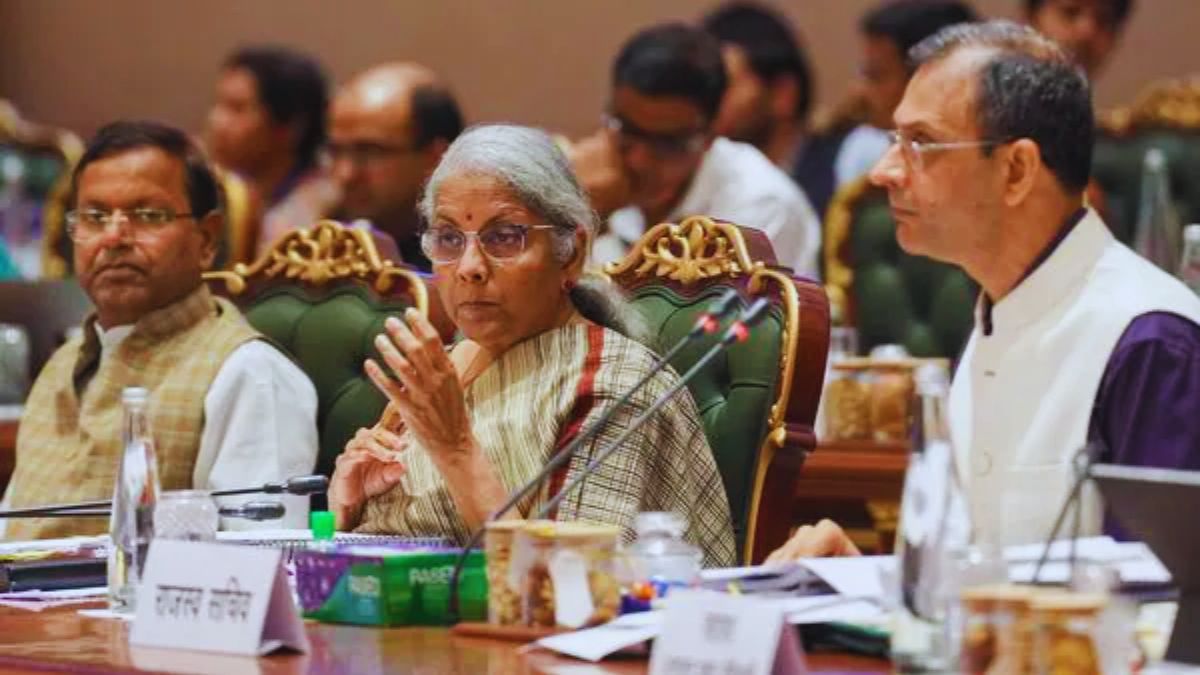
Union Finance Minister Nirmala Sitharaman is set to give shape to Prime Minister Narendra Modi’s clarion call for GST reforms, when she chairs the 58th GST Council slated for September first week.
The primary agenda involves discussion and decisions pertaining to ‘rate cut’ and ‘rationalisation’. The Council is expected to deliberate and announce rate cuts for close to 175 items – from cars to soaps and air-conditioners – as well as the rationalisation of an existing four-tier system to mere two slabs. This GST Council meeting will bring together the union and state finance ministers for a singular agenda of GST reforms, including rate rationalisation, simpler compliance, and potential new compensation mechanisms.
Key Points to Consider
- A two-slab structure is being proposed—5% for essential goods and 18% for non-essentials— from the existing four slabs of 5%, 12%, 18% and 28% at present.
- An additional slab of 40% is being considered for the so-called “sin goods” like tobacco and cars priced INR 50 lakh and above.
- The fitment panel has already approved moving to this two-tier structure.
According to Reuters, India is planning to cut GST by at least 10 percentage points on nearly 175 items but there are a few revisions that the common man is looking forward to in particular.
- GST on essential items—toothpaste, shampoo, talcum powder, soaps—are now likely to be in the 5% bracket from 18% earlier. GST on butter and cheese, as well as ready-to-eat foods(pickles, snacks, chutney, etc.) may also come down to 5% from the 12% and 18% present currently.
- Broadly, nearly all food and textile items will come under the 5% slab, if the revision is approved – bringing ease in the FMCG (Fast Moving Consumer Goods) category.
- The 18% slab, which will now include consumer electronics such as TVs, ACs, refrigerators and washing machines – termed as ‘white goods’ earlier attracted 28% GST. GST on cement may also reduce to 18% from 28% at present.
GST rationalisation
- Structural Simplification: Four slabs (5%, 12%, 18%, 28%) consolidated into effectively two (5% and 18%) plus a special 40% slab category for luxury/sin goods.
- Enhanced Ease of Doing Business: With fewer categories, compliance becomes simpler, litigation reduces, and administration streamlines.
- Revenue Neutrality: The 40% slab on sin/luxury items aims to offset losses from lower slabs.
- Compensation Mechanism: A cess surplus (INR 40,000-50,000 crore) is being considered for compensating states, with a phaseout by 31 October. The insurance sector has proposed exemptions and wants rate benefits passed to policyholders.
- Mitigating Duty Inversion: There’s awareness of inverted duty structure – where input services are taxed higher than outputs. The GST Council will discuss on aligning input and output rates to ensure consumers benefit.
Why GST Reforms?
Prime Minister Narendra Modi, during his Independence Day speech on 15 August, announced India’s biggest indirect tax overhaul since July 2017, when Goods and Services Tax first came into effect. India’s stock market went on a tear in the days that followed, only to reverse gains less than two weeks later when 50% US tariffs on India came into effect.
In essence, the GST reforms are a cushion to the blow that the Indian economy would take due to Trump’s tariff tirades over New Delhi’s purchase of Russian oil.






Be First to Comment