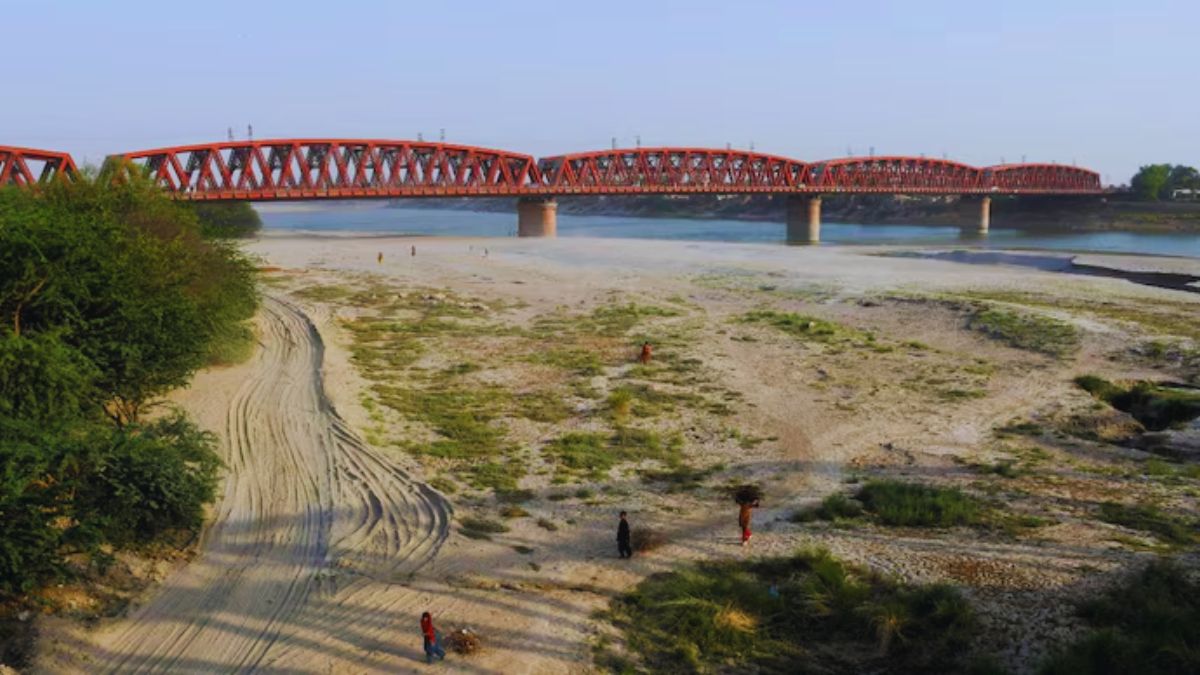
Pakistan’s agriculture, which heavily depends on the Indus basin, is facing an escalating water crisis as India gains strategic leverage over river management.
According to the Ecological Threat Report 2025 by the Sydney-based Institute for Economics and Peace (IEP), even minor changes in India’s dam operations could cause large-scale water shortages across Pakistan, threatening food security and livelihoods.
India’s Dam Control Raises Alarm for Pakistan’s Water Security
The IEP report highlights that nearly 80% of Pakistan’s agriculture depends on the Indus basin. With India now holding operational control over several key dams, even small alterations in water flow – especially during summer or dry months can severely affect Pakistan’s irrigated plains. Pakistan’s current storage infrastructure can retain only about 30 days’ worth of Indus River flow, leaving it highly vulnerable to disruptions.
This warning comes in the wake of India’s decision to suspend the Indus Waters Treaty (IWT) of 1960 after the Pahalgam terror attack in April, which was allegedly carried out by Pakistan-based terrorists. The move effectively freed India from its decades-long water-sharing obligations. Under the IWT, India was responsible for controlling the eastern rivers—Beas, Ravi, and Sutlej—while allowing Pakistan to utilize the western rivers—Indus, Jhelum, and Chenab.
Dam Operations Give India Strategic Advantage
While India cannot completely block or divert the Indus flow due to the technical design of its run-of-the-river projects, it still maintains the ability to influence downstream water availability by adjusting dam gate operations. The IEP report emphasized that these small, yet crucial changes can significantly affect Pakistan’s water flow at critical agricultural periods.
In May, India conducted reservoir flushing at the Salal and Baglihar dams on the Chenab River without a prior notice to Pakistan. The move triggered flood-like conditions downstream, underscoring India’s enhanced strategic control over river management since the IWT suspension.
Afghanistan’s Dam Plans Add to Pakistan’s Woes
Pakistan’s water challenges are further compounded by Afghanistan’s recent announcement to construct a dam on the Kunar River, which flows into Pakistan. The Taliban’s Supreme Leader has prioritized this project, threatening to further restrict Pakistan’s access to vital cross-border water resources. This move follows heightened tensions and recent armed clashes between the two neighbors.
Limited Water Storage Capacity Leaves Pakistan Exposed
According to the IEP report, Pakistan’s limited dam storage capacity leaves it ill-equipped to handle even temporary water disruptions. “If India were to reduce Indus flows during critical periods, Pakistan’s plains would experience devastating shortages—particularly during dry seasons,” the report warns.
Strategic and Geopolitical Implications
The IEP also noted that India’s suspension of the Indus Waters Treaty could have broader geopolitical consequences. The move coincided with Pakistan’s defence pact with Saudi Arabia, signaling shifting regional alliances. Riyadh is reportedly expected to support Islamabad amid growing water and security tensions in South Asia.
With its water reserves dwindling and dependence on India’s upstream operations increasing, Pakistan’s agricultural future stands on precarious ground. The IEP’s findings underline an urgent need for Islamabad to invest in larger water storage projects, negotiate diplomatic channels, and strengthen climate resilience measures. Without decisive action, Pakistan’s food security and rural economy could face irreversible damage in the coming years.






Be First to Comment