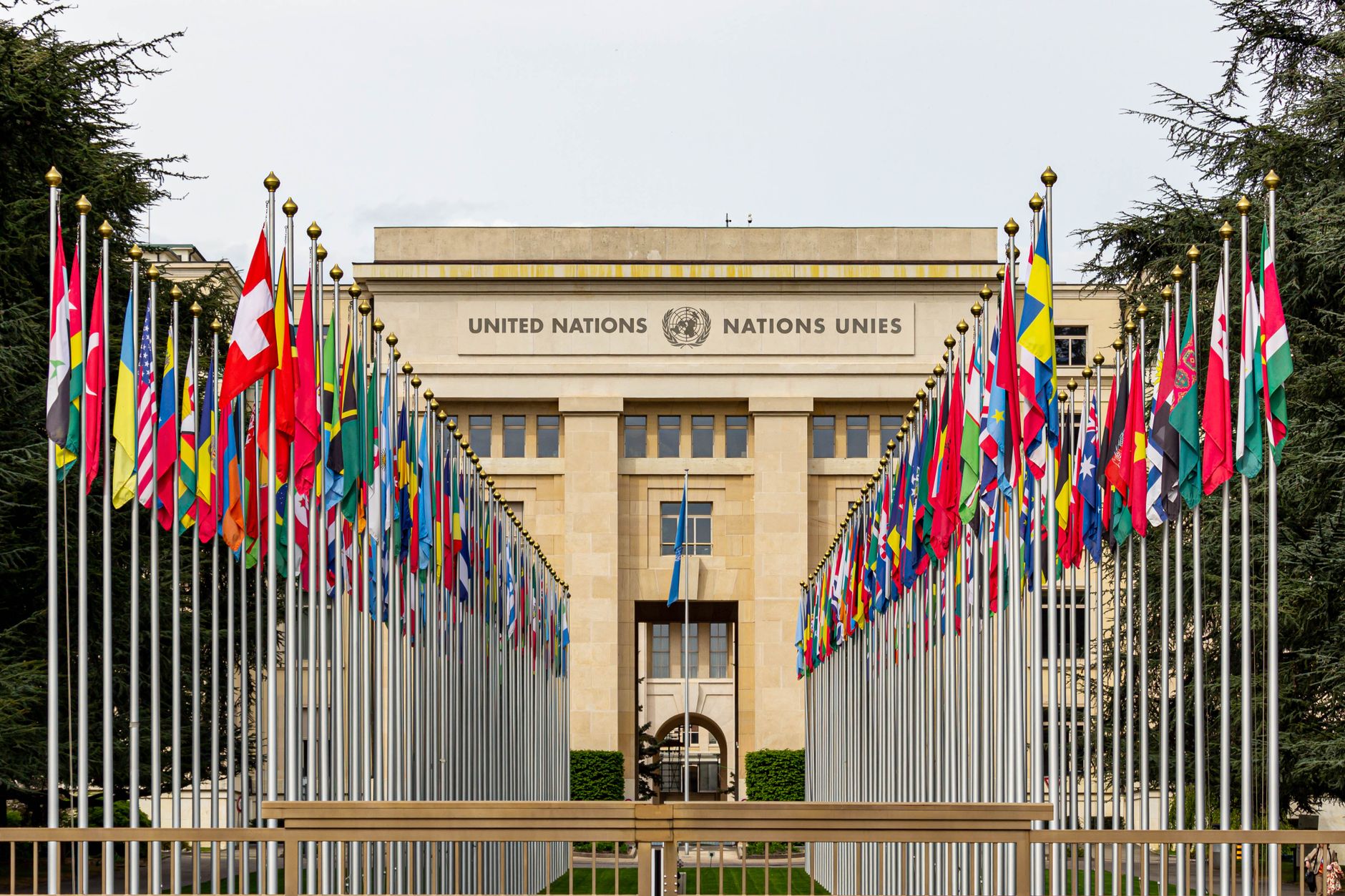
On Tuesday, India delivered a forceful rebuttal to the Organisation of Islamic Cooperation (OIC) after the inter‑governmental body issued comments on New Delhi’s recent operation against terrorist infrastructure in Pakistan and the region it administers as Pakistan‑occupied Jammu and Kashmir (PoK). The response was voiced by Bharatiya Janata Party (BJP) Member of Parliament Biplab Kumar Deb, who addressed the United Nations General Assembly’s Sixth Committee – the forum that handles legal issues related to international terrorism.
India’s statement at the UN Sixth Committee
Deb, a Lok Sabha representative from West Tripura, delivered India’s national statement on the committee’s agenda titled “Measures to Eliminate International Terrorism.” He was part of a delegation of fifteen Indian MPs who had arrived in New York for a week‑long UN familiarisation programme. In his remarks, Deb condemned the OIC chair’s remarks as a failure to distinguish between “fact and fiction” and between the victim and the perpetrator of terror.
“India has the full right to protect its people against terrorism on the border coming from Pakistan,” Deb asserted. He warned that any involvement in terrorism would not be tolerated, underscoring the principle that a state’s sovereign right to self‑defence extends to actions taken against terrorist networks operating from across its western frontier.
Drawing on what he described as “bitter experience,” the MP portrayed terrorism not as a theoretical threat but as a “persistent and daily reality” that undermines international peace, economic progress, democratic institutions and human rights. He stressed that the most fundamental right under threat is the right to life, a right he said is assaulted whenever civilians are deliberately targeted.
Context of the cross‑border threat
Deb highlighted the Pahalgam terror attack of April the previous year as a stark illustration of the human cost of cross‑border terrorism. The assault claimed the lives of 26 tourists and, according to Deb, was a “calculated assault on our sovereignty, planned and executed by networks that continue to enjoy state patronage, safe havens, and material and logistical support from across our western border.” He linked the attack directly to the infrastructure that New Delhi targeted in its recent strike.
He further framed terrorism as antithetical to United Nations values, stating that there is “no distinction between good and bad terrorism” and labeling terrorist attacks as crimes against humanity. Citing Prime Minister Narendra Modi, Deb reiterated that even a single attack or loss of life is “one too many.”
Beyond the immediate security concerns, Deb rejected what he called the OIC’s “unwarranted reference” to the Union Territory of Jammu and Kashmir. He urged the OIC chair to focus instead on what India describes as Pakistan’s illegal occupation, specifically naming the town of Rawalakot. According to Deb, Rawalakot is a site where “wanton killings, brutal violence and the denial of basic rights” are evident, and he accused the OIC of willful blindness that reflects “bigotry and intolerance.”
The OIC’s statement had been delivered on behalf of the group by Saudi Arabia at the same UNGA Sixth Committee session. The Saudi‑made remarks included references to the Union Territory of Jammu & Kashmir, prompting India’s sharp criticism.
Deb also referenced ongoing unrest in the PoK region, noting that protests have persisted for several months over twelve contested refugee seats. He mentioned a security‑force crackdown and allegations of electoral rigging in the recent legislative‑assembly elections, although he did not provide specific figures or outcomes.
In concluding his address, Deb reiterated that India’s actions are measured, focused, and rooted in the need to protect its citizens from a threat that he described as both “persistent” and “daily.” He called on the international community to recognise the legitimacy of India’s right to act against terrorist infrastructure that operates from across the border, and to refrain from equating the victim state with the perpetrators of terror.
The exchange at the UN Sixth Committee reflects a broader diplomatic tussle over the narrative surrounding cross‑border terrorism, the status of Jammu and Kashmir, and the role of multilateral bodies in addressing security challenges that straddle contested borders.






Be First to Comment