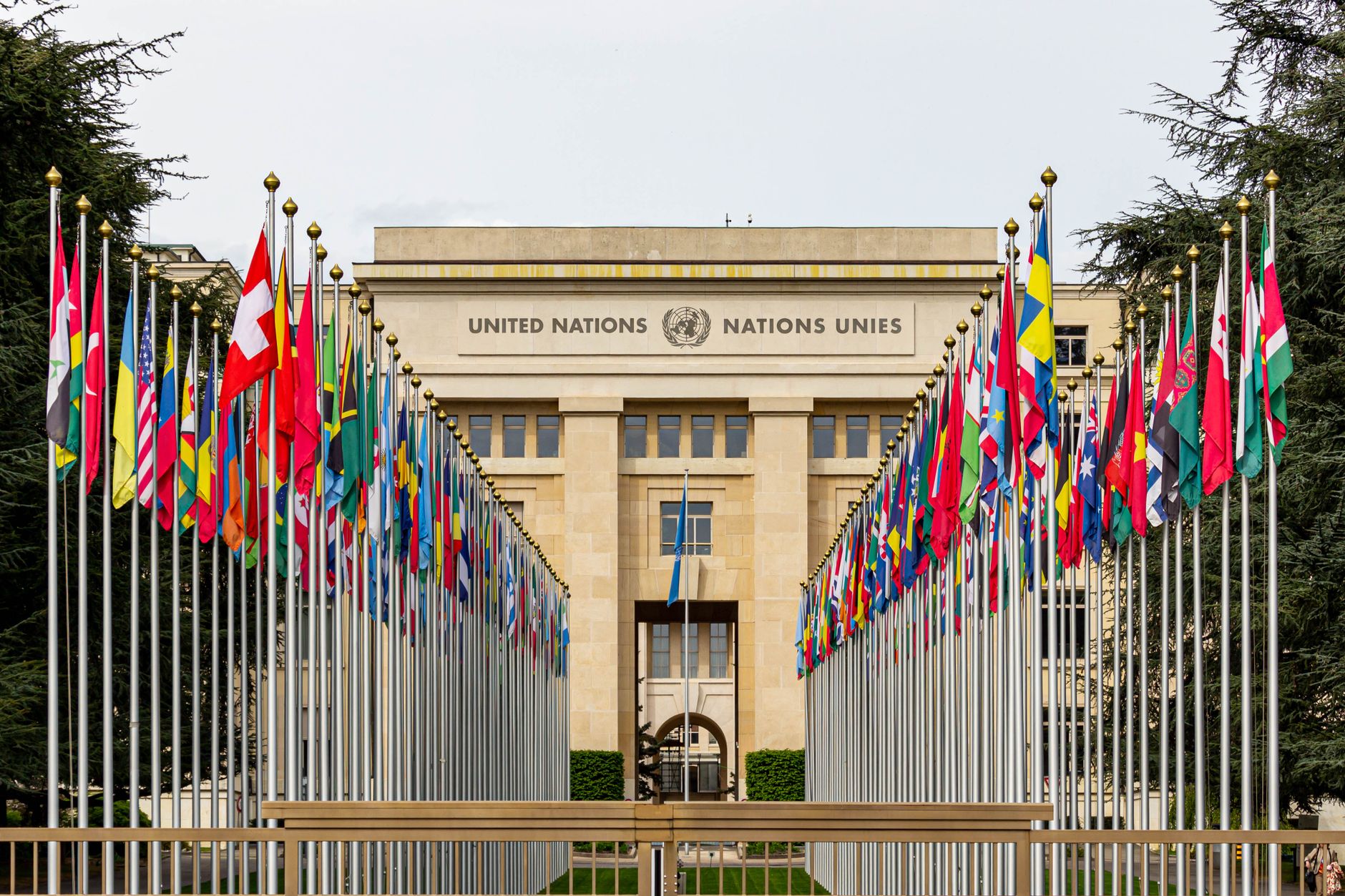
New Delhi used the United Nations platform on Wednesday to turn Pakistan’s own statements against it, arguing that terror networks once nurtured by Islamabad have begun to menace the country itself. India’s first secretary to the UN, Raghoo Puri, addressed the General Assembly’s Sixth Committee – the body that deals with legal affairs – and urged the international community to take firmer action against states accused of sponsoring terrorism.
India’s UN Remarks
Puri opened his remarks by noting that Pakistan has long portrayed itself both as a frontline state in the fight against terrorism and as a victim of cross‑border attacks. He said that narrative masks a “Frankenstein’s monster” the Pakistani state created, a monster that has now moved from wreaking havoc in neighbouring countries to doing the same inside Pakistan’s own borders.
“You cannot run with the hares and hunt with the hounds,” Puri warned, emphasizing that reality does not work that way. He was responding to remarks made earlier in the session by Pakistan’s deputy permanent representative, Usman Jadoon, who had launched an attack on India during the proceedings.
Puri cited a recent statement by the chief minister of Pakistan’s Punjab province, Maryam Nawaz, who told reporters in Lahore that the greatest threat to her province of 130 million people comes not from neighbouring countries but from neighbouring Pakistani provinces. The Indian diplomat also recalled an interview given by Maryam Nawaz’s father, former prime minister Nawaz Sharif, to the newspaper Dawn in 2018. In that interview Sharif said, “Militant organisations are active. Call them non‑state actors; should we allow them to cross the border and kill 150 people in Mumbai?” Puri did not name either Maryam Nawaz or Nawaz Sharif while making his remarks, but he used their comments to illustrate what he described as Pakistan’s own acknowledgment of an internal terror threat.
Pakistan’s Internal Threats Highlighted
The Indian delegation also addressed Pakistan’s claims about the outcome of India’s counter‑terror operation, dubbed Operation Sindoor, which was launched after the Pahalgam attack on tourists. Puri dismissed Pakistan’s portrayal of “bombed‑out airfields and cratered runways” as a victory, calling it “welcome to enjoy” for those who spread false claims. He accused Islamabad of a broader campaign of misinformation and psychological warfare, saying the Pakistani representatives’ “desperation to falsely tout the Pakistani military’s narrative” was consistent with a long‑running pattern.
“Pakistan believes in the circular economy of words and narratives,” Puri said, adding that if the effort were directed at countering terrorism rather than narrative building, “the world would have been a better place.” He referred to Pakistan’s political system as a “Form 47 government,” alluding to alleged manipulation of the electoral process.
Addressing minority‑rights claims, Puri argued that the victims of the Pahalgam attack were asked about their religion, not their political orientation, and that it was “deeply ironic” for Pakistan to speak of combating religious hatred while allowing the conditions that enable it to thrive, especially by fostering cross‑border terrorism.
The Indian envoy also raised the issue of Jaish‑e‑Mohammed chief Masood Azhar, a UN‑listed terrorist. Pakistan had recently increased the reward for information leading to Azhar’s arrest from 50 lakh to 70 lakh rupees. Puri said Pakistan “glosses over its state support for terrorism” by announcing such rewards while the media can still reach Azhar for statements about Operation Sindoor, suggesting the Pakistani state knows his whereabouts. He reminded the audience that a few months earlier Pakistani representatives had called Jaish‑e‑Mohammed a “defunct organisation,” a claim India says has been disproven.
Calls for International Action
Linking past terrorist incidents to the present debate, Puri invoked the 2001 9/11 attacks, noting that al‑Qaeda leader Osama bin Laden was found in Abbottabad, Pakistan, years after the attacks. He also recalled the 2008 Mumbai attacks – known as 26/11 – in which 166 people were killed, and the recent Pahalgam attack, urging that “the world has not forgotten” these events.
Turning to financial aspects of terrorism, Puri warned that Pakistan’s record on terror financing remains a concern for the global community. He referenced the upcoming plenary meeting of the Financial Action Task Force (FATF) in Paris, scheduled for 26 to 30 October, and said the world is aware of Pakistan’s financial support to terrorism.
In concluding remarks, Puri stressed that allowing terrorist groups to operate under state protection undermines international commitments and denies justice to victims. He called on the international community to take stronger action against states that sponsor terrorism, framing Pakistan’s alleged behavior as a breach of global norms.
The speech reflected a broader pattern of diplomatic exchanges between India and Pakistan at multilateral forums, where each side seeks to highlight the other’s alleged support for extremist groups. While Pakistan’s deputy permanent representative, Usman Jadoon, launched a rebuttal earlier in the session, India’s delegation left the floor with a detailed catalogue of accusations, historical references, and a clear appeal for heightened international scrutiny of Pakistan’s counter‑terrorism record.






Be First to Comment