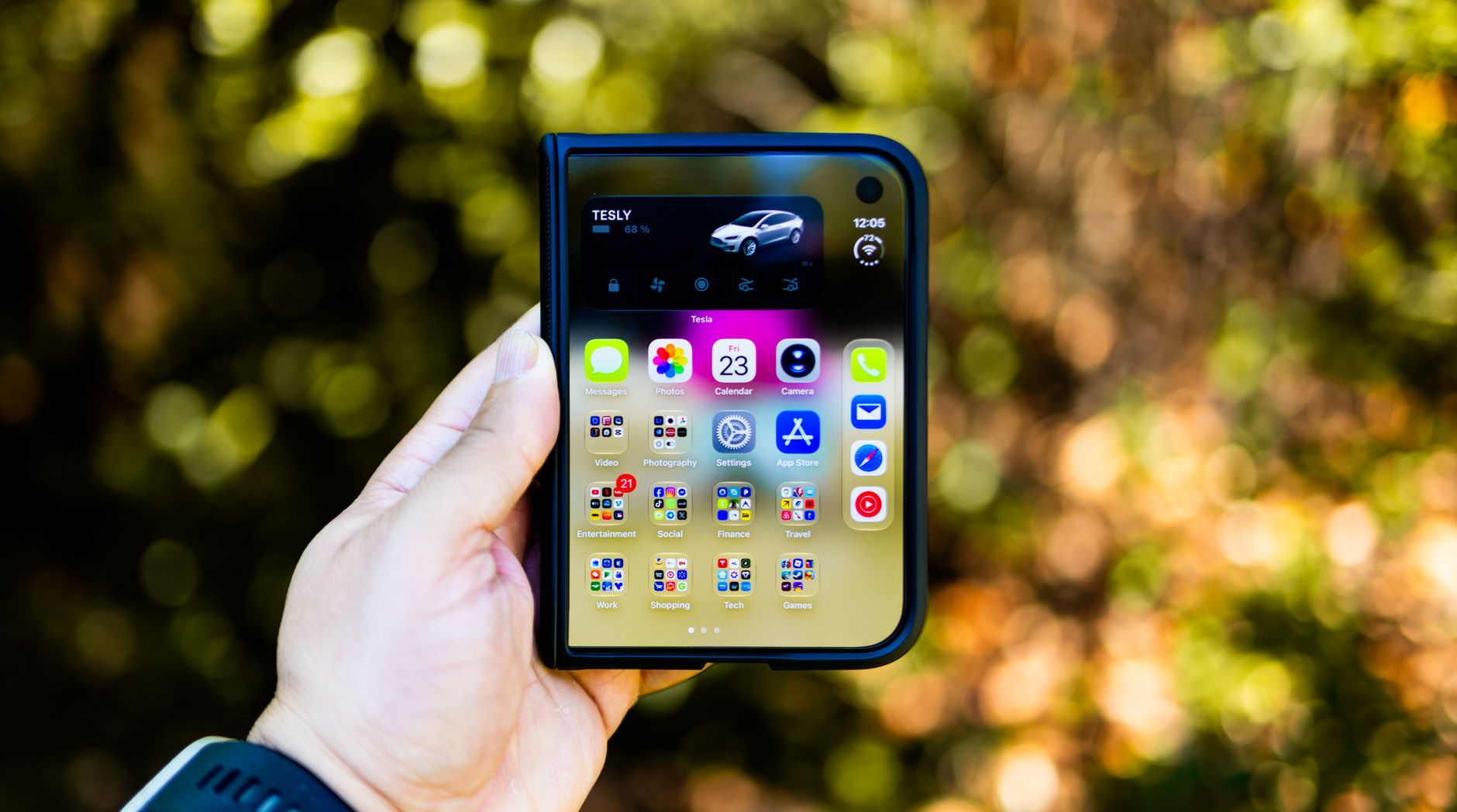
Apple’s first foldable smartphone, the iPhone Duo, has begun to attract attention for a specific durability issue only days after it entered the market. Users posting on social platforms reported that a line of cracks is appearing along the central crease of the display, the area where the screen folds. In response, Apple confirmed on Monday that a subset of Duo devices are experiencing screen problems and announced that it will replace units that are found to be defective.
Apple’s response and replacement plan
The company’s acknowledgment came after a wave of online complaints highlighted the pattern of cracks forming precisely where the hinge meets the display. Apple’s statement indicated that the issue is limited to “some iPhone Duo devices” and that the manufacturer will provide replacements for phones that exhibit the fault. No specific numbers or timelines were disclosed, but the public commitment to replace affected units signals that Apple is treating the matter as a warranty‑eligible defect rather than a user‑error scenario.
While Apple’s official communication was brief, it underscored the importance of early detection. The company’s approach mirrors past strategies for hardware problems, wherein a replacement rather than a repair is offered when the defect is tied to the device’s core design. Consumers who suspect their Duo is impacted are advised to contact Apple support for assessment and potential exchange.
Technical insights from iFixit’s teardown
Independent repair organization iFixit released a detailed teardown of the iPhone Duo shortly after the reports surfaced. The analysis focused on the phone’s hinge mechanism, a critical component that enables the device to fold while maintaining a seamless display. iFixit’s engineers noted that the hinge’s construction could be a contributing factor to the observed screen cracks, although the report did not definitively link the design to the failures.
Despite the crack issue, iFixit described the Duo as the most repairable foldable phone it has examined to date. The teardown demonstrated that, in theory, the device can be disassembled for component replacement, but iFixit cautioned that the process remains “difficult.” The organization highlighted the complexity of accessing the inner display and hinge, suggesting that most users would still need professional service to address any structural problems.
Expert advice on warning signs and everyday precautions
Emily Stallings, co‑founder of phone‑accessory brand Casely, emphasized that foldable phone owners should be vigilant for subtle changes in device behavior. According to Stallings, sudden alterations in how the phone opens, closes, or displays content can be early indicators of a larger issue.
Stallings outlined five specific warning signs that could signal emerging screen or hinge problems:
- Stiff or resistant hinge: A foldable hinge is expected to move smoothly. If it suddenly feels tighter, catches at a particular point, or requires noticeably more force, the mechanism may be compromised.
- Unusual cracking or popping sounds: Several iPhone Duo owners have reported hearing a sharp noise while unfolding their phones, followed by visible damage to the screen. While not every sound points to a defect, a sudden crack, pop, or crunch—especially when paired with resistance—should not be ignored.
- Lines, spots or other display abnormalities: Users have observed bright lines, white patches, flickering areas, or sections of the screen that stop responding near the folding zone. These visual anomalies can indicate stress on the display layers.
- Changes in opening or closing behavior: If the phone no longer opens fully, appears misaligned, or leaves an unexpected gap when closed, the hinge may be experiencing mechanical trouble.
- Unexpected gaps or misalignment: A phone that does not sit flush when closed could be suffering from hinge wear or internal pressure.
Beyond detection, Stallings offered practical steps to reduce the risk of damage. She advised users to inspect the inner display before folding the device shut, ensuring that no small objects are trapped between the two halves. Sand, dust, and other debris were also flagged as potential hazards that can interfere with hinge movement.
Because foldable displays are built to bend rather than remain rigid, applying excessive pressure to the inner screen can accelerate wear. Stallings recommended that owners avoid pressing hard on the display and choose accessories that are specifically marketed as compatible with foldable phones.
Finally, she urged users to cease forcing a hinge that feels abnormal. If a phone exhibits any of the warning signs—stiffness, strange noises, visual defects—continuing to open or close it could exacerbate the underlying problem. Instead, she suggested seeking professional assessment, whether through Apple’s support channels or a qualified repair service.
The convergence of Apple’s acknowledgment, iFixit’s technical breakdown, and expert guidance paints a clear picture for consumers: early recognition of mechanical or visual irregularities can prevent a minor issue from turning into a costly replacement. As the iPhone Duo remains a flagship product in the emerging foldable market, both the manufacturer and users appear poised to address durability concerns head‑on.






Be First to Comment