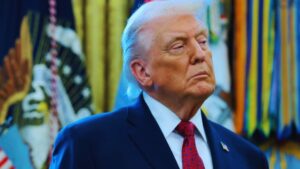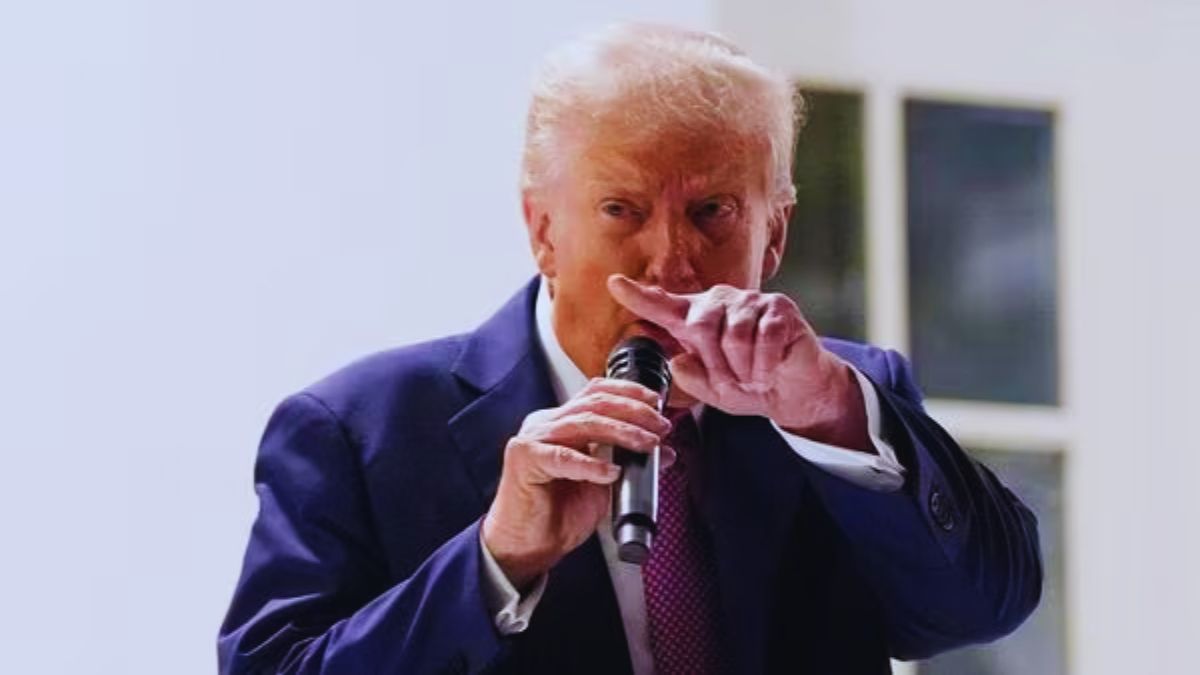
U.S. President Donald Trump has once again voiced concerns over India’s oil imports from Russia while clarifying his earlier remarks about losing India and Russia to China, stating that he does not believe such a shift has taken place.
Speaking to ANI during a media interaction at the White House, Trump expressed disappointment over India’s continued purchase of Russian crude, highlighting that Washington has imposed a hefty 50% tariff on Indian goods, including a 25% penalty related to Russian oil imports. He emphasized his personal rapport with Prime Minister Narendra Modi, recalling their recent joint press conference at the Rose Garden, but reiterated his disapproval of India’s energy trade with Moscow amid the Ukraine conflict.
Trump’s clarification followed his own Truth Social post in which he had suggested that “India and Russia have been lost to China,” a statement accompanied by an old photo featuring PM Modi, Russian President Vladimir Putin, and Chinese President Xi Jinping during a Shanghai Cooperation Organization (SCO) summit in Tianjin. The post drew global attention given the visible camaraderie among the three leaders, sparking speculation about shifting global alliances.
From Losing India to China to a U-turn
While Trump took a U-turn on those remarks, he insisted that the United States remains committed to its strategic partnership with India, despite the challenges posed by tariffs and trade disputes. Adding to the administration’s criticism, Trump’s Senior Counsellor for Trade and Manufacturing, Peter Navarro, accused India of profiteering from discounted Russian oil and argued that Indian tariffs were costing American jobs. White House Economic Advisor Kevin Hassett also noted the administration’s disappointment, stressing that India’s oil purchases were indirectly funding Russia’s war in Ukraine, though he expressed hope for positive developments in U.S.-India relations through ongoing trade engagement.
MEA Declines Direct Comment on U.S. Statements
The Ministry of External Affairs (MEA), however, declined to comment directly on Trump’s remarks involving India, Russia, and China, reiterating instead that India’s bilateral ties with any country, including Russia, stand on their own merit and are not shaped by third-party pressures. On trade disputes, the MEA confirmed that India continues to remain engaged with the U.S. to resolve issues constructively, underscoring that both nations value their partnership across strategic, defense, and economic domains.
Despite the imposition of high tariffs, Trump maintained that he shares a strong working relationship with PM Modi, suggesting that the disagreements over Russian oil may not derail long-term cooperation. Analysts note that Washington’s concern stems from India’s position as one of the largest buyers of discounted Russian crude since the Ukraine war began, a factor that complicates U.S. efforts to isolate Moscow economically.
As the U.S. elections draw closer, Trump’s mixed messaging—first suggesting a drift of India and Russia toward China and then walking it back—reflects both domestic political posturing and the delicate balancing act in America’s foreign policy. For now, India continues to navigate its complex global partnerships, seeking to strengthen ties with Washington while maintaining its strategic autonomy with Moscow and engaging with multilateral platforms like the SCO (Shanghai Cooperation Organization) and BRICS (Brazil, Russia, India, China, South Africa).

Helene Elliott is the Lead Science & Space Reporter at News Raise. She reports on aerospace missions, astrophysics discoveries, quantum research, and environmental technology.