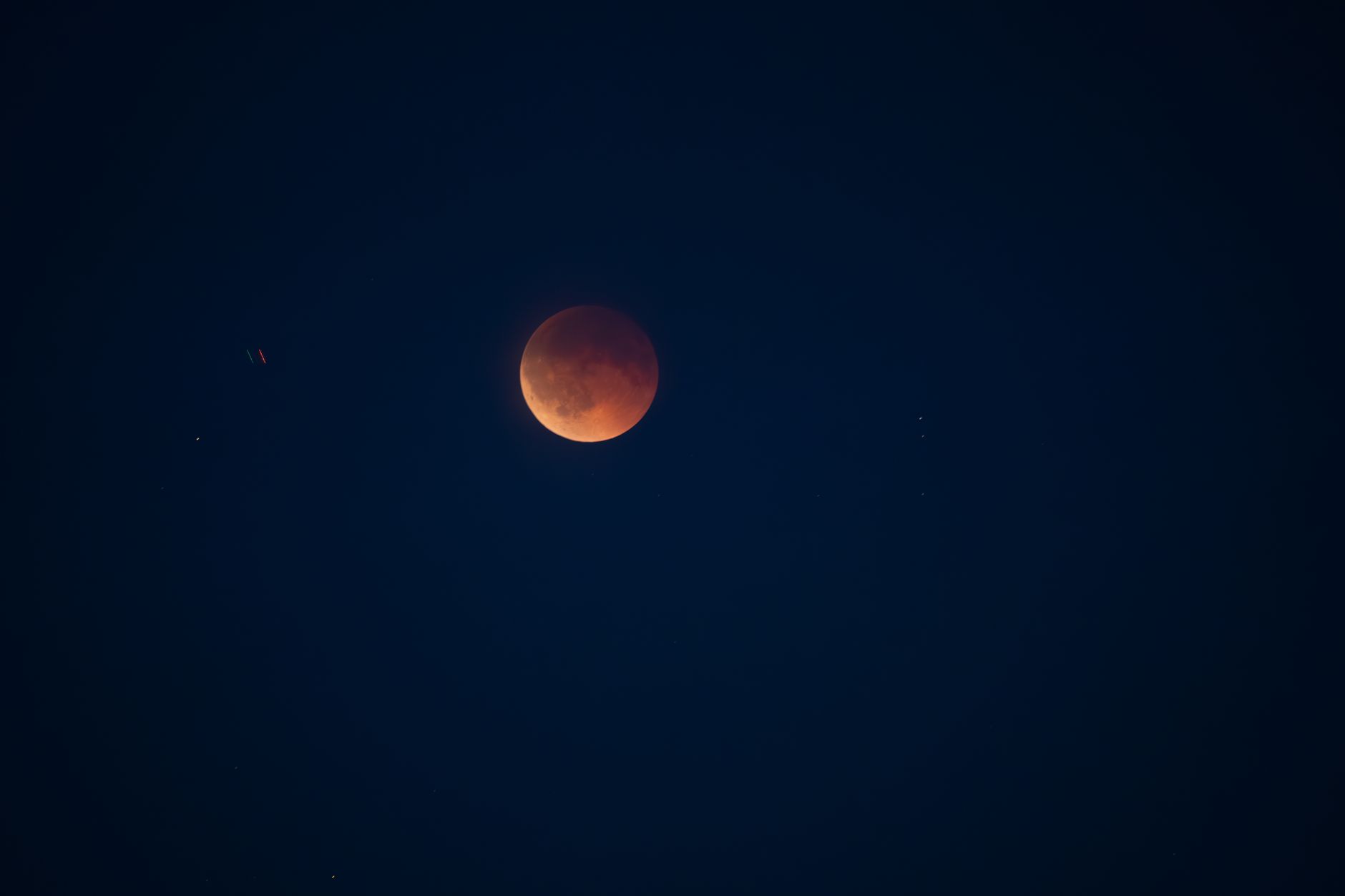
The night of Aug. 27‑28 brought a deep partial lunar eclipse that plunged 96.2% of the Moon into Earth’s umbral shadow. According to Time and Date, the eclipse reached its maximum at 12:12 a.m. EDT (04:12 GMT), leaving only a thin sliver of the lunar surface directly illuminated by the Sun. While the event fell short of a total eclipse, the extensive coverage produced a coppery, “almost blood moon” hue that was visible to skywatchers across much of the world.
Timeline of the Eclipse
The partial phase began at 10:33 p.m. EDT on Aug. 27 (02:33 GMT on Aug. 28) when the edge of Earth’s dark central shadow, the umbra, first touched the Moon. The deepest point arrived just after midnight, and the partial coverage continued until 1:51 a.m. EDT (05:51 GMT), when the last of the Moon emerged from the umbra. Although the partial phase ended, the Moon remained within Earth’s fainter penumbral shadow until 3:01 a.m. EDT (07:01 GMT), marking the official conclusion of the eclipse.
With 96.2% coverage, this eclipse was the deepest partial lunar eclipse visible anywhere on Earth until Dec. 31, 2028, making it a noteworthy event for amateur and professional astronomers alike.
Global Observations and Photographs
Enthusiasts captured striking images from several continents. In Phoenix, Arizona, photographer Kohinoor Kar documented the Moon’s transition from a bright full Sturgeon Moon to the deep partial eclipse, noting clear skies that allowed a clean view of Earth’s shadow sweeping across the lunar surface.
In Europe, Giuseppe Pappa photographed the eclipse from Pedara, Sicily, Italy, producing a composite that shows the umbra’s progression on Aug. 28. His images were taken with a Canon 760D camera paired with a 300 mm lens.
North Carolina’s Kevin McCarthy faced a stormy night but managed to capture a close‑up of the near‑total eclipse after clouds briefly cleared at the moment of maximum coverage. He told Space.com, “With thunderstorms in the area throughout the night, I was worried I may miss the chance to capture this event… at the last minute, as the maximum shadow coverage approached, the clouds parted long enough for me to get the shot.”
Over Lake Ohrid in North Macedonia, Dimitar Birachoski photographed the partially eclipsed Moon as it sank toward the horizon. Using a Nikon Z6 III with a Sigma 120‑400 mm lens and a DJI Mavic 4 Pro drone, he captured the Moon against a backdrop of Saharan dust and approaching sunrise. He remarked, “Even if it was 5 a.m., I stayed, photographed and created some good photos… feeling tired, and also a little bit sad because we were unable to see the ‘red phase.’”
Viewing Conditions and Aftermath
For observers in Europe, the Moon set in the western sky as dawn brightened, offering a final glimpse of the partially eclipsed disc. In contrast, the Moon remained above the horizon across North and South America, allowing viewers there to watch the umbral shadow retreat.
Following the event, the live blog invited readers to submit their own photos and comments to spacephotos@space.com. The coverage concluded with a note that the eclipse had lasted five hours and thirty‑eight minutes, and that the penumbral phase officially ended at 3:01 a.m. EDT.
While the deep partial eclipse did not achieve full totality, its near‑total coverage, vivid coloration, and global participation underscored the enduring appeal of lunar events for both casual observers and dedicated astronomers.

Norman Pearlstine is the Executive Editor and Co-Founder at News Raise. With over two decades of experience across financial journalism, corporate governance, and market analysis, Norman leads the editorial direction and ensures strict adherence to journalistic accuracy and ethics.