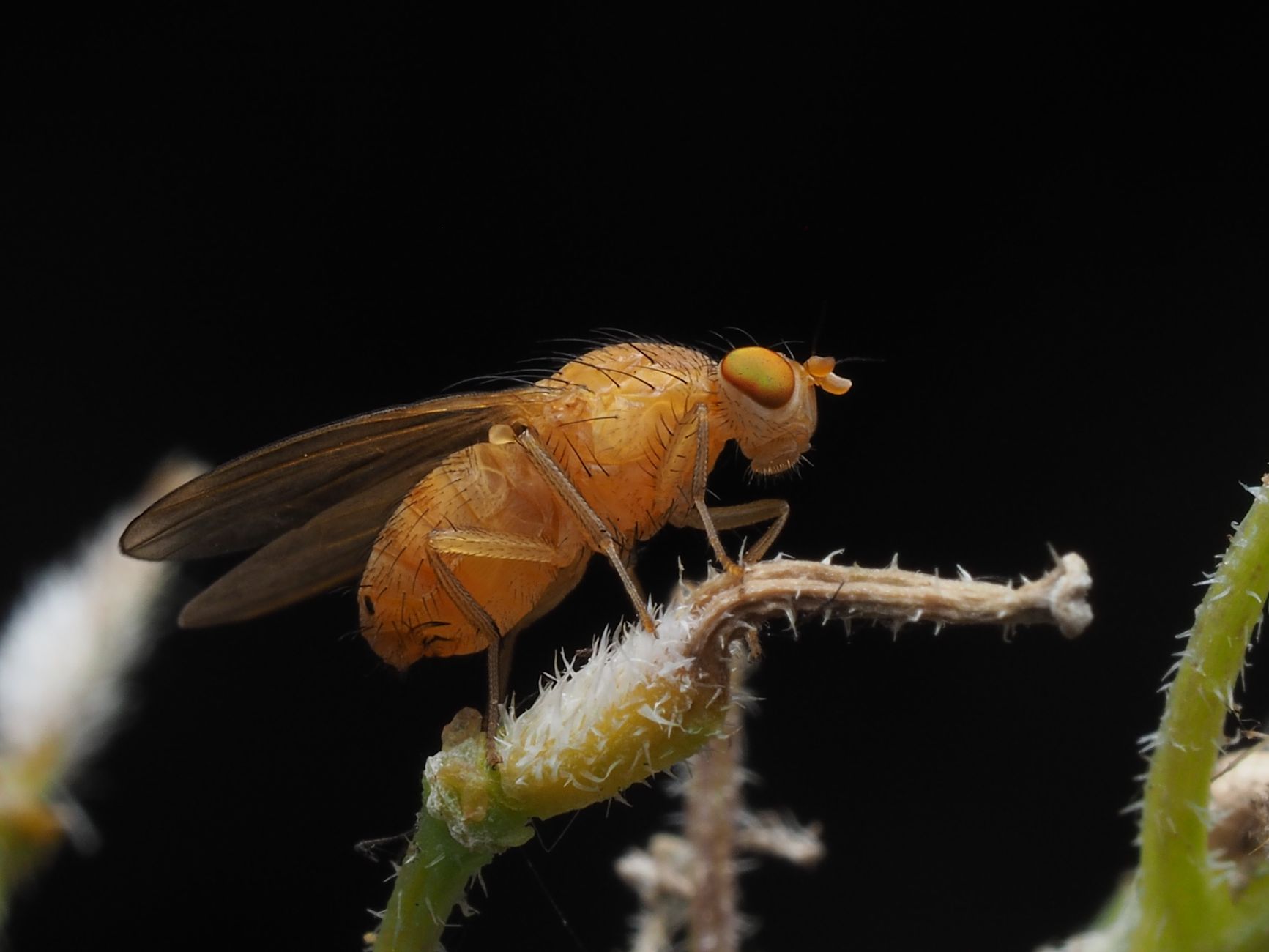
A comprehensive wiring diagram of the male fruit fly (Drosophila melanogaster) nervous system has been released, documenting more than 166,000 neurons across the brain and its equivalent of a spinal cord. The map, published in the journals Cell and Current Biology on September 3, follows a 2024 female fruit fly connectome that covered roughly 140,000 neurons. Together, the two datasets provide the first complete neuronal atlases for both sexes of an animal with complex social behaviors.
Map Details and Significance
Co‑author Gerry Rubin, a senior group leader at the Howard Hughes Medical Institute’s Janelia Research Campus, emphasized that the paired maps allow scientists to pinpoint neuronal differences that may underlie distinct male and female behaviors. “It is the first time we can compare both sexes of an animal with complex social behavior,” Rubin said, noting that researchers can now target specific neurons responsible for sex‑specific actions such as courtship or aggression.
The project was led by Carlos Ribeiro, a principal investigator at the Champalimaud Foundation in Lisbon, whose team contributed to the reconstruction of the male nervous system. Ribeiro highlighted the efficiency of the fly nervous system, stating, “The fly nervous system performs remarkably sophisticated computations with relatively few neurons and little energy, and its architecture could suggest principles for designing more efficient artificial systems.” He added that the work also serves as a technical roadmap for larger‑scale connectomics efforts in mammals.
Insights into Sex Differences and Sensory Processing
Alongside the connectome, three companion papers explored specific functional circuits. One study examined visual processing, revealing that more than half of the roughly 11,000 identified neuron types participate in vision, extending deep into the brain. Another paper identified a male‑specific network that appears to coordinate courtship and aggressive behaviors, such as lunging in males versus head‑butting in females.
Despite these sex‑specific networks, the researchers found that most sensory and motor circuits are shared between males and females. However, “specific switches within those circuits reroute signals to different destinations in the male and female brain,” a finding that the team plans to investigate further.
A third companion paper, led by Inês de Haan Vicente, a research technician in Ribeiro’s lab, focused on taste circuitry. The investigators mapped taste receptors located on the legs, wings, mouthparts, and throat, traced their connections to the brain, and linked them to downstream circuits governing swallowing and locomotion. Vicente described the map as a “hypothesis‑generation tool,” allowing researchers to query which sensory neurons connect to motor pathways and to identify intermediate neurons for experimental manipulation.
Future Directions
The Champalimaud team outlined near‑term goals to extend connectomic mapping to larval zebrafish (Danio rerio) and the adult danionin fish (Danionella). In the longer term, the researchers aim to apply insights from invertebrate and vertebrate models to unravel the neural basis of complex behaviors and, ultimately, to inform studies of neurological and psychiatric disorders in humans.
By delivering a complete neuronal blueprint for both male and female fruit flies, the new connectome establishes a foundation for systematic exploration of how brain architecture drives sex‑specific behavior, while also offering a scalable framework for future brain‑mapping initiatives across species.

Steve Lopez is a Senior Editorial Columnist and Health & Public Policy reporter for News Raise. Steve focuses on healthcare advancements, medical technologies, and public health policies.