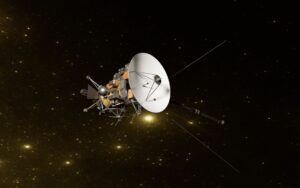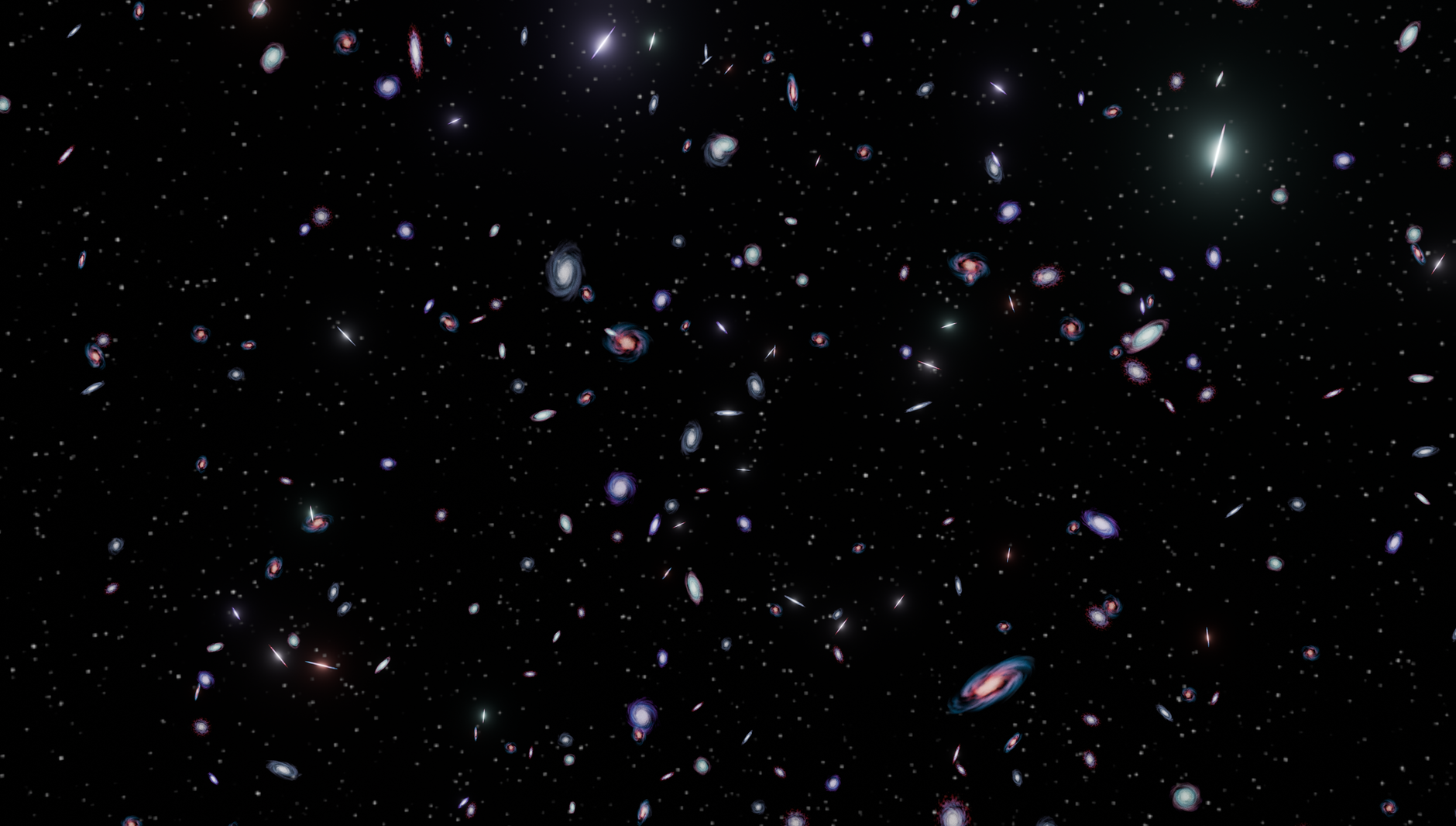
The European Space Agency’s Euclid mission, launched in July 2023, has delivered its first major data release, providing an unprecedented three‑dimensional view of the cosmos. The dataset, which covers roughly 14 % of the sky that Euclid will eventually map, contains more than 900 million identified galaxies and over 60 million potential quasars—extremely luminous objects powered by supermassive black holes at the centers of distant galaxies.
Scale of the Euclid Survey
Euclid’s ambition is to chart a third of the celestial sphere and trace more than 10 billion years of cosmic history. According to Professor Andy Taylor of the University of Edinburgh, who leads the United Kingdom’s ground segment for the mission, the survey combines the high‑resolution imaging traditionally associated with the Hubble Space Telescope with a sky coverage that is orders of magnitude larger. “The technological leap that’s Euclid is that we can keep that high resolution, but now we can basically map huge volumes of the sky, huge volumes of the universe,” Taylor said.
The newly released portion of the map therefore represents the “biggest high‑resolution image of the universe we’ve ever had,” according to Taylor. While earlier surveys have imaged large swaths of sky, none have matched Euclid’s blend of detail and breadth, a factor that researchers expect will enable new discoveries across many fields of astrophysics.
Gravitational Lensing Finds New Cases
Among the most striking findings in the release is a substantial increase in the number of strong gravitational‑lensing candidates. Strong lensing occurs when a massive foreground galaxy—often part of a galaxy cluster—lies directly along the line of sight to a more distant galaxy. The foreground mass bends and magnifies the background light, producing characteristic arcs or rings. Einstein’s theory of general relativity predicts this effect, and its strength is amplified by the presence of dark matter, which adds to the galaxy’s total mass.
Prior to Euclid, astronomers had catalogued roughly 1,000 strong‑lensing systems. Euclid’s data now includes about 15,000 probable cases, and mission planners estimate that up to 170,000 such systems could be identified by the mission’s conclusion. Professor Stephen Serjeant of the Open University highlighted the diagnostic power of these observations, noting that the way dark matter clusters within galaxies can be inferred from lensing patterns. “With strong gravitational lensing, you find out how the dark matter is clumping and that’s very diagnostic of the type of matter that it is,” he explained.
Implications for Dark Matter and Dark Energy
The Euclid mission’s overarching goal is to illuminate the nature of dark energy and dark matter, which together are thought to comprise about 95 % of the universe’s total mass‑energy budget. By mapping the distribution of galaxies and measuring both strong and weak gravitational lensing, scientists can construct a three‑dimensional map of dark matter across cosmic time. Weak lensing, a subtler distortion of background galaxies caused by foreground mass, will be featured in a subsequent data release expected next summer.
Taylor emphasized that the statistical patterns emerging from these lensing measurements will allow researchers to test competing theories of dark matter and dark energy. Different theoretical models predict slightly different distortion signatures on the sky, offering a way to discriminate between them. “Depending on the type of dark matter, the type of dark energy, we’re expecting to see slightly different patterns on the sky,” he said.
Beyond the immediate scientific returns, the sheer volume of Euclid data is reshaping how astronomers work. “No human eyeball is able to look at all of the Euclid data any more. It’s now too big,” Taylor observed, underscoring the need for advanced algorithms and machine‑learning tools to sift through the terabytes of information.
With the next release slated for the coming summer, Euclid is poised to deepen our understanding of the “dark universe” and likely reveal phenomena that have never been observed before.

Helene Elliott is the Lead Science & Space Reporter at News Raise. She reports on aerospace missions, astrophysics discoveries, quantum research, and environmental technology.