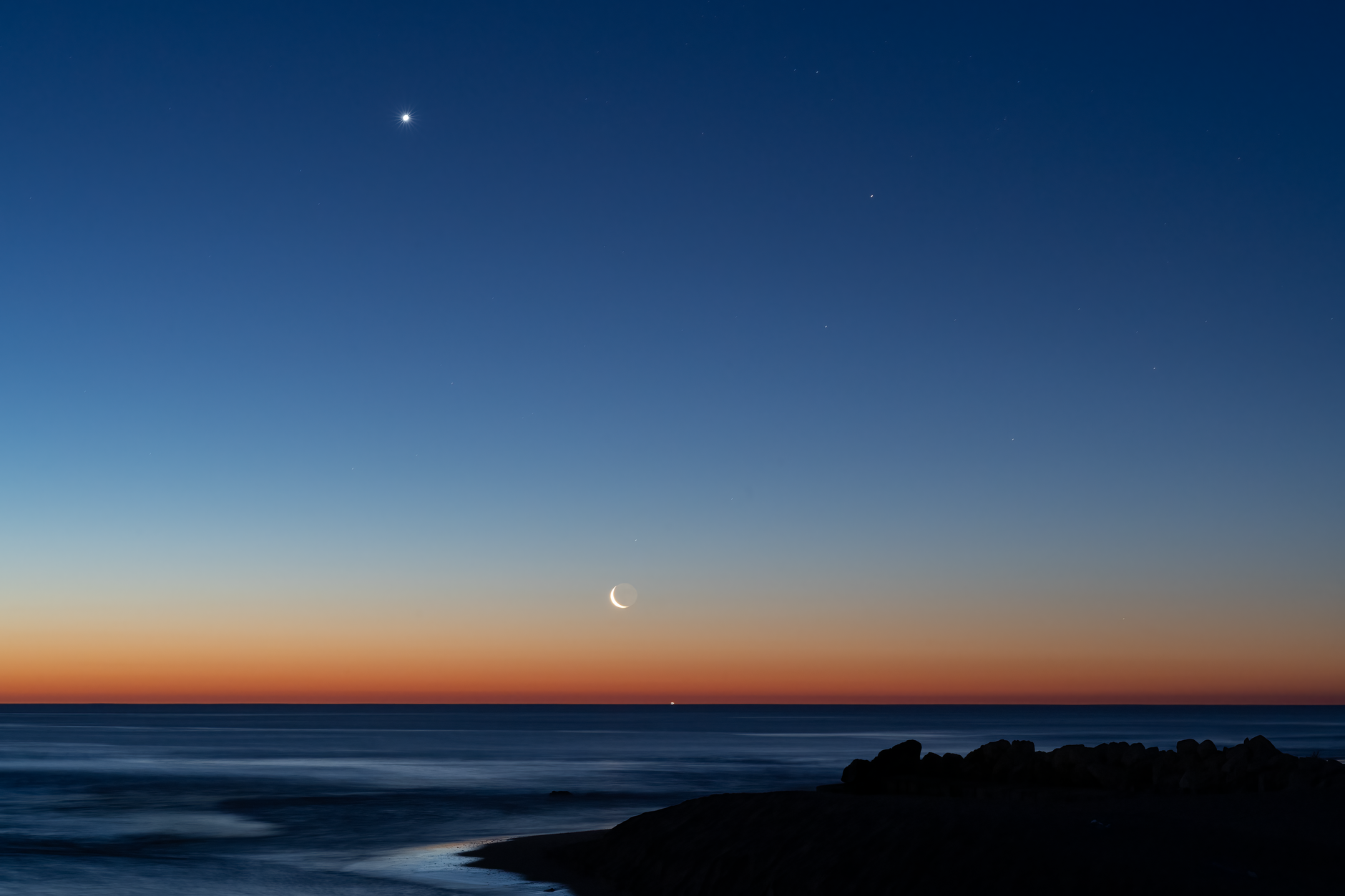
Stargazers across the United States will have a brief window on the night of November 15‑16 to witness Jupiter and Mars appear side by side in the constellation Leo. The two planets will be separated by just over one degree as they rise near the eastern horizon around midnight, creating a visual pairing that will not recur until July 2029.
When and Where to See the Appulse
The phenomenon, known to astronomers as an appulse, occurs when Mars catches up to Jupiter in its orbit, making the pair appear close from Earth’s perspective. This alignment happens roughly every two to two and a half years, but the specific November 2026 event is noteworthy because the planets will be positioned directly above the blue‑white star Regulus, which lies about 79 light‑years from Earth. While the apparent separation will be just over one degree, the true distance between the two worlds remains immense—approximately 368 million miles (592 million kilometers).
For observers, the best view will be after midnight when both planets have risen above the eastern horizon. The faint glow of Regulus will sit below the planetary duo, providing a useful reference point for locating the pair in the sky.
What to Expect Through a Telescope
Both Jupiter and Mars are classified as superior planets, meaning their orbits lie beyond Earth’s. As a result, each displays a fully illuminated disk when viewed through a telescope, unlike inner planets that show phases. A modest 6‑inch telescope is sufficient to reveal the distinct characteristics of each planet.
When aimed at Jupiter, observers can see the planet’s massive cloud bands and zones, which are formed by ammonia and water compounds moving in opposite directions within a hydrogen‑helium atmosphere. Powerful jet streams drive these bands, giving the gas giant its iconic striped appearance.
Turning the instrument to Mars will show a reddish‑ochre disk marked by darker surface features. NASA describes these features as areas where basaltic rock has been stripped of the iron‑rich dust that typically coats much of the Martian surface, exposing cleaner rock beneath.
Why the Alignment Matters
The November appulse offers more than a pretty picture; it provides a practical opportunity for both amateur and seasoned astronomers to compare two very different planetary environments in a single field of view. The event also serves as a reminder of the orbital dynamics that govern our solar system, illustrating how planetary motion can create fleeting visual coincidences for observers on Earth.
Photographers interested in capturing the moment are encouraged to consult observational guides that cover equipment selection, exposure settings, and composition tips for planetary imaging. Such resources often include recommendations for telescopes, cameras, and lenses suited to night‑sky work in 2026.
Enthusiasts who manage to photograph the pairing are invited to share their images with the broader community. Submissions, along with comments and photographer details, can be sent to the designated email address for potential publication.

Steve Lopez is a Senior Editorial Columnist and Health & Public Policy reporter for News Raise. Steve focuses on healthcare advancements, medical technologies, and public health policies.