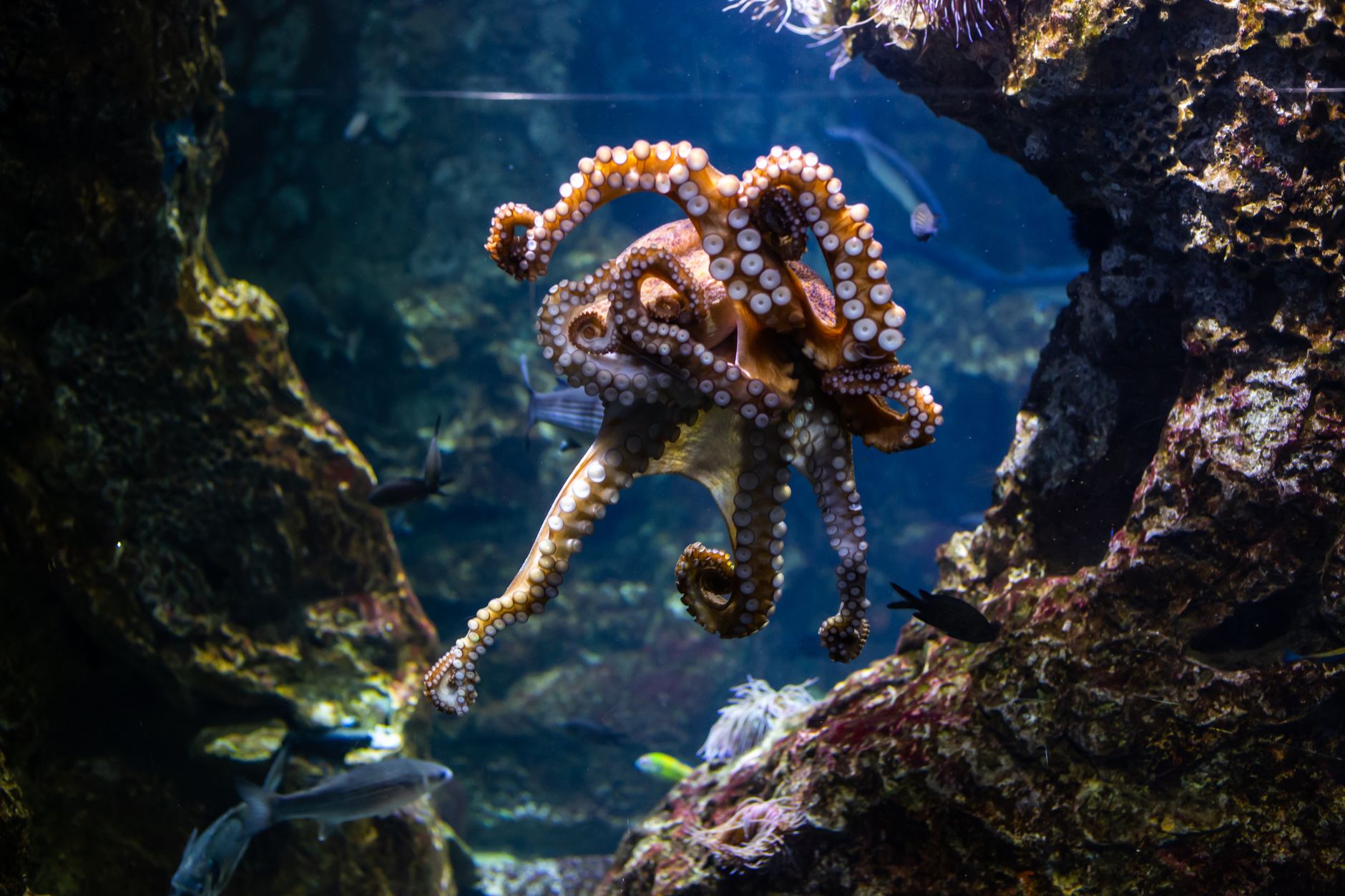
Octopuses are renowned for their ability to contort their bodies and pass through openings that appear far smaller than any rigid animal could manage. A new study published in the Journal of Experimental Biology examined how three sub‑adult common octopuses (Octopus vulgaris) achieve this feat, and the findings could inform the next generation of soft‑robotic machines.
Experimental approach and key observations
The research team, comprising cephalopod specialists from Italy and Austria and engineers from the National University of Singapore’s Advanced Robotics Centre, recorded high‑resolution video of the octopuses navigating holes of different diameters. By analysing the footage, the scientists broke the animals’ movements down into “motor primitives”—basic neural building blocks that can be recombined into complex actions. This concept, originally from neuroscience, is now also used in robotics to simplify control algorithms.
When the aperture was relatively large, the octopuses followed a consistent three‑step pattern: first, they probed the opening with one or more arms; second, they shifted additional arms through the gap; third, they used two already‑inside arms to anchor with their suckers and pull the mantle and remaining limbs through in a single squeeze. The probing arm was usually one of the front two on the left side, and up to five arms could be involved before the final squeeze.
Adaptations for tighter constraints
For smaller holes, the animals added an extra phase, creating a four‑step strategy. After probing and shifting arms, the octopus separated the squeezing of the remaining arms from the compression of the mantle, performing these actions sequentially rather than simultaneously. This finer control allowed the animals to pass through openings slightly smaller than the distance between their eyes—a measurement the researchers used as a proxy for the size of the central nervous system, which is encased in a stiff cartilage sheath.
The study highlighted the delicacy of moving the head and mantle, which house vital organs such as the three hearts, digestive system, and a donut‑shaped brain that wraps around the esophagus. Video frames showed the octopuses deliberately deforming their mantle muscles to thread through the narrow gaps without damage.
Implications for bio‑inspired robotics
Robotics engineers have long admired the octopus for its lack of a rigid skeleton, which permits extreme deformations and navigation of complex geometries. The authors note that current soft‑robotic platforms designed for search‑and‑rescue missions often adopt snake‑like forms to slip through confined spaces. An octopus‑inspired architecture could accommodate more sensors and manipulators, enhancing adaptability during missions where precise interaction with the environment is required.
By cataloguing the motor primitives underlying the octopus’s squeezing behavior, the researchers provide a blueprint for “embodied intelligence” in soft‑bodied machines—systems that rely on their physical form to simplify control. The paper concludes that a deeper understanding of these biological strategies offers valuable principles for designing robots capable of overcoming physical limitations in cluttered or unpredictable settings.
Overall, the work demonstrates how a creature’s evolutionary solutions to spatial constraints can translate into engineering innovations, reinforcing the octopus’s status as a compelling model for both biological study and the development of next‑generation soft robotics.

Steve Lopez is a Senior Editorial Columnist and Health & Public Policy reporter for News Raise. Steve focuses on healthcare advancements, medical technologies, and public health policies.