Astronomers have long struggled to see planets that orbit far brighter stars, because the glare can be up to 100,000 times stronger than the planet’s own light. A new computational approach, dubbed Physics‑based Learning for Imaging Planets (FLIP), has now allowed researchers to pull the giant exoplanet 51 Eridani b out of data collected by the James Webb Space Telescope (JWST), a planet that had previously remained invisible.
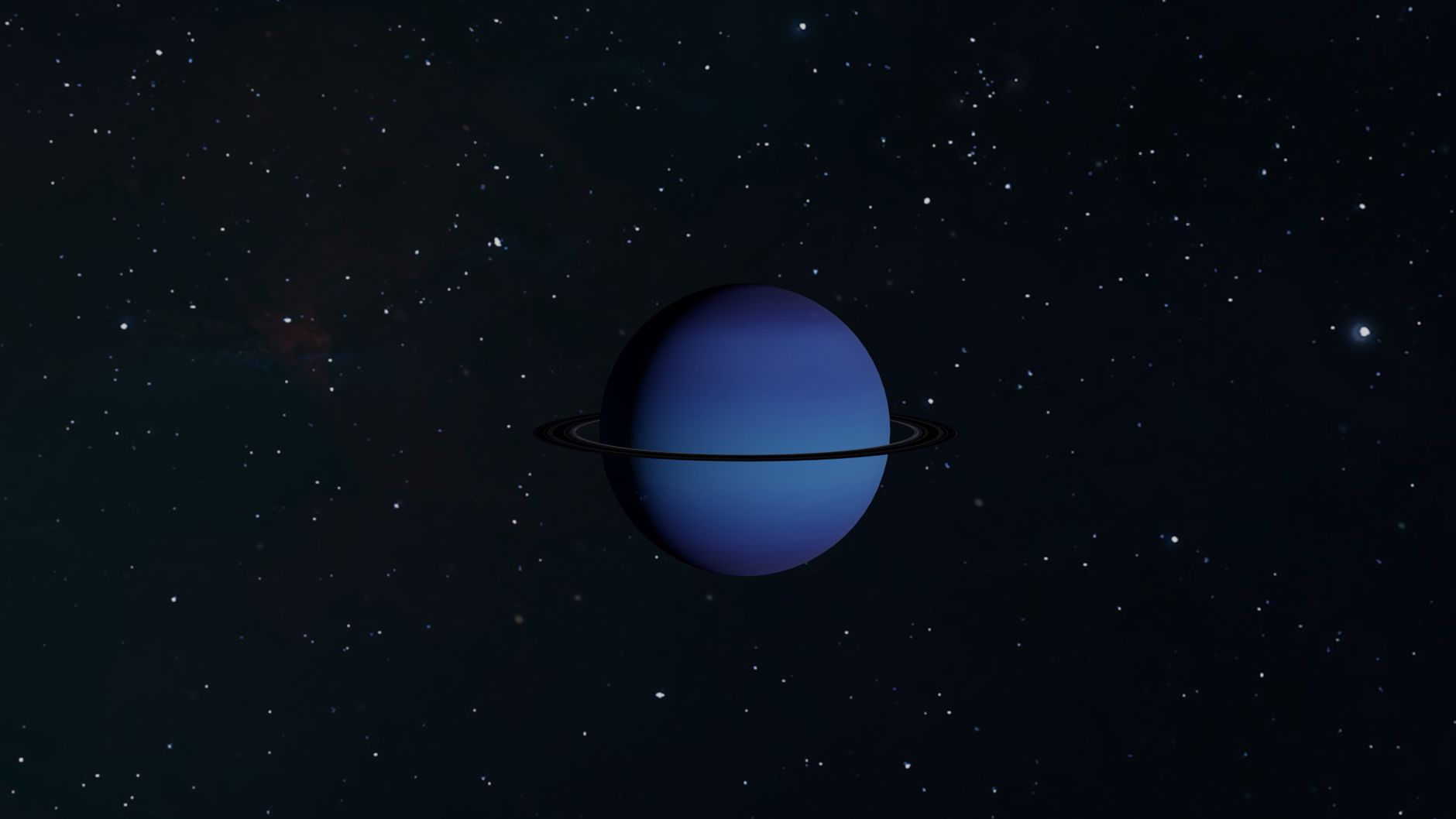
51 Eridani b is a gas giant roughly 11 times the mass of Jupiter and orbits a star located about 97 light‑years from Earth. The planet was first identified in 2015 using ground‑based telescopes, but when JWST observed the same system, the planet did not appear in the images. The missing signal was not a shortcoming of the telescope; rather, starlight from the host star, 51 Eridani A, continued to dominate the view even after the telescope’s coronagraph attempted to block it.
New image‑processing technique
Traditional methods rely on observing a reference star and subtracting its image from the target observation to cancel out unwanted glare. As Northwestern University astronomer Jason Wang explained, “For the past 20 years, astronomers have tackled this problem by observing a different star and using its image as a reference… Then, they subtract that reference image from the original observation to remove the unwanted glare to reveal faint planets that otherwise might be hidden.” However, even the most stable telescopes experience minute vibrations. JWST’s NIRCam instrument, kept cold by cryocoolers, suffers tiny mirror motions that scatter starlight and leave residual glare.
FLIP addresses this limitation by constructing a digital twin of the telescope—a virtual replica that simulates how light travels through the mirrors and reaches the detectors. The model is iteratively refined to match millions of tiny imperfections observed in the real instrument. Once aligned, the simulated starlight pattern can be subtracted from the actual image, dramatically reducing the remaining glare.
To test the method, the team re‑examined JWST data from two systems with known exoplanets—HIP 65426 and 51 Eridani—as well as a third system, TYC 5899, with no known planets. The FLIP technique outperformed conventional image‑processing approaches by factors ranging from two to fifteen, depending on the dataset. In the case of 51 Eridani, the planet emerged clearly from observations taken two years earlier, confirming Wang’s statement: “We showed that we can actually recover a planet that people previously couldn’t see.”
Implications for future exoplanet studies
The success of FLIP suggests that many existing JWST observations may contain hidden planets awaiting discovery with the right analysis tools. The research team hopes that other astronomers will adopt the technique to revisit archival data and uncover additional worlds that have been obscured by stellar glare.
Looking ahead, the method could prove valuable for NASA’s proposed Habitable Worlds Observatory, which aims to directly image Earth‑like planets around sun‑like stars. As team leader Rodrigo Ferrer‑Chavez noted, “We know of no planets around other stars that are like those in our own solar system. It’s not that they don’t exist. It’s that we cannot see them.” Improved processing methods such as FLIP could therefore expand the catalog of known planetary systems and deepen understanding of how planetary systems form and evolve.
The findings were published on November 4 in the journal Nature, marking a significant step forward in the quest to image distant worlds directly.

Helene Elliott is the Lead Science & Space Reporter at News Raise. She reports on aerospace missions, astrophysics discoveries, quantum research, and environmental technology.