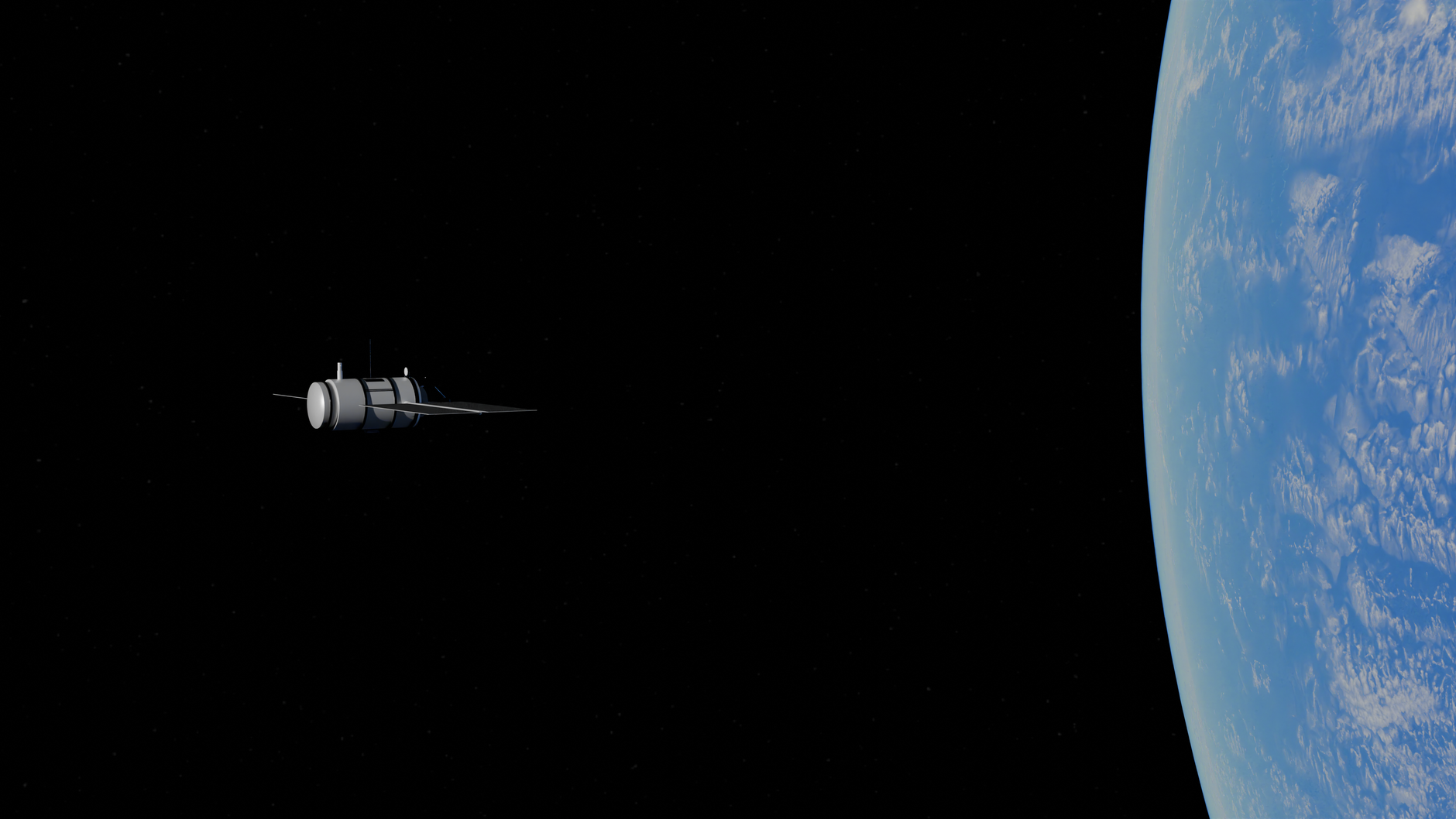
NASA’s twin Escape and Plasma Acceleration and Dynamics Explorers (ESCAPADE) spacecraft completed a maneuver that marks the first powered Earth flyby ever used by the agency to propel a probe toward Mars. The two probes fired their engines within Earth’s gravity well on Nov. 7 and Nov. 9, 2026, a maneuver that NASA officials said was performed flawlessly.
Why a powered flyby was needed
ESCAPADE was originally slated for launch in October 2024, a period when Earth and Mars were favorably aligned for a direct transfer. Delays with Blue Origin’s New Glenn launch vehicle pushed the launch to Nov. 2025, causing the mission to miss that optimal window. Rather than wait for the next alignment, mission planners designed a “loitering” orbit shaped like a kidney bean that would carry the spacecraft on a looping trajectory, bring them back to Earth in early Nov. 2026, and then use a powered gravity assist to reach Mars.
Rob Lillis, the mission’s principal investigator and a planetary‑space physicist at UC Berkeley, noted that no previous NASA mission has required such a maneuver because most Mars missions launch during a narrow alignment that occurs every 26 months. The ESCAPADE team therefore had to develop a new flight profile that combined a traditional gravity‑assist flyby with an engine burn to boost the spacecraft’s velocity.
Execution of the maneuver
According to Asal Naseri, acting associate flight director for NASA’s Heliophysics Division, the burns on Nov. 7 and Nov. 9 were the first instance of a powered Earth flyby used to send a spacecraft toward Mars, and both were executed without issue. “This is the first time NASA has used a powered Earth flyby to propel a spacecraft toward Mars, and we’ve now executed this maneuver twice, flawlessly, in just two days,” Naseri said in a statement.
Following the burns, only minor trajectory corrections are expected before the probes set a course for a September 2027 arrival at the Red Planet.
Science payload and unexpected discoveries
Each ESCAPADE probe, roughly the size of two refrigerators, carries three scientific instruments and a pair of cameras. The primary science goal is to study Mars’ unusual magnetic environment, which arises from interactions between solar‑wind particles and the planet’s thin atmosphere, as well as from localized magnetic crustal fields.
During the loitering phase, the twins provided a rare look at Earth’s magnetotail far beyond the region normally sampled by previous missions. For about ten days early in 2025, the spacecraft traversed the magnetotail at a distance of roughly 1.19 million miles (1.91 million km) from Earth, capturing magnetic field structures, plasma flows, and tail dynamics that have not been observed before. Lillis described the data as “unprecedented” and highlighted that it was the first simultaneous measurement of the distant tail by two spacecraft.
A second pass over the summer brought the probes closer to Earth while the Moon crossed the magnetotail. This alignment allowed ESCAPADE to coordinate observations with the twin ARTEMIS‑THEMIS spacecraft orbiting the Moon, providing four‑point measurements of the tail’s magnetic field lines and plasma behavior. Lillis emphasized that such multi‑point measurements are essential because the magnetotail’s structure cannot be inferred remotely.
Beyond the immediate mission objectives, the ESCAPADE flyby demonstrates a new operational capability for deep‑space missions that miss traditional launch windows. By using a powered Earth gravity assist, NASA can now consider more flexible trajectories for future planetary exploration.
With the engine burns completed and the spacecraft on a clear path, the ESCAPADE team looks ahead to the September 2027 Mars encounter, where the probes will begin their primary investigation of the Martian magnetic environment.

Steve Lopez is a Senior Editorial Columnist and Health & Public Policy reporter for News Raise. Steve focuses on healthcare advancements, medical technologies, and public health policies.