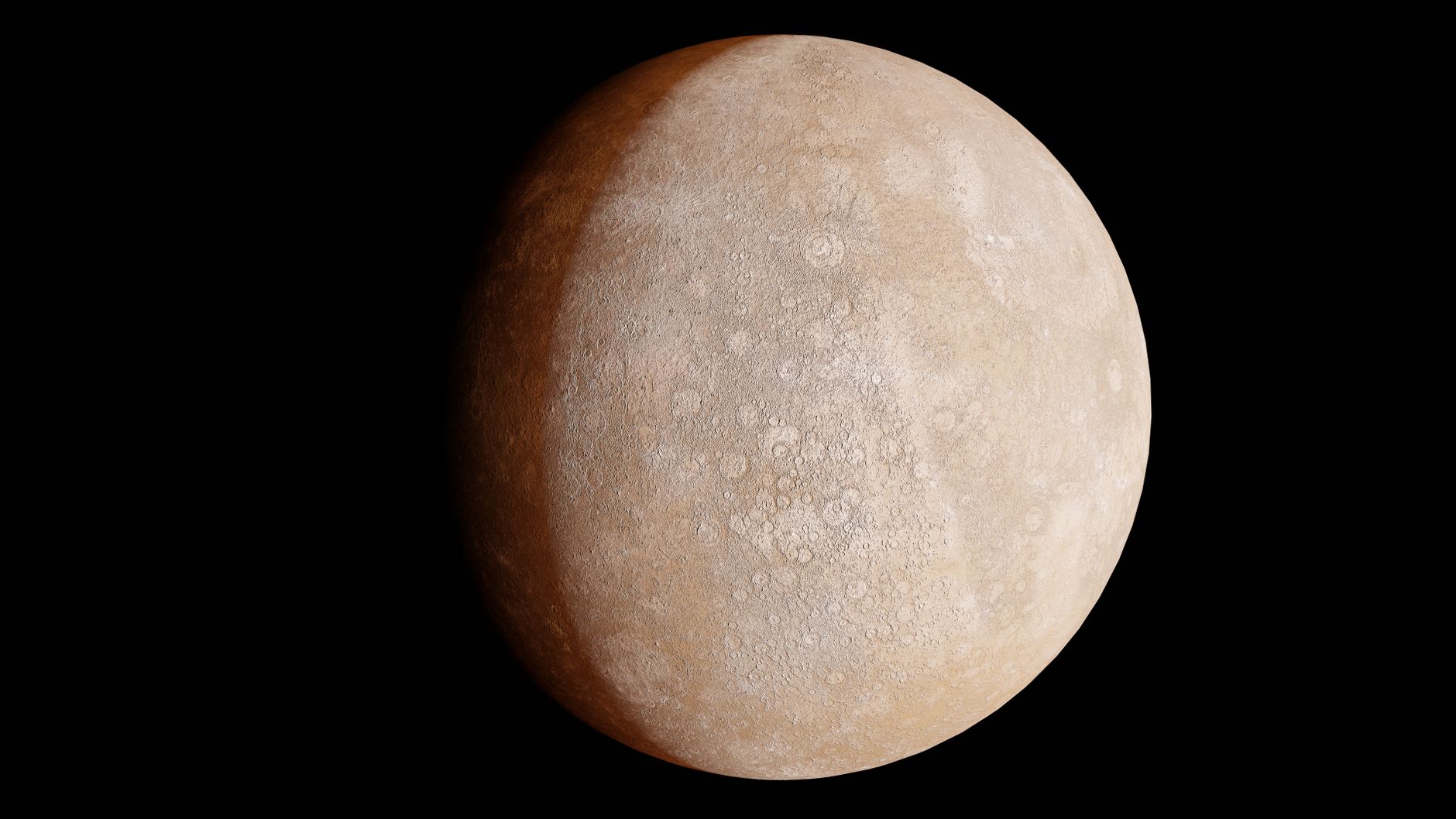
After more than eight years of travel and roughly 6 billion miles, the joint European‑Japanese BepiColombo mission has arrived at Mercury and is poised to fire its thrusters on Saturday to enter orbit around the solar‑system’s smallest planet.
The €1.6 billion (about £1.4 billion) endeavor will become only the second mission ever to circle Mercury, following the historic MESSENGER spacecraft. Researchers view the arrival as a critical step toward answering long‑standing questions about how Mercury formed so close to the Sun, why it possesses a magnetic field, and what frozen water may exist in its permanently shadowed craters.
Mission milestones
Launch preparations began more than eight years ago, with the spacecraft covering an estimated 6 billion miles before reaching its target. In early December, the probe will separate into two distinct orbiters: the European Mercury Planetary Orbiter (MPO) and its Japanese counterpart. Each will maneuver into separate polar orbits around the planet, allowing complementary observations. Science operations are slated to start in April of next year, following a period of orbital insertion and system checks.
Professor Emma Bunce of the University of Leicester, who has worked on the project for two decades and serves as principal investigator for the Mercury Imaging X‑ray Spectrometer (MIXS), expressed excitement at the milestone. “We’re very excited, it’s been a long wait,” she said.
Scientific objectives
The MPO will map Mercury’s surface and composition at high resolution, and probe its interior to shed light on the unusually large metallic core that makes the planet denser than the Moon despite being only about 50 % larger in diameter. The Japanese orbiter will focus on measuring the planet’s magnetic field and its thin sodium exosphere—a tenuous layer of gas and atoms surrounding Mercury.
Mercury’s extreme environment adds to the mission’s scientific value. The planet rotates once every 58 Earth days, causing any surface location to endure three months of continuous daylight followed by three months of darkness. Temperatures swing from roughly 450 °C in daylight to –180 °C at night. Its proximity to the Sun—about 36 million miles, or one‑third of Earth’s distance—means the spacecraft must constantly brake to avoid overshooting the planet, a challenge highlighted by Professor Bunce.
Lead project scientist Professor Geraint Jones of the European Space Agency noted that the dual‑spacecraft approach equips scientists with a “huge” suite of instruments, including cameras covering a wide wavelength range, sensors to “taste” surrounding gases, ultra‑sensitive magnetic field detectors, interior probing tools, and a laser for precise shape mapping.
The mission is designed for a three‑year orbital phase. After fuel is exhausted, the orbiters will gradually lose altitude and ultimately impact Mercury’s surface, concluding the program. As Professor Bunce remarked, “Sadly, they are not coming back.”

Norman Pearlstine is the Executive Editor and Co-Founder at News Raise. With over two decades of experience across financial journalism, corporate governance, and market analysis, Norman leads the editorial direction and ensures strict adherence to journalistic accuracy and ethics.