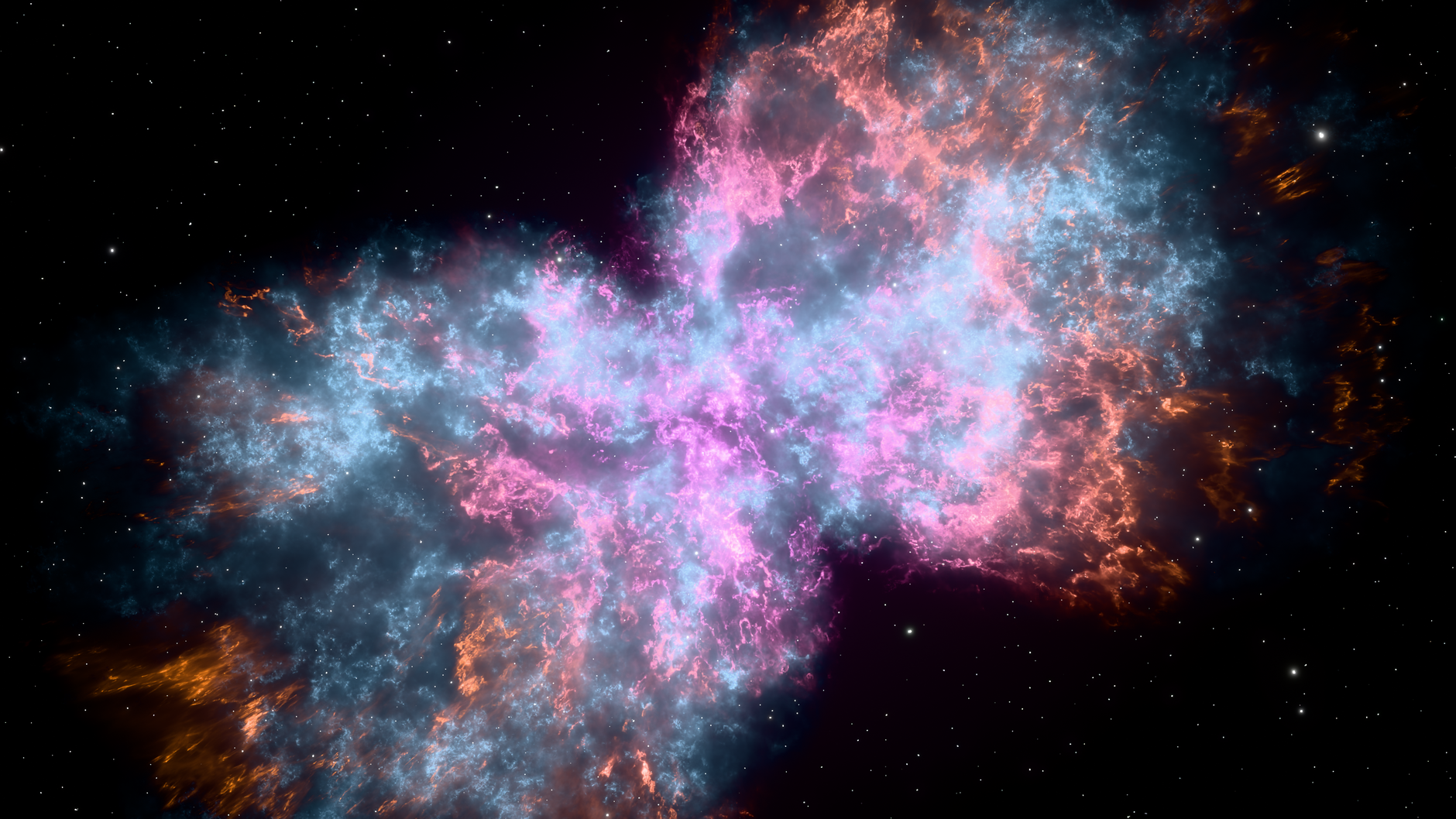
A new stellar explosion designated SN 2026ahvu has been observed in the spiral galaxy NGC 1433, located roughly 50 million light‑years from Earth. Classified as a Type Ia supernova, the event was detected while the brightness was still increasing, providing scientists with an uncommon opportunity to study the explosion from its early phases.
Discovery and Early Observation
The initial detection was made by ATLAS – the Asteroid Terrestrial-impact System – a network of robotic telescopes operating in both the northern and southern hemispheres. Although ATLAS was built primarily to identify near‑Earth asteroids that could threaten the planet, its wide‑field survey capability also enables it to spot transient astronomical phenomena. In this case, ATLAS recorded the rise of SN 2026ahvu before the supernova reached its peak luminosity.
Type Ia supernovae typically arise in binary star systems where a white dwarf star draws material from a companion. When enough matter accumulates on the white dwarf’s surface, a thermonuclear runaway occurs, resulting in a bright, short‑lived explosion. By catching SN 2026ahvu while it was still brightening, researchers can examine the buildup to the explosion, a stage that is often missed in later detections.
Significance of Early Capture
Early detection matters because it allows astronomers to compare observations taken before, during, and after the event. Most supernovae are first noticed as they fade, limiting insight into the precise moment of ignition. SN 2026ahvu’s early appearance in ATLAS data means that archival images of NGC 1433 can be examined for any pre‑explosion activity, while ongoing monitoring will track how the explosion evolves over time.
Understanding the detailed physics of Type Ia supernovae is crucial for several reasons. These explosions serve as “standard candles” for measuring cosmic distances, underpinning much of modern cosmology. Any refinement in the knowledge of how they ignite and develop can improve the accuracy of distance estimates across the universe.
Follow‑up Observations
After ATLAS reported the brightening source, additional observations were secured with two powerful instruments. The Dark Energy Camera (DECam) at the National Optical‑Infrared Astronomy Research Laboratory (NOIRLab) captured high‑resolution images of the supernova and its host galaxy. Simultaneously, the Gemini South telescope, located in Chile, obtained complementary data, further confirming the Type Ia classification and providing spectroscopic details.
The combined data set from ATLAS, DECam, and Gemini South will enable researchers to chart the light curve of SN 2026ahvu from its rise through its peak and eventual decline. By comparing this curve with theoretical models, scientists hope to refine estimates of the mass transferred to the white dwarf and the conditions that trigger the thermonuclear runaway.
In summary, the early capture of SN 2026ahvu in NGC 1433 illustrates the versatility of survey instruments originally designed for planetary defense. The coordinated observations across multiple facilities promise to deepen understanding of Type Ia supernova mechanisms and reinforce their role as essential tools for probing the scale of the cosmos.

Helene Elliott is the Lead Science & Space Reporter at News Raise. She reports on aerospace missions, astrophysics discoveries, quantum research, and environmental technology.