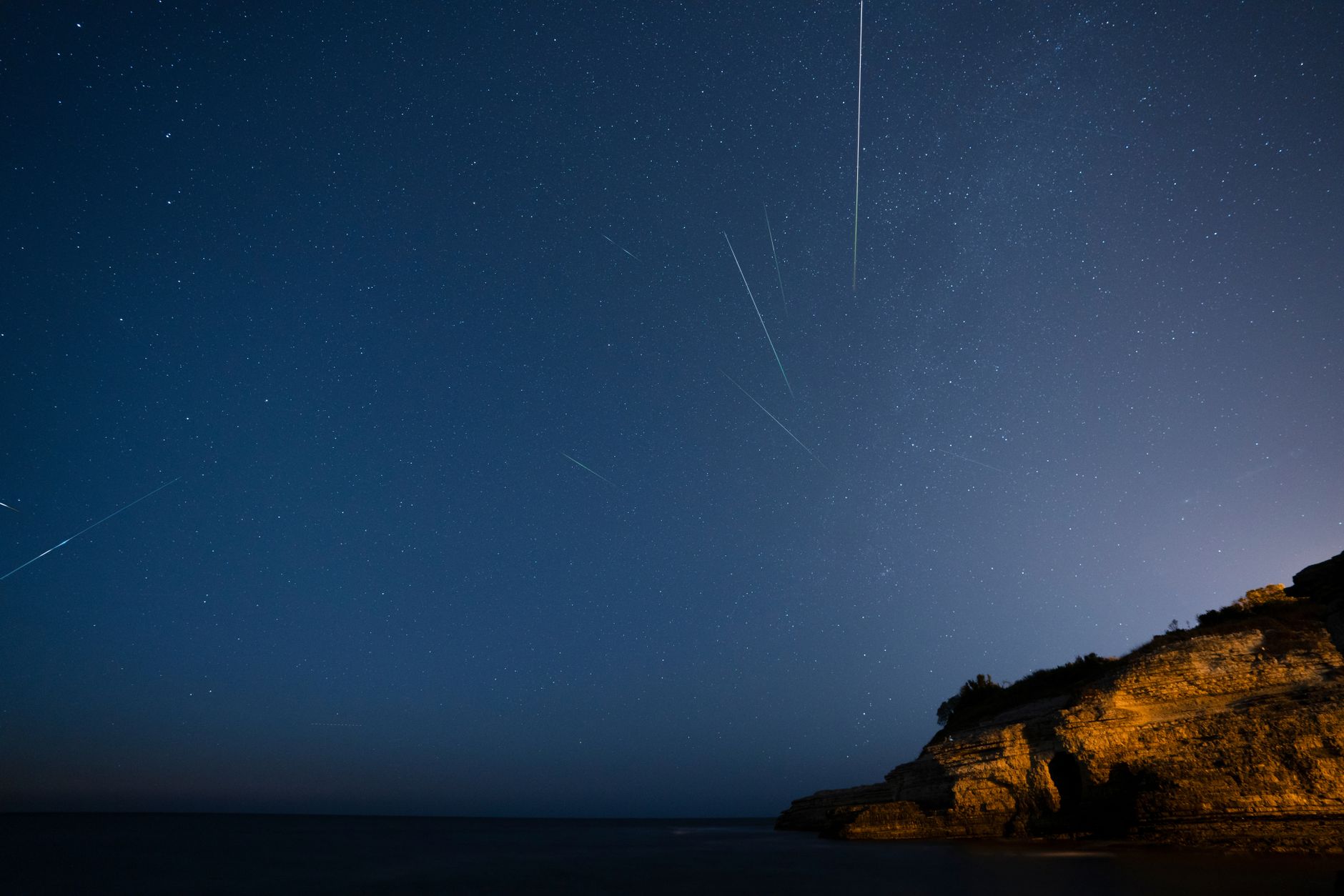
The Leonid meteor shower reaches its peak during the night of November 16 into the early hours of November 17, offering observers a chance to witness some of the fastest fireballs and the elusive Earth‑grazing meteors.
Peak timing and darkness
The lunar phase on November 17 will be a waxing crescent with about 43 % illumination. The moon is expected to set near midnight, leaving the second half of the night unusually dark. Astronomers recommend the window from midnight to dawn as the optimal period for spotting meteors, when the sky is at its darkest.
Weather outlook across the United States
Cloud cover will be uneven. Storm systems are moving in from the west, bringing rain and mountain snow, while a low‑pressure area over the Gulf of Mexico is forecast to deliver heavy rain to Florida, potentially obscuring the display there. In contrast, a broad high‑pressure ridge extending from the Central Plains across the Great Lakes to the East Coast is expected to produce sinking air and clear skies, creating favorable conditions for viewers in those regions.
How to watch and what to expect
Leonid meteors can appear anywhere in the sky, so observers need not stare directly at the constellation Leo, the radiant point. However, looking roughly toward Leo has the added bonus of seeing Mars and Jupiter positioned close together this year. The shower’s overall rate is modest—about three meteors per hour—but individual meteors tend to be bright and sometimes colorful.
The meteors originate from debris left by comet 55P/Tempel‑Tuttle. As Earth passes through this dusty trail each November, tiny particles burn up in the atmosphere at speeds of roughly 44 miles per second. Two distinct classes are common: fireballs, which arise from larger fragments and produce longer, brighter flashes, and Earth‑grazers, which skim the horizon and leave long, colorful tails.
Although the Leonids usually produce a low hourly count, they are known for occasional spectacular outbursts. Approximately every 33 years the shower can generate a meteor storm, defined as more than 1,000 meteors per hour. The most recent storm occurred in 2002, and the historic 1966 event produced thousands of meteors per minute for a fifteen‑minute span, described by NASA as resembling rain.
For the best viewing experience, choose a location with an unobstructed view of the sky, away from trees, buildings, and artificial light. Rural areas with minimal light pollution are ideal. Before heading out, verify the local forecast and allow your eyes at least 20 minutes of complete darkness to adapt—avoid using phones or flashlights during this period.
The Taurid meteor shower has already peaked, but a few lingering Taurids may still be visible through November 20, offering an additional chance to catch meteors alongside the Leonids.
With dark skies expected after moonset, clear conditions over much of the central and eastern United States, and the possibility of bright fireballs and horizon‑skimming Earth‑grazers, tonight presents a strong opportunity for both casual skywatchers and seasoned astronomers to enjoy one of November’s classic celestial events.

Steve Lopez is a Senior Editorial Columnist and Health & Public Policy reporter for News Raise. Steve focuses on healthcare advancements, medical technologies, and public health policies.