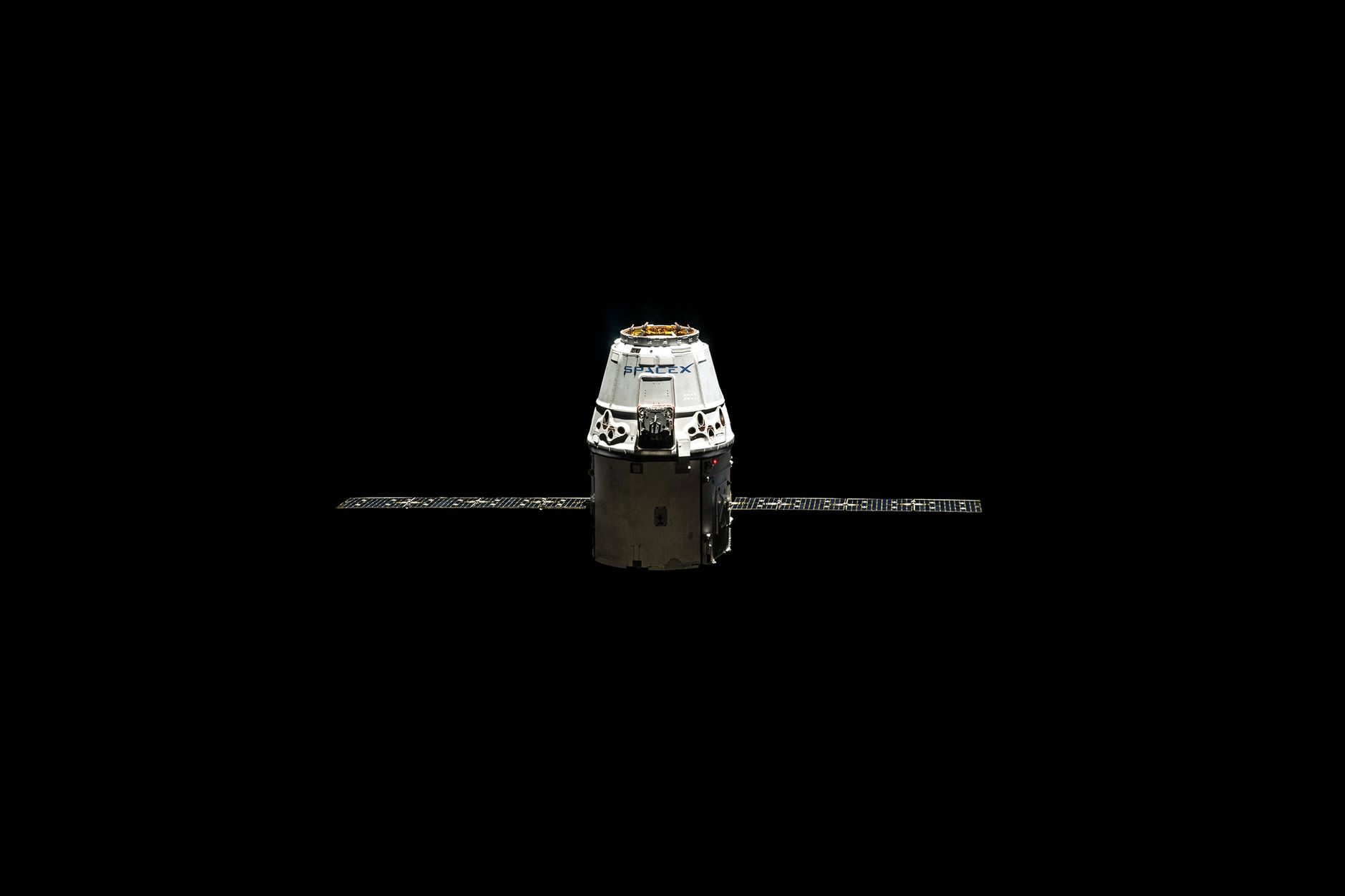
SpaceX’s 35th cargo mission, designated CRS‑35, successfully separated from the International Space Station at 12:05 p.m. EST (1705 GMT) on Nov. 20. The robotic Dragon capsule drifted away while orbiting roughly 260 miles (418 km) above western China. NASA expects the spacecraft to re‑enter Earth’s atmosphere and splash down in the Pacific Ocean off the coast of California on Saturday, Nov. 21, at approximately 4:55 p.m. EST (2155 GMT). No live video feed will be provided for the re‑entry or splash‑down phase, and the undocking moment was not captured live due to a brief gap in the high‑bandwidth signal required for video transmission.
Mission timeline and payload
The Dragon capsule launched from Florida on Oct. 13, marking the start of its CRS‑35 flight for NASA’s Commercial Resupply Services program. Two days later, on Oct. 15, the spacecraft berthed with the ISS and delivered more than 6,300 pounds (2,860 kg) of food, scientific equipment, and other essential supplies for the crew aboard the orbiting laboratory. In addition to the outbound cargo, the capsule is now carrying “thousands of pounds of cargo” back to Earth, according to a NASA update posted on Nov. 17.
Among the returning items are research samples intended to advance future space exploration and benefit life on Earth. Notably, the payload includes a 3D‑bioprinted blood‑vessel construct that scientists used to study vascular aging and cardiovascular disease both in microgravity and on the ground. The return of such specimens enables researchers to analyze the effects of spaceflight on human biology and to refine medical technologies for terrestrial use.
Dragon’s unique capability
Dragon remains the only cargo vehicle currently in operation that can perform a down‑mass mission—delivering cargo to the station and then returning it safely to the planet. Competing resupply ships, such as Northrop Grumman’s Cygnus, Russia’s Progress vehicle, and Japan’s HTV‑X, are all expendable; they burn up upon re‑entry after a single flight and cannot bring payloads back to Earth.
This capability makes Dragon a critical component of NASA’s logistics chain, especially for experiments that require physical samples to be examined in terrestrial laboratories. The ability to retrieve scientific hardware, biological specimens, and hardware prototypes supports a broader range of investigations than would be possible with disposable cargo craft.
Implications for future research
NASA’s statement highlights the importance of the returning cargo, emphasizing that the samples could “advance future space exploration and improve life on Earth.” The inclusion of the 3D‑bioprinted vascular construct illustrates how space‑based research is directly informing medical advancements, potentially leading to new treatments for age‑related cardiovascular conditions. As the Dragon capsule completes its journey, the scientific community anticipates the analysis of the returned materials, which may yield insights that shape both orbital missions and Earth‑bound healthcare.
Following its splash‑down, the capsule will be retrieved by recovery teams, and the cargo will be transported to designated laboratories for processing. The successful completion of CRS‑35 adds to SpaceX’s growing record of reliable cargo deliveries and returns, reinforcing the company’s role in sustaining the continuous human presence aboard the ISS.

Helene Elliott is the Lead Science & Space Reporter at News Raise. She reports on aerospace missions, astrophysics discoveries, quantum research, and environmental technology.