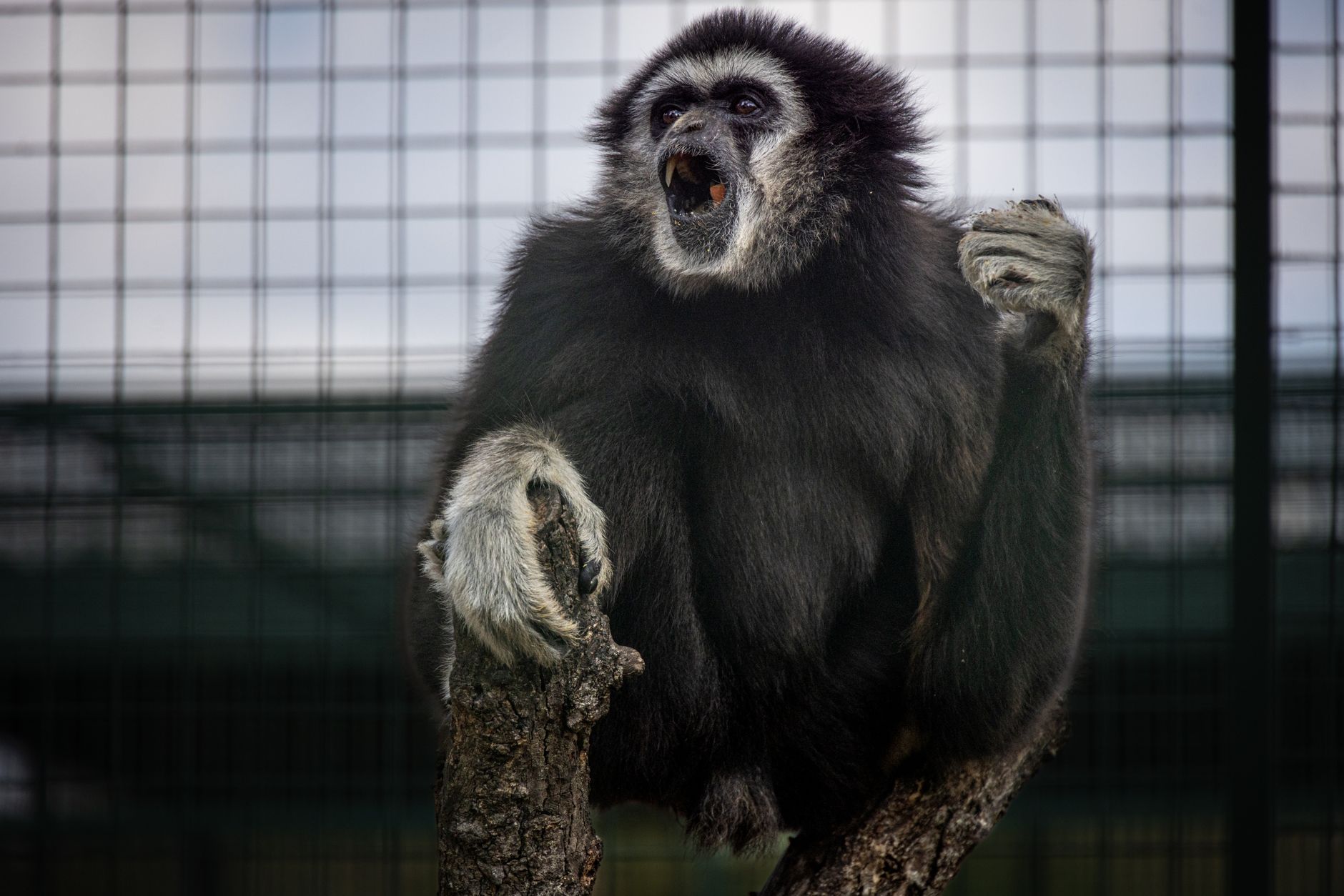
The rhythm and timing of laughter in humans and other great apes offer a window into the evolution of vocal control, suggesting a continuum of development that ultimately paved the way for language, according to new research.
Laughter, a universal non-linguistic vocal expression shared by all great apes, serves as a valuable proxy for understanding the evolutionary changes in vocal control that led to human speech and language. While previously known to be conserved across species and age groups, the evolutionary trajectory of its defining feature—rhythm—remained largely unexplored.
This comparative analysis, which included recordings from orangutans, gorillas, bonobos, chimpanzees, and humans, indicates that the laughter of the last common ancestor was already characterized by regular timing, or isochrony. Over hominid evolution, laughter became progressively faster, more variable, and increasingly sensitive to social context.
Evolutionary Trajectory of Laughter Rhythm
The study found that laughter across great apes is inherently isochronous, meaning there is regular timing between vocal bursts. This regularity has been consistent for at least 15 million years, extending previous findings in orangutans to other great apes and primates. However, isochrony was found to be context-dependent: laughter during tickling was highly regular, while laughter during social play deviated from strict regularity.
This difference is attributed to the dynamic nature of social play, which can disrupt regular respiratory cycles. The stable rhythm of tickling laughter, in contrast, provides a clearer view of evolutionary changes in the phonatory-respiratory system among hominids. This suggests a progressive loosening of the coupling between vocal output and the respiratory cycle observed in great ape laughter.
Analyses also confirmed that laughter rhythm has accelerated along hominid evolution. This trend was more pronounced in tickling laughter than in play laughter. Notably, only humans demonstrated the ability to modulate laughter tempo based on context, producing faster laughter during tickling compared to play. This context-sensitive modulation was absent in the non-human great apes studied.
Increased Vocal Plasticity in Humans
Phylogenetically informed statistical analyses revealed a gradual shift toward greater temporal variability in laughter across the hominid lineage. Humans exhibited the highest variability in laughter tempo, a characteristic associated with enhanced rhythmic range and advanced vocal control. This temporal variability in human laughter is perceived as more socially and emotionally positive, suggesting that rhythmic flexibility conveys important social information about emotional state and intent.
The findings chart an evolutionary pathway toward increased vocal flexibility, providing empirical evidence for the shift toward faster, more variable, and context-sensitive rhythms in humans. This enhanced vocal plasticity is considered a crucial precursor to the emergence of speech and language. The study posits that laughter, therefore, serves not only as a social signal but also as a model for understanding the deep evolutionary roots of human vocal communication.

Norman Pearlstine is the Chief Editor of News Raise and focuses on Business news. His responsibility is to oversee the editorial content including business, commodities, personal investments and the stock market.