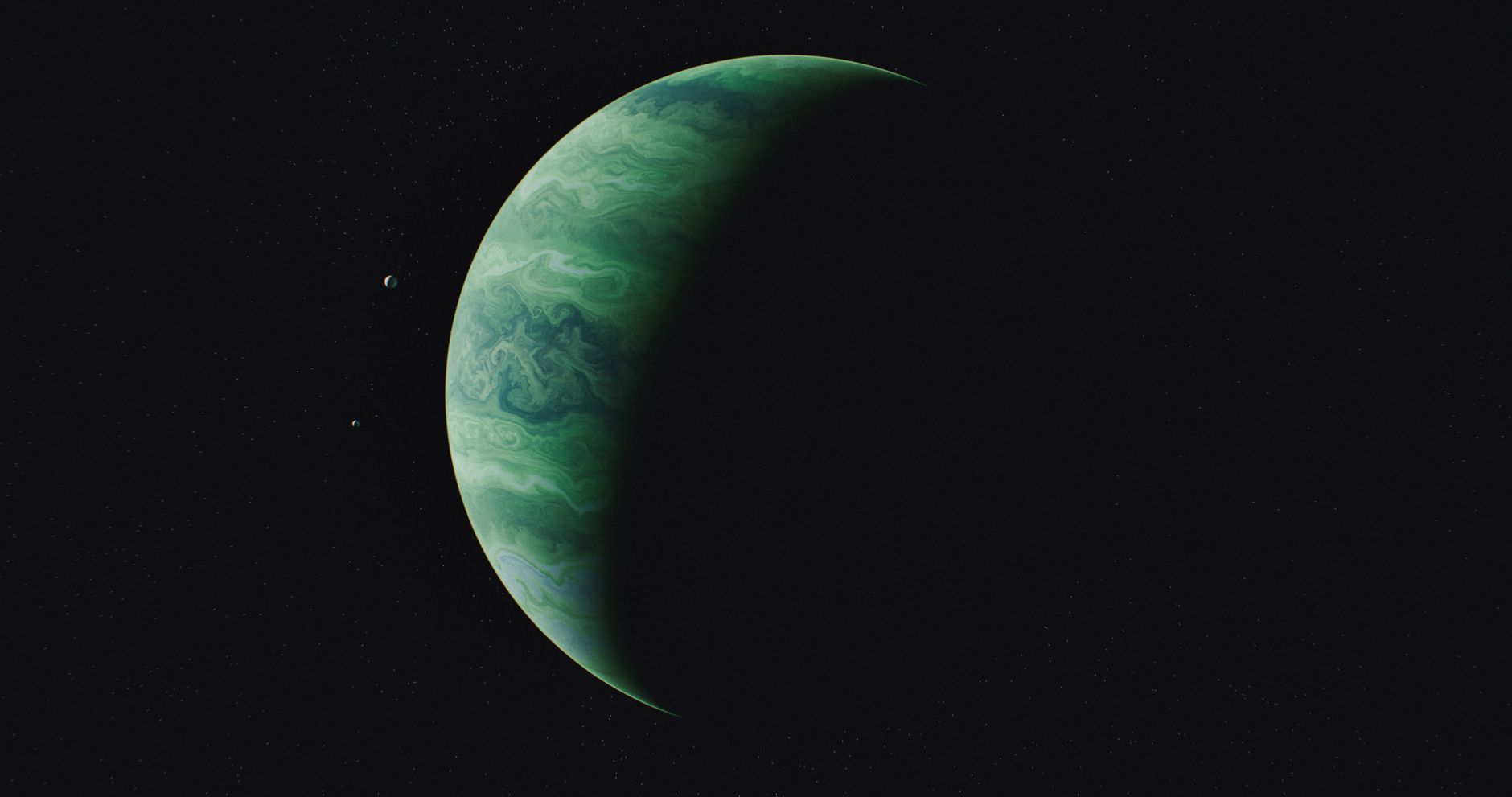
Scientists have announced the detection of a candidate exoplanet that appears to reside in the so‑called habitable zone of a star considerably hotter than our Sun. Designated HD 156295 b, the object is estimated to have a mass between 5.2 and 7.4 times that of Jupiter, making it a gas‑giant‑type world that could, under the right conditions, orbit where liquid water might exist on a rocky companion.
Discovery and Characteristics of HD 156295 b
The finding was detailed in a paper published in The Astrophysical Journal. Researchers based their analysis on data collected by NASA’s Transiting Exoplanet Survey Satellite (TESS), a mission launched on 18 April 2018 aboard a SpaceX Falcon 9 from Cape Canaveral, Florida. TESS continuously monitors the brightness of stars to spot the minute dimming caused by planets passing in front of them, as well as to detect regular variations that can reveal orbiting bodies through timing shifts.
The host star, HD 156295, is classified as an A‑type star. It is roughly twice the radius of the Sun and radiates about nine times more light. Temperature estimates suggest it is roughly 2,000 °C hotter than the Sun, a figure that would make it the hottest known star to host a planet within its habitable zone, should the candidate be confirmed.
Located approximately 140 million light‑years from Earth, the system lies relatively close on a cosmic scale. The source likens the distance to the stretch between New York City and Newark, New Jersey, if the Milky Way were reduced to the size of a single planet.
Implications and Next Steps
The concept of a habitable zone refers to the orbital region around a star where temperatures could allow liquid water to exist on a planetary surface, a key criterion in the search for life‑supporting worlds. While HD 156295 b itself is a gas giant and unlikely to host life directly, its presence in the habitable zone raises the possibility of large moons or other smaller companions that might possess suitable conditions.
Because the detection relies on indirect measurements of stellar brightness variations, the research team emphasizes that additional observations are required to confirm the planetary nature of the signal. Continued monitoring with TESS, which remains dedicated to exoplanet discovery, along with data from forthcoming, more powerful telescopes, could either validate HD 156295 b as a bona fide planet or reclassify the signal as a different astrophysical phenomenon.
NASA’s catalog of confirmed exoplanets now exceeds 6,300, reflecting the rapid expansion of the field since the first discoveries in the 1990s. Each new candidate, especially those that challenge existing assumptions about where planets can form and survive, adds valuable data points for refining models of planetary system evolution.
If HD 156295 b is confirmed, it would set a new benchmark for the hottest star known to host a planet within its habitable zone, prompting astronomers to revisit theories about planet formation around luminous, high‑temperature stars. The discovery also underscores the continued importance of space‑based surveys like TESS in probing the diverse architectures of planetary systems throughout the galaxy.

Steve Lopez is a Senior Editorial Columnist and Health & Public Policy reporter for News Raise. Steve focuses on healthcare advancements, medical technologies, and public health policies.