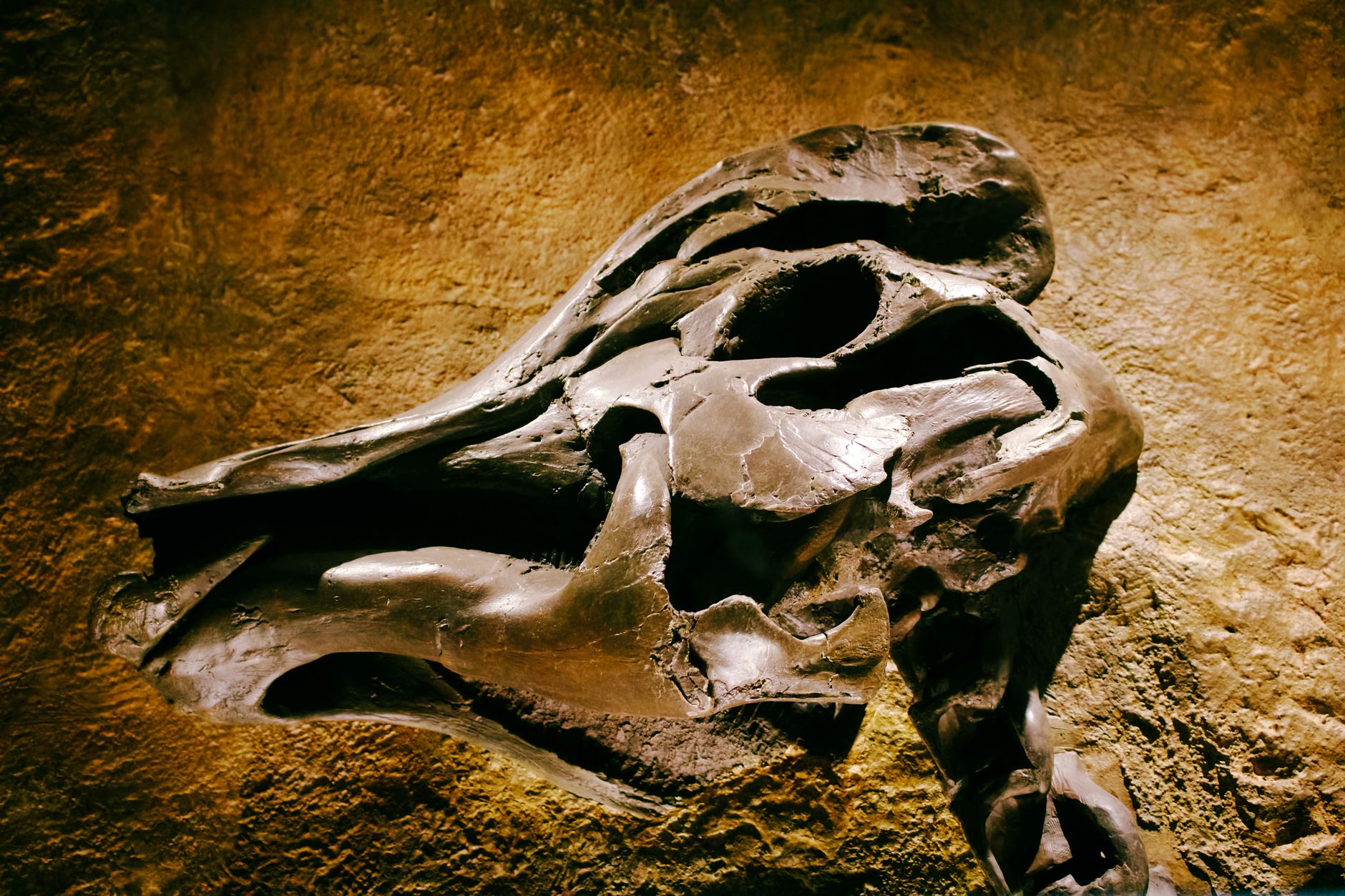
A fossil skull that had sat in a museum drawer for almost a century has been re‑identified as a new species of large, two‑legged carnivore, marking the first discovery of a megaraptoran dinosaur in Europe. The specimen, originally unearthed on the Isle of Wight in 1924 and stored at the Natural History Museum, was examined using CT X‑ray scans that produced a three‑dimensional model of the skull’s interior.
Identification and naming
Analysis of the 3D model revealed a distinctive combination of features, including an oval opening where the spinal cord entered the brain and an hourglass‑shaped crest. These traits, together with comparisons to the braincases of tyrannosaurs, spinosaurs, raptors and other bipedal theropods, convinced researchers that the fossil represented a previously unknown species. The new dinosaur has been named Invictibellatrix amberina. The genus name translates to “unconquered female warrior,” a reference chosen to symbolize resilience for those facing oppression, while the species name honors the amber found in the rock matrix of the find.
Physical characteristics and ecology
According to palaeontologist Cassius Morrison of University College London, the animal was roughly the size of a large tiger, measuring three to four metres in length and standing just over a metre and a half tall—about the height of an adult human. Its slender head, long arms and massive curved claws—estimated at ten to twenty centimetres in length—suggested a hunting strategy that relied on grasping prey rather than powerful bites. Morrison added that the creature likely bore feathers, a trait inferred from its close relatives.
Dietary reconstructions indicate that Invictibellatrix would have preyed on small dinosaurs, lizards and mammals, occupying a niche comparable to modern hyenas. Although not the apex predator of its ecosystem, the researchers noted that its size would have made it a more immediate threat to early humans than a much larger Tyrannosaurus rex, which would have ignored prey of that scale.
Implications for dinosaur biogeography
Megaraptorans are thought to have originated in Asia before spreading westward through Europe and eventually reaching the southern supercontinent Gondwana, which comprised present‑day Africa, South America and Antarctica. The discovery of Invictibellatrix amberina provides the first concrete evidence that this group was present in Europe during the Early Cretaceous, supporting the hypothesis that megaraptorans migrated into Europe before moving southward into Gondwana rather than island‑hopping directly to the southern continents.
Co‑author Charlie Scherer highlighted that the find clarifies the early global distribution of megaraptorans, which were widespread in the Early Cretaceous but appear to have vanished from the northern landmass of Laurasia by the Late Cretaceous, possibly due to climate change or competition from other large predators. Senior author Paul Barrett emphasized that the Isle of Wight continues to yield unexpected discoveries after more than two centuries of collecting, underscoring the value of revisiting historical museum collections.
The study, published in the journal Royal Society Open Science, demonstrates how modern imaging techniques can unlock new scientific insights from long‑stored specimens, offering a reminder that many more hidden treasures may still reside in museum drawers worldwide.

Steve Lopez is a Senior Editorial Columnist and Health & Public Policy reporter for News Raise. Steve focuses on healthcare advancements, medical technologies, and public health policies.