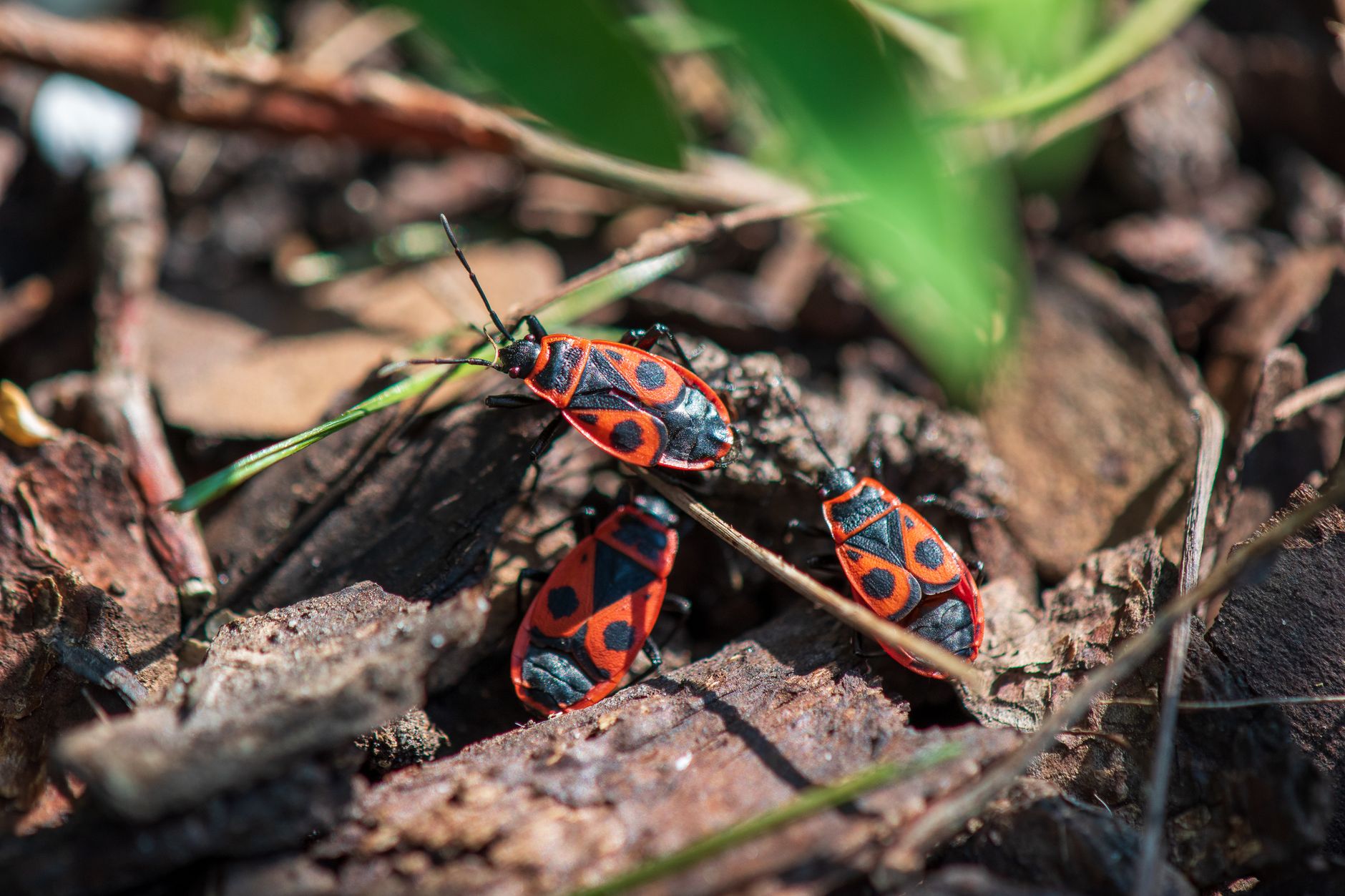
When the Spokane Complex fires swept through north Spokane, Washington earlier this year, crews found an unexpected surge of black fire beetles in the ash. The insects, belonging to the genus Melanophila, are equipped with infrared sensors that locate the heat of forest fires and are drawn to freshly charred wood where they lay their eggs, according to the U.S. Forest Service.
Fire beetles thrive in burned landscapes
Entomologists reported that the beetles moved into burned neighborhoods and cleanup zones in numbers that could reach the thousands, sometimes arriving while fire crews were still on the scene or in the days that followed. Near the burn scars, the beetles have been observed crawling onto equipment and even human skin, mistaking warm bodies for the hot wood they seek. Their mandibles, designed for chewing into tree bark, can deliver a painful bite.
Prescribed fires curb tick numbers
While wildfires attract fire beetles, they can also devastate tick populations—provided the fire is a prescribed, or controlled, burn rather than an uncontrolled wildfire. Prescribed fires are planned ignitions set under specific conditions to meet land‑management goals, as defined by the U.S. Forest Service. These burns remove the shaded, damp cover that ticks need to survive.
Dr. Michael Gallagher, a research ecologist at the Forest Service’s Northern Research Station, explained that frequent, impactful prescribed burns can markedly reduce tick abundance. Field studies have documented tick mortality rates exceeding 75% after such burns. In southern pine forests where burns are conducted every two to four years over at least a decade, University of Georgia researchers observed a drop of up to 98% in encounters with ticks carrying pathogenic bacteria.
A single burn, however, does not produce the same effect and may temporarily raise tick numbers. Historically, many eastern forests experienced natural fires every one to 25 years, but decades of fire suppression have stretched intervals to 50 to 100 years, creating cooler, shadier understories that favor ticks. Gallagher noted that the lack of regular fire, combined with reduced timber harvesting, has created an environment where ticks can thrive.
Public‑health stakes and cultural shifts
Tick‑related emergency‑room visits have risen sharply since 2017, according to the Centers for Disease Control and Prevention. The agency estimates that about 31 million Americans are bitten by ticks each year, with roughly 476,000 receiving treatment for Lyme disease. Standard personal‑protection measures—such as repellents, post‑outdoor showers, and tweezers—lower individual risk but do not diminish the overall tick population in an area.
Repeated, well‑planned prescribed burns offer a landscape‑level tool to curb tick encounters. In addition to reducing disease‑carrying pests, controlled fires recycle nutrients, suppress other forest pests, support fire‑dependent plant species, and can lessen human exposure to tick‑borne illnesses, according to the Forest Service.
Gallagher emphasized that broader adoption of prescribed fire will depend on cultural attitudes toward fire. “Fire is a cultural thing,” he said, noting that historic fires in the Northeast have shaped a perception of fire as inherently dangerous. Shifting that mindset could enable more frequent, strategic burns that protect both ecosystems and public health.

Steve Lopez is a Senior Editorial Columnist and Health & Public Policy reporter for News Raise. Steve focuses on healthcare advancements, medical technologies, and public health policies.