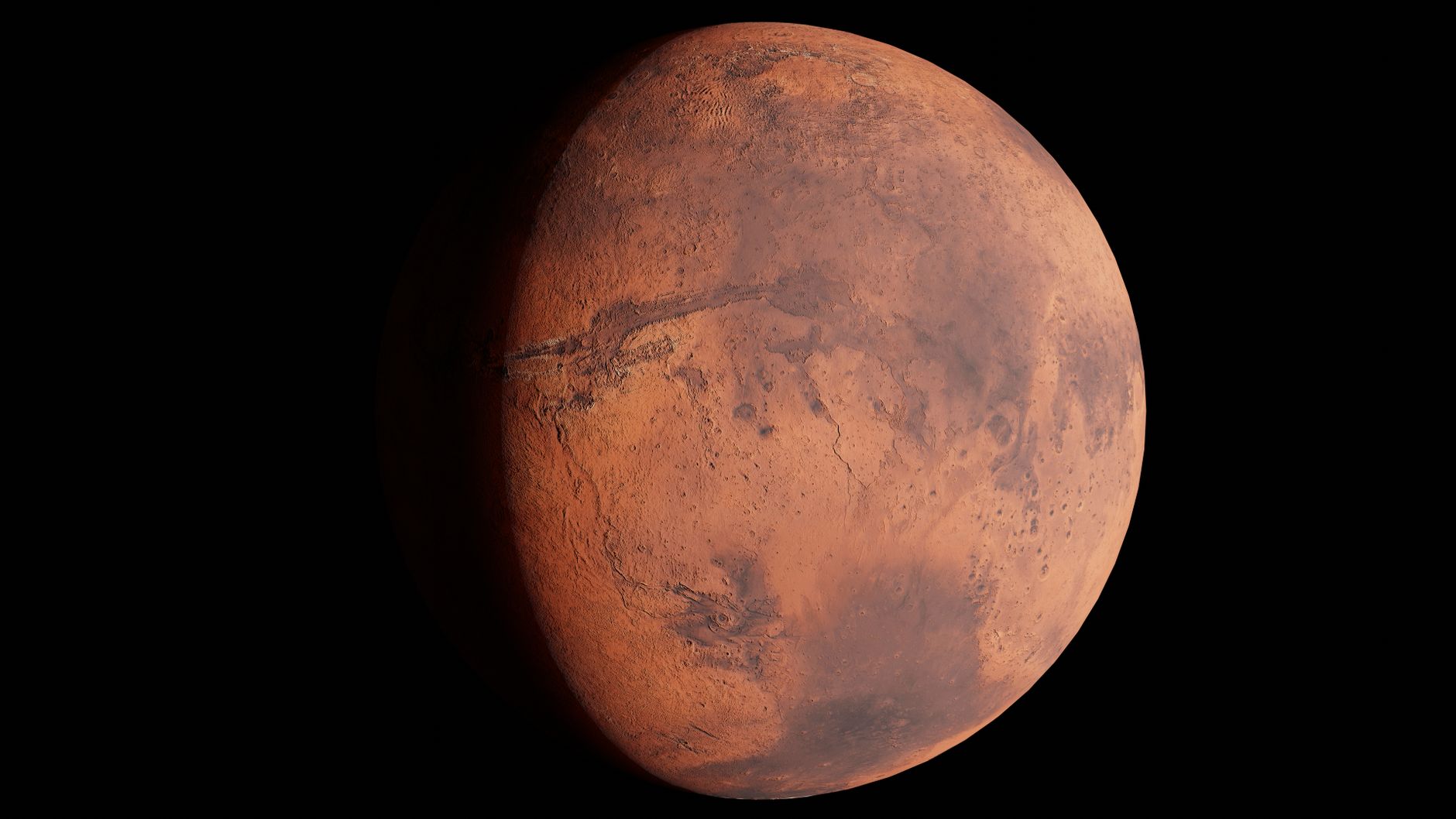
Japan’s space agency, JAXA, announced the successful launch of the Martian Moons Exploration (MMX) spacecraft on a H3 rocket from the Tanegashima Space Centre at 4:41 a.m. local time. The launch, witnessed by thousands of early‑rising spectators and streamed live worldwide, marked the first attempt by any nation to land on one of Mars’s moons, Phobos or its smaller companion Deimos.
Mission profile and timeline
The five‑tonne MMX probe will travel toward Mars and is expected to enter the planet’s orbit in August of next year. Once in the vicinity of Phobos, the spacecraft will deploy a small French‑German rover named Idefix. The rover, designed to bounce across the moon’s surface because Phobos’ gravity is roughly one‑thousandth that of Earth, will spend about 100 days scouting for safe landing and sampling locations.
Following the rover’s survey, a four‑legged stationary lander will detach from the main craft, descend to Phobos, and conduct a two‑hour drilling and vacuuming operation to collect a minimum of 10 grams of soil and rock. After the brief sampling window, the lander will launch back into space, carrying the sealed container of material toward Earth. JAXA projects the sample return to occur in 2031.
Scientific goals and international collaboration
MMX is a collaborative effort involving five space agencies and carries a price tag of roughly $578 million. Scientists hope the retrieved material will clarify how Phobos and Deimos formed. Two competing theories exist: the “giant impact” hypothesis, which suggests the moons coalesced from debris after a large body struck Mars, and the “capture” hypothesis, which posits that the moons are captured asteroids. Determining the correct scenario could illuminate the processes that created habitable environments on the inner terrestrial planets.
“It is a once‑in‑a‑lifetime chance. We are part of the first sample‑return mission from the Martian system,” said Markus Grebenstein, rover chief for the German Space Agency. NASA astrophysicist Tom Statler, who is participating in the Japan‑led project, echoed the excitement, describing the launch as “a lot of adrenaline and a lot of wow.”
Beyond planetary science, the mission is expected to inform future crewed expeditions to Mars. JAXA noted that insights from Phobos samples could shape the design of habitats, propulsion, and life‑support systems for humans traveling to the Red Planet.
Context within the global sample‑return race
While Japan focuses on Phobos, the United States and China are each pursuing their own Mars sample‑return objectives. NASA’s Perseverance rover has already collected Martian rocks, but a congressional vote in January halted the planned Earth return. China’s Tianwen‑3 mission is slated for launch around 2028, with a potential return of Martian material as early as 2031—potentially before MMX’s 2031 timeline.
MMX will also conduct several flybys of Deimos before departing Mars’s orbit in November 2030, providing additional observations of the smaller moon. The mission’s successful completion would represent a milestone for international space exploration and mark Japan’s first deep‑space sample‑return endeavor.

Steve Lopez is a Senior Editorial Columnist and Health & Public Policy reporter for News Raise. Steve focuses on healthcare advancements, medical technologies, and public health policies.