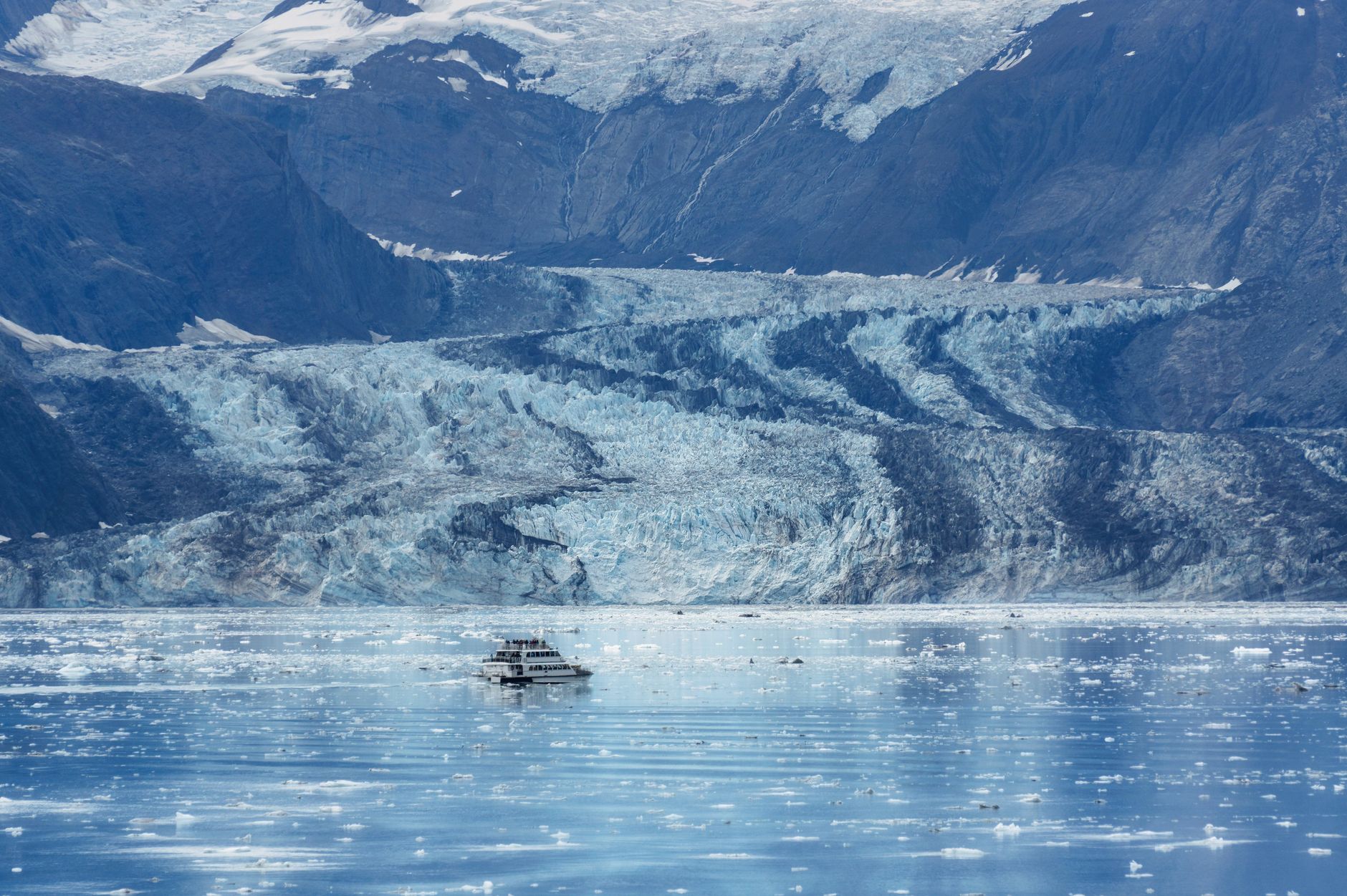
Scientists have found that the rise in carbon emissions since the 1960s may have stopped a nascent glaciation in North America. The research, published Thursday in Science, examined ancient vegetation and rock records to trace the growth and recent retreat of the Barnes Ice Cap, the last remnant of the once‑vast Laurentide Ice Sheet.
Reconstructing Millennia of Ice Growth
The Barnes Ice Cap sits on Canada’s Baffin Island and today covers an area roughly the size of Delaware. Unlike mobile glaciers, the cap is frozen to the underlying bedrock, preserving a detailed record of the plants that lived around it. Researchers used exposure dating of rocks near the ice margin, measuring the cosmogenic isotope Beryllium‑10, to estimate that the cap reached its modern extent about 3,600 years ago.
To determine subsequent changes, the team analyzed mosses and lichens that colonized newly exposed land after earlier retreats. Lead author Nicolás Young, a paleoclimatologist at Columbia University’s Lamont‑Doherty Earth Observatory, explained that dead moss layers become trapped when the ice advances again, providing a timeline of ice movement. These biological markers indicated that the ice cap began expanding again roughly 2,000 years ago, a growth that could have marked the onset of a new glacial period.
Modern Retreat Mirrors Global Warming Trends
Historical aerial photographs revealed that the Barnes Ice Cap reversed its millennial‑long expansion beginning in the 1960s. Since the 1980s, the ice edge has retreated at an average rate of about four meters per year. The timing aligns with a rapid increase in global carbon emissions, a pattern also observed in glaciers worldwide.
Andrew Wickert, an associate professor of environmental science at the University of Minnesota Twin Cities who was not involved in the study, noted that the findings answer a popular question: humanity may have already emitted enough greenhouse gases to halt the next ice age. Meredith Kelly, an earth‑sciences professor at Dartmouth, described the data as “awesome” and called for comparative studies at other sites to better understand pre‑industrial glaciation dynamics.
Historical Context and Broader Implications
The Earth’s climate naturally oscillates between ice ages and interglacial periods due to Milankovitch cycles—variations in the planet’s orbit and axial tilt. The last major ice age ended about 12,000 years ago when the Laurentide Ice Sheet, which once stretched from Canada into the U.S. Midwest, melted back to form the Barnes Ice Cap. In the early 1970s, scientists convened at Brown University and warned President Richard Nixon that a new glaciation could be imminent. Climate‑change deniers later cited the meeting and a brief cooling in the 1970s as evidence against global warming.
The new study provides empirical support for the earlier scientific concern, showing that the Barnes Ice Cap had indeed been expanding before human‑driven warming reversed the trend. While the exact mechanisms that trigger the start of a glaciation remain under investigation, the research underscores how quickly anthropogenic emissions can alter long‑term natural cycles.

Helene Elliott is the Lead Science & Space Reporter at News Raise. She reports on aerospace missions, astrophysics discoveries, quantum research, and environmental technology.