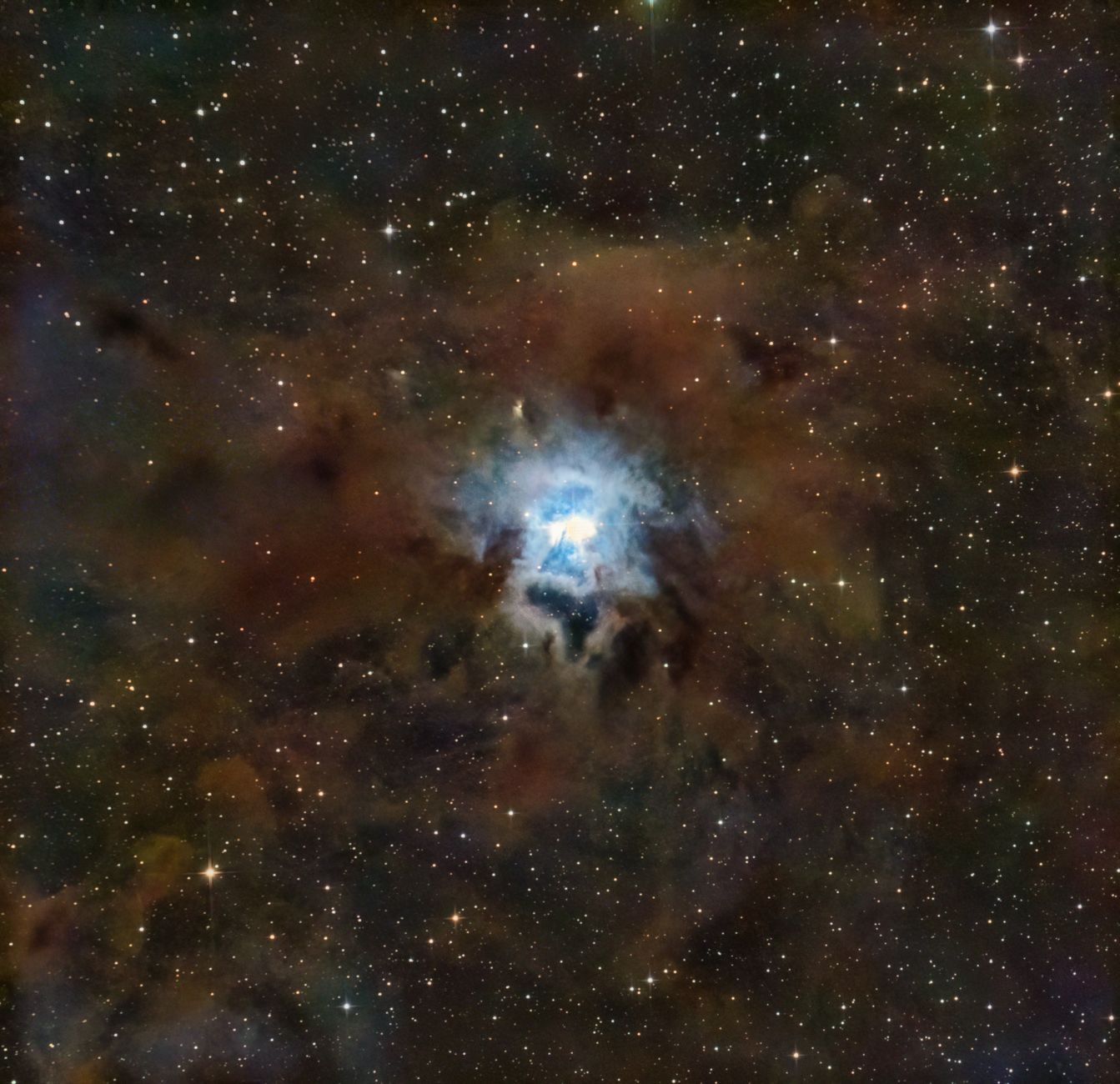
As Halloween approaches, astronomers have released three fresh images that give the Cat’s Eye Nebula an otherworldly, ghost‑like appearance. The nebula, named for a distinctive silhouette that resembles a feline head, lies roughly 7,500 light‑years from Earth inside the much larger Carina Nebula, a prolific star‑forming region.
Distinctive Shape and a Glowing Red Eye
Both the Hubble Space Telescope and the James Webb Space Telescope captured the nebula from slightly different angles, and each image shows the familiar “cat’s head” on the left side of the frame. In the new data, a bright red point appears where the cat’s eye would be. Experts suggest the red glow could be a young star that is still enveloped by the surrounding dust, giving it a haunting, luminous quality.
Multi‑Wavelength Views Reveal New Details
The Hubble snapshot records the nebula in visible light. In that view, the structure appears as a brown pillar of dust set against a hazy, almost rainbow‑colored field of gas. The colors arise from Hubble’s filters, which isolate light emitted by oxygen, hydrogen and sulfur atoms, as well as light scattered by dust particles. This combination creates a vivid portrait of the nebula’s composition and the interplay of its gaseous and dusty components.
James Webb’s contribution comes from observations in the near‑ and mid‑infrared portions of the spectrum. Infrared wavelengths can pierce through dust that blocks visible light, allowing astronomers to see deeper into the heart of the nebula. By comparing the infrared data with Hubble’s visible‑light image, scientists can identify features that are invisible in one band but prominent in another, uncovering layers of structure and activity that would otherwise remain hidden.
What the Images Tell Us About the Nebula’s Future
The Cat’s Eye Nebula is part of an active star‑forming environment. As the stars within the Carina Nebula continue to form, mature and eventually die, the surrounding gas and dust will be reshaped by stellar winds, radiation pressure and supernova explosions. Over time, the iconic cat‑shaped silhouette is expected to lose its recognizable form, gradually blending into the broader tapestry of the Carina Nebula.
For now, the combination of Hubble’s visible‑light detail and JWST’s infrared penetration offers a rare, multi‑dimensional glimpse of a region where new stars are being born and hidden within clouds of dust. The striking red “eye” adds a dramatic focal point that underscores the dynamic processes at work, while also providing a fittingly spooky visual for the Halloween season.
These images illustrate the power of using multiple telescopes and wavelengths to study distant cosmic objects. By layering data from different instruments, astronomers can construct a more complete picture of how nebulae evolve, how stars emerge from their dusty cradles, and how the larger structures of the galaxy are continually transformed.

Steve Lopez is a Senior Editorial Columnist and Health & Public Policy reporter for News Raise. Steve focuses on healthcare advancements, medical technologies, and public health policies.