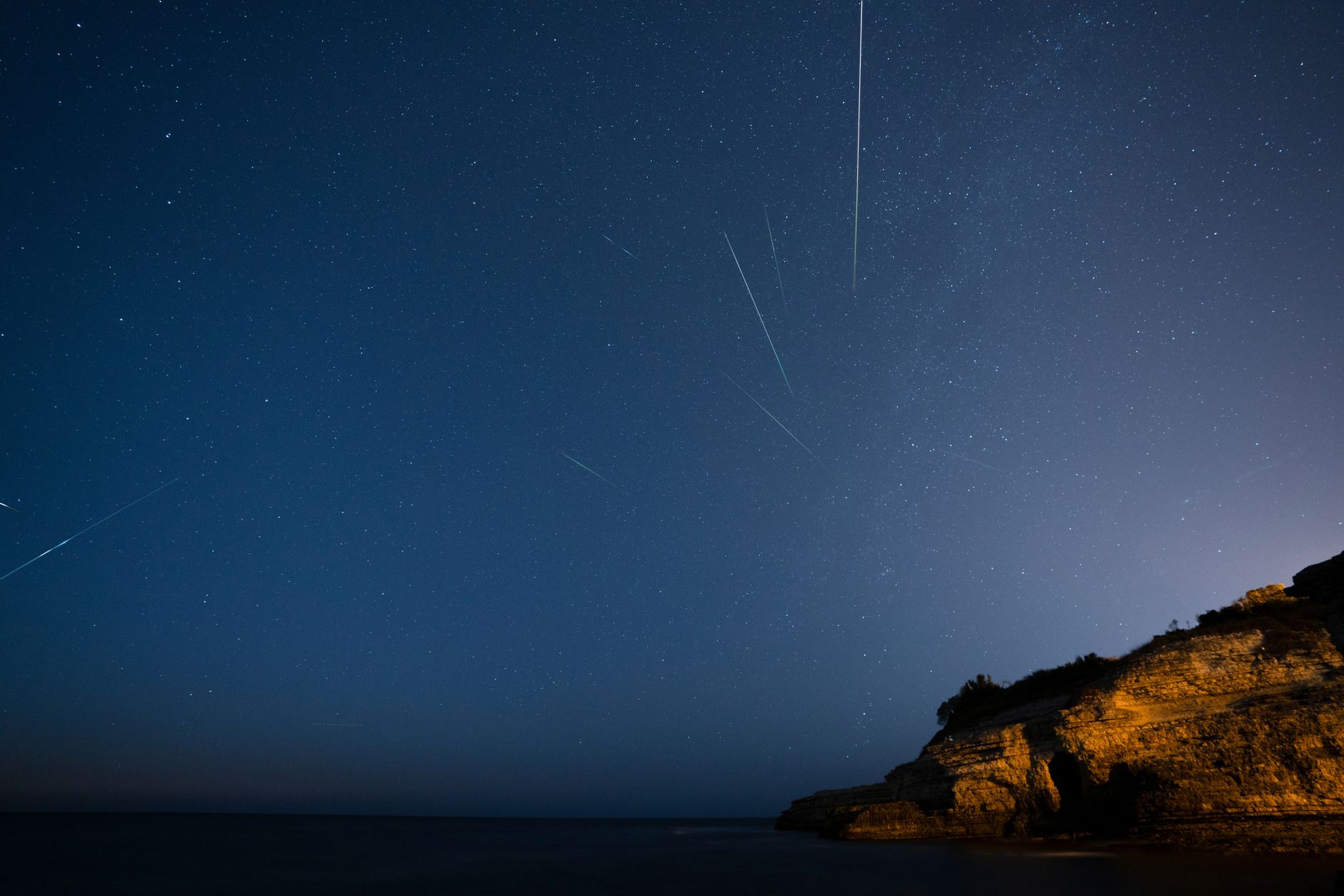
Night‑time sky‑watchers have a brief window on Thursday, Nov. 5, to see the Southern Taurid meteor shower at its peak. The shower is expected to produce roughly five meteors per hour, many of which will be bright fireballs that linger longer than those from faster showers such as the Orionids.
What makes the Taurids stand out
Southern Taurid meteoroids strike Earth’s atmosphere at about 65,000 miles per hour (104,607 kilometers per hour). Their relatively slow speed means they remain visible for an extended period, creating lengthy glowing trails that appear to radiate from the Taurus constellation. Bill Cooke, head of NASA’s Meteoroid Environment Office, explained, “What makes the Taurids spectacular is that they’re rich in bright fireballs. There are not many of them, but when you see one, you’ll remember it. It’ll leave a brilliant streak across the sky.”
Fireballs originate from debris the size of a marble up to a small boulder, making them brighter than the planet Venus at times. Some leave brief ionized lines that vanish in seconds, while others produce smoke‑like vapor clouds that can linger for several minutes.
Viewing tips for the peak night
According to EarthSky, the estimated peak occurs around 3 p.m. ET on Nov. 5, but the best visual window will be near midnight local time. A crescent moon will be present, reducing background light and helping observers spot the meteors. Astronomer Bethany Cobb Kung, associate professor of honors and physics at George Washington University, advises first locating Orion’s belt, then looking to the right where Taurus lies. “If you can find Orion and look to the right, that’s where Taurus is,” she said. Precise aiming is not required; a general direction toward the constellation is sufficient.
Cooke recommends finding a dark site, allowing the eyes at least thirty minutes to adapt, and avoiding phone screens. “Just look up and take in the show,” he added. The shower is visible from almost anywhere on Earth except the South Pole.
Broader context and future activity
The Southern Taurids have been active since September and will continue until Nov. 20. They are produced by Earth passing through debris left by comet 2P/Encke, the solar system’s shortest‑period comet with an orbit of roughly 3.3 years. Scientists believe Encke was once part of a larger body that fragmented about 20,000 years ago, creating the complex that generates both the Southern and Northern Taurids as well as at least three other meteor showers.
The nearby Northern Taurid stream began mid‑October, peaks on Nov. 12, and runs through Dec. 10. Cooke’s forecasting work helps protect spacecraft and crews from meteoroid impacts. While this year’s Taurid activity is modest, he warned that a denser swarm is expected in 2032. “If you’re out the night of Halloween in 2032 and skies are clear, you may see lots of brilliant fireballs blazing above your head,” he said, noting the current period is a lull before that heightened activity.
For those eager to continue sky‑watching, additional peaks this year include the Northern Taurids (Nov. 11‑12), Leonids (Nov. 16‑17), Geminids (Dec. 13‑14) and Ursids (Dec. 21‑22).

Norman Pearlstine is the Executive Editor and Co-Founder at News Raise. With over two decades of experience across financial journalism, corporate governance, and market analysis, Norman leads the editorial direction and ensures strict adherence to journalistic accuracy and ethics.