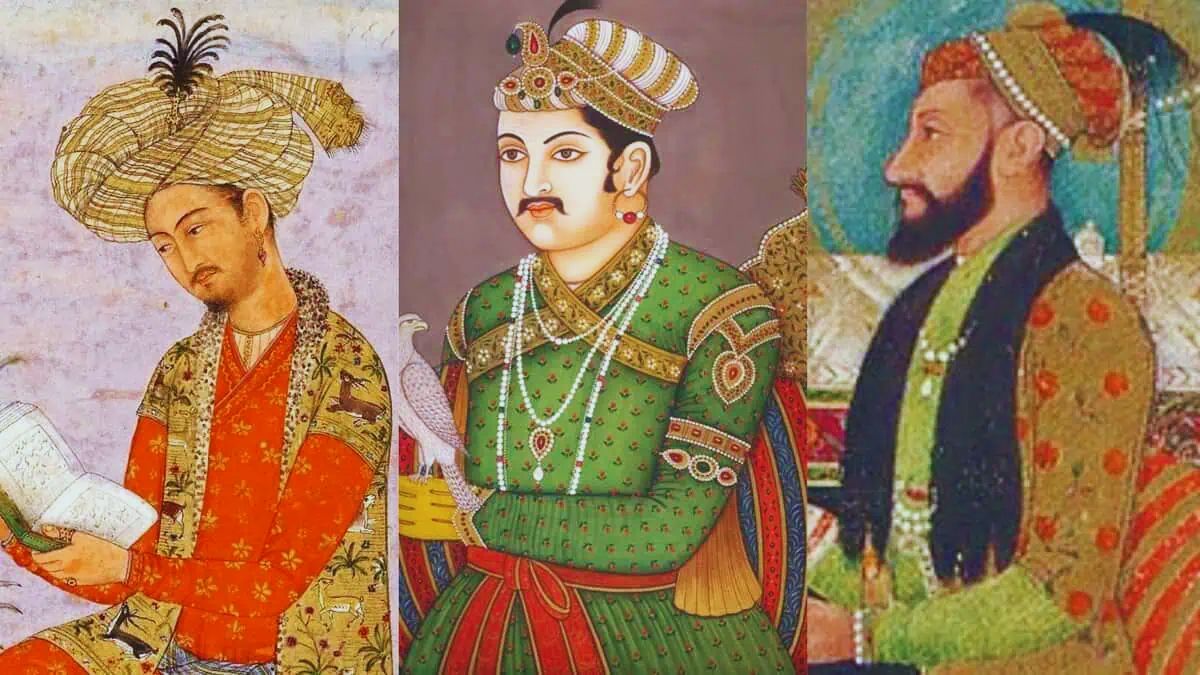
The new textbook has chapters on the Ganga River and AI (Artificial Intelligence), India’s Gaganyaan program, and a controversial portrayal of the Sultanate and Mughal periods.
In a major reform by the education ministry, the class 8 social science book is the first in the new NCERT book range to introduce students to the historic period of Delhi Sultanate and Mughal era. The National Council for Education Research and Training (NCERT) has revised the Class 8 social science textbook, pointing out many instances of ‘religious intolerance’ during this history phase, which mark the onset of a wave in India’s timeline.
The revamped social science textbook will introduce the students to the Delhi Sultanate and the Mughal periods and will describe Babur as a ‘brutal and ruthless conqueror’, ‘slaughtering entire population of cities”, Akbar’s reign as a ‘blend of brutality and tolerance’ and Aurangzeb, as someone who destroyed ‘innumerable temples and gurudwaras’. The NCERT opined it has also included a disclaimer with the revisions, which states that no individual from today should be held responsible for events of the past, and the note has been listed as a sub-section, titled ‘Note on Some Darker Periods in History’.

NCERT Book
NCERT released Part 1 of the Social Science book for Class 8 across schools, ‘Exploring Society: Indian and Beyond’. The book is for use in the ongoing academic session. The given book is the first in the new NCERT books to introduce students to the Delhi Sultanate and the Mughal period. Although the period between the 13th – 18th century was originally introduced to students in Class 7 in the earlier years until now, the NCERT has stated that the period of Indian history that will cover the Delhi Sultanate, the Mughals, and the Marathas will now only be dealt with in Class 8 in the new syllabus. The book’s chapters will include the rise and fall of the Delhi Sultanate and resistance to it, the Vijayanagar Empire, the Mughals and resistance to them, and the rise of the Sikhs.
These lessons will describe the Sultanate period as one underlined by political instability and military campaigns that saw villages and cities being destroyed, plundered and temples crushed to ruins. These instances are not mentioned in the old Class 7 NCERT book that introduced students to the same period of history.
The historical account will aim to be balanced and entirely evidence-based, as the emphasis is on imparting knowledge with an honest approach that can draw from its important lessons for a better future. NCERT has been publishing new school textbooks in accordance with the National Education Policy (NEP) 2020 and the National Curriculum Framework for School Education 2023.
In addition, the Uttarakhand’s education government has also directed the National Council of Educational Research and Training (NCERT) to incorporate the Bhagavad Gita and the Ramayana in the syllabus of 17,000 government schools in the state, to promote the inculcation of traditional values and familiarize students with India’s glorious history.






Be First to Comment