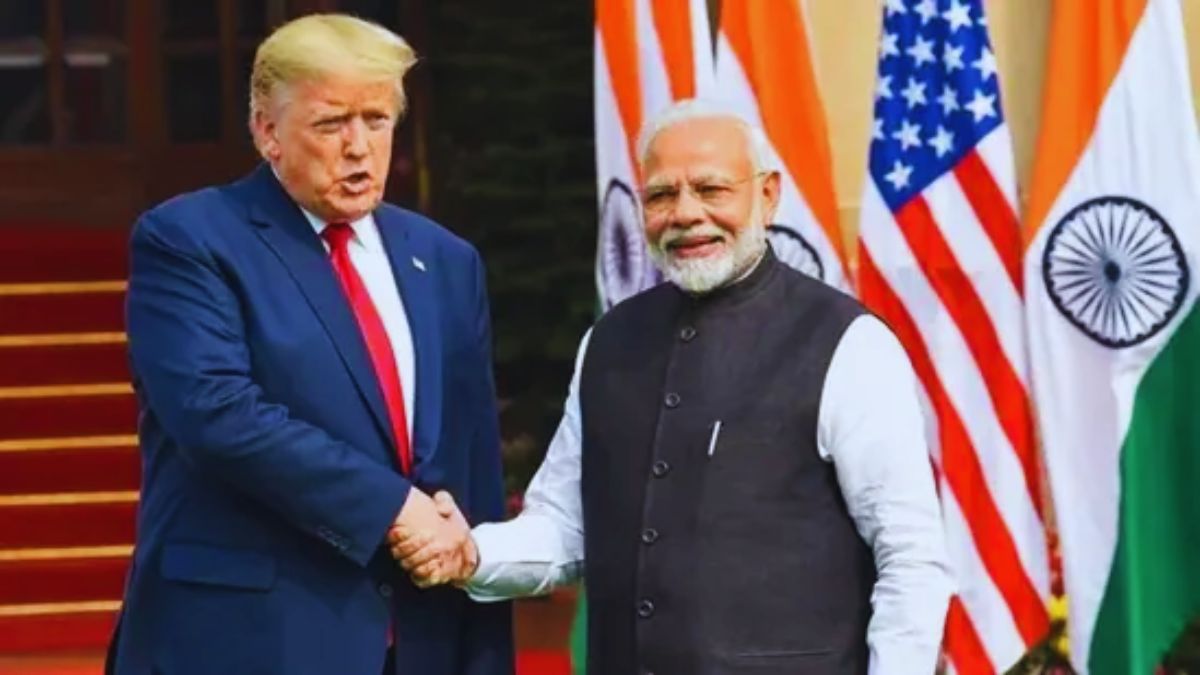
India and the United States are reportedly close to finalizing a long-awaited trade agreement that could significantly reshape bilateral trade dynamics.
According to a PTI report, the deal aims to reduce American tariffs on Indian goods to 15–16% from the current 50%, marking a major breakthrough after years of stalled negotiations.
The proposed agreement, expected to be officially announced at the ASEAN Summit later this month during a meeting between Prime Minister Narendra Modi and US President Donald Trump, will focus primarily on energy and agriculture cooperation. Sources indicate that the pact could also influence India’s oil import strategy, with New Delhi gradually reducing its reliance on discounted Russian crude.
Trade and Energy at the Core
The new trade deal is designed to rebalance bilateral tariffs and expand market access for both sides. For India, the agreement promises relief from punitive levies imposed by the US — a 25% tariff on Indian exports — which had been introduced in response to India’s Russian oil purchases. Once implemented, the revised tariff structure could open up smoother trade channels across various sectors.
Energy trade is emerging as a key pillar of the new arrangement. Washington is expected to offer concessions on energy exports, while India may diversify its crude sourcing to include a higher share of US oil. Currently, Russia accounts for around 34% of India’s crude imports, while the US contributes roughly 10% of the country’s oil and gas needs.
Officials have indicated that state-run Indian oil firms could be advised to gradually scale back Russian oil imports and increase purchases from the US. Although New Delhi has informed Moscow of this shift, sources highlight that the US must still match the price discounts that Russia offers to maintain competitiveness.
Agriculture Market Access Expands
Agriculture is another critical component of the upcoming deal. India may increase its import quota for non-genetically modified (non-GM) corn and soymeal from the US, while maintaining the current 15% import duty. The existing annual quota for non-GM maize imports is 0.5 million tonnes, and this could be raised to meet growing domestic demand for poultry feed, dairy, and ethanol production.
Talks are also underway regarding the import of non-GM soymeal for both human and livestock consumption. However, there remains uncertainty over tariff relaxations on dairy products and high-end cheeses, which remain a key US demand point. India, on the other hand, is pushing for a review mechanism within the trade deal to allow periodic reassessment of tariffs and market access conditions.
Trump-Modi Discussions and Russian Oil Factor
President Donald Trump confirmed that he recently spoke with Prime Minister Narendra Modi about trade and energy cooperation. Speaking during a Diwali celebration at the White House, Trump said Modi had assured him that India would limit oil purchases from Russia and support efforts to end the ongoing Russia–Ukraine conflict.
“He’s not going to buy much oil from Russia. He wants to see that war end as much as I do,” Trump said. He also suggested that India’s reduced energy imports from Russia would be part of the broader trade understanding between the two nations.
However, Indian officials have maintained that any reduction in Russian crude imports would be gradual and based on economic viability. The External Affairs Ministry clarified that they were not aware of the specific conversation mentioned by Trump but reiterated that India’s decisions would prioritize national energy security.






Be First to Comment