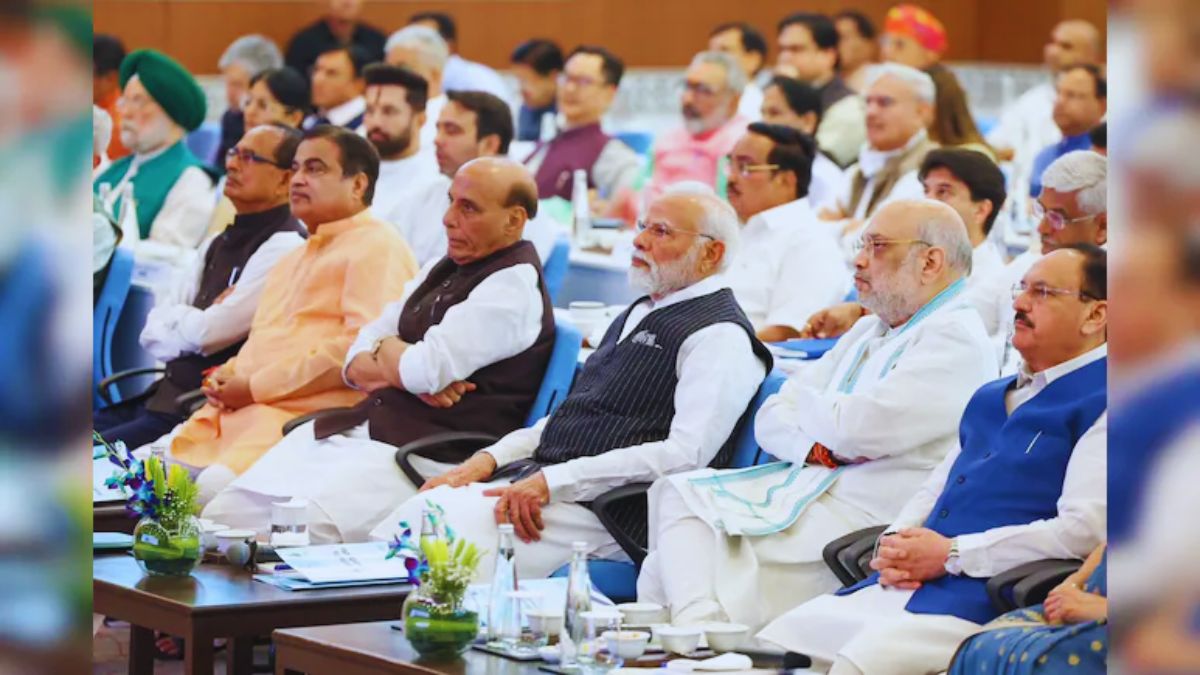
The Union Cabinet, chaired by Prime Minister Narendra Modi, has officially approved the guidelines for the 8th Central Pay Commission (CPC), marking a major development for central government employees and pensioners across India.
The Commission had submitted its recommendation report, which will reportedly impact the salaries and pensions of more than 1 crore people, including around 50 lakh central government employees and 65–69 lakh pensioners.
What is the 8th Central Pay Commission?
The 8th Pay Commission was announced in January 2025 to review and recommend revisions in salaries, pensions, and allowances for central government employees and retirees. The new pay structure is expected to come into effect from January 1, 2026. A typical government salary includes components such as basic pay, dearness allowance (DA), house rent allowance (HRA), and transport allowance. According to Ambit Institutional Equities’ report;
- Basic pay forms about 51.5% of total income,
- DA accounts for 30.9%,
- HRA makes up 15.4%, and
- Transport allowance contributes around 2.2%.
The Commission’s recommendations will directly affect not just central employees and pensioners, but also state government staff, as most states usually adopt central pay commission structures with minor modifications.
Implementation Timeline and Leadership
While announcing the decision, Information and Broadcasting Minister Ashwini Vaishnaw said the Commission’s recommendations are likely to take effect from January 1, 2026, pending the submission of the interim report. The 8th Pay Commission will be headed by former Supreme Court judge Ranjana Prakash Desai. Other key members include IIM Bangalore Professor Pulak Ghosh as Part-Time Member and Petroleum Secretary Pankaj Jain as Member Secretary.
The Cabinet also approved the Terms of Reference, which outline the scope and responsibilities of the Commission. These include:
- Recommending salary and pension revisions for central government employees.
- Reviewing benefits, allowances, and other service conditions.
- Ensuring recommendations align with the country’s economic conditions and fiscal prudence.
- Considering the financial impact on state governments and public sector undertakings.
- Evaluating the unfunded liabilities of existing pension schemes.
The Commission has also been given the flexibility to submit interim reports as necessary before the final recommendations are completed.
Traditionally, pay commissions are set up every 10 years to align employee compensation with inflation and cost-of-living changes. The 7th Pay Commission, formed in 2014, came into effect on January 1, 2016, leading to significant revisions in government pay scales and pensions. This upcoming revision is expected to balance employee welfare with the government’s fiscal responsibility. The final recommendations will take into account India’s macroeconomic conditions, developmental priorities, and resource availability for welfare schemes.
In summary, the 8th Central Pay Commission is set to reshape the salary and pension framework for millions of government employees in India. With a submission timeline of 18 months and implementation expected from January 2026, it aims to create a fair, sustainable, and future-ready compensation system that aligns with India’s economic realities and growth aspirations.






Be First to Comment