Sheikh Hasina’s Death Sentence Raises Extradition Questions as India Reviews Bangladesh’s Request
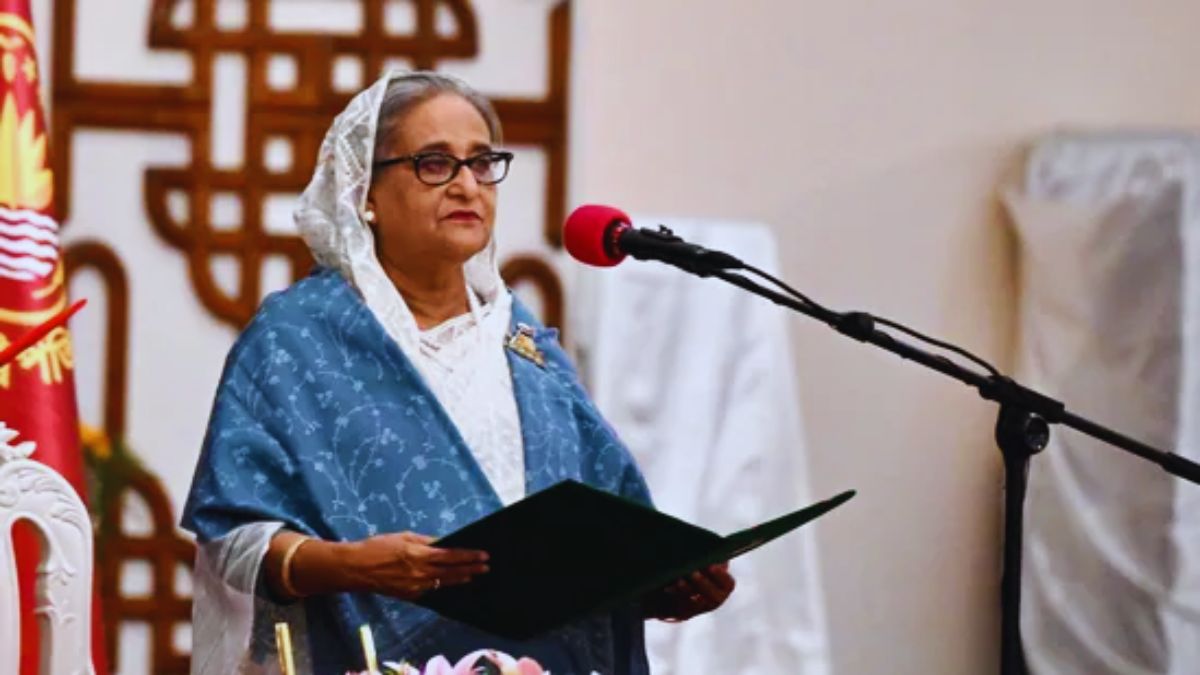
The future of former Bangladesh Prime Minister Sheikh Hasina, currently taking refuge in India, has become increasingly uncertain, after a tribunal court in Dhaka handed her a death sentence, in connection with last year’s violent student-led uprising.
- The International Crimes Tribunal (ICT) ruled that Hasina had ordered the use of lethal force during the August 2023 civil protests and was therefore responsible for the deaths and injuries that occurred during the crackdown.
- She was also given a separate sentence of imprisonment until death for being a part of the crimes allegedly carried out by law enforcement agencies and loyalists of the Awami League.
Hasina fled to India shortly after the unrest, and the ICT had already declared her and former home minister A. Khan Kamal as “fugitives”. With the verdict pronounced now, Dhaka has intensified its demand for her return, stating that India’s failure to extradite her would amount to “a highly unfriendly gesture and an affront to justice”.
The interim government has maintained that ‘no one is above the law’ and urged New Delhi to comply with the provisions of the bilateral extradition treaty.
India’s Measured Response
Reacting to the latest developments, India’s Ministry of External Affairs (MEA) has taken note of the verdict delivered and reiterated its commitment to supporting peace, democracy, inclusion and stability in Bangladesh. However, India avoided any direct comment on whether it intended to return Hasina.
According to a Reuters report citing an Indian government source, any decision on extradition would require a detailed examination of tribunal documents to ensure due legal process, credible evidence and fair representation. The source added that exemptions within the treaty may apply if the case appears politically influenced, and India cannot move forward without reviewing all relevant legal material.
How the Extradition Treaty Applies
The India–Bangladesh extradition treaty, signed in 2013 and amended in 2016, is based on the principle of ‘dual criminality’- meaning the alleged offence must be punishable under the laws of both countries. While Hasina’s conviction technically qualifies under the procedural framework, the dual-criminality clause also allows India room to reject extradition if the legal definitions do not fully align.
- Article 8 of the treaty permits refusal if the accused demonstrates that the request is ‘unjust or oppressive’, including instances where charges are politically motivated, made in bad faith.
- Article 7 empowers India to decline extradition if it chooses to conduct its own prosecution instead.
- In addition, India’s Extradition Act, 1962 gives the central government broad authority to halt, delay or dismiss an extradition request if it considers the charges trivial, unjust, politically driven or contrary to the interests of justice.
What Happens Next?
With Bangladesh pressing for Hasina’s return and India signaling caution, the next steps will depend heavily on legal review, diplomatic conversations and political sensitivities between the two neighbours. For now, Hasina’s fate—and India’s final position—remains unresolved, adding further complexity to the already tense political climate in Bangladesh.






Be First to Comment