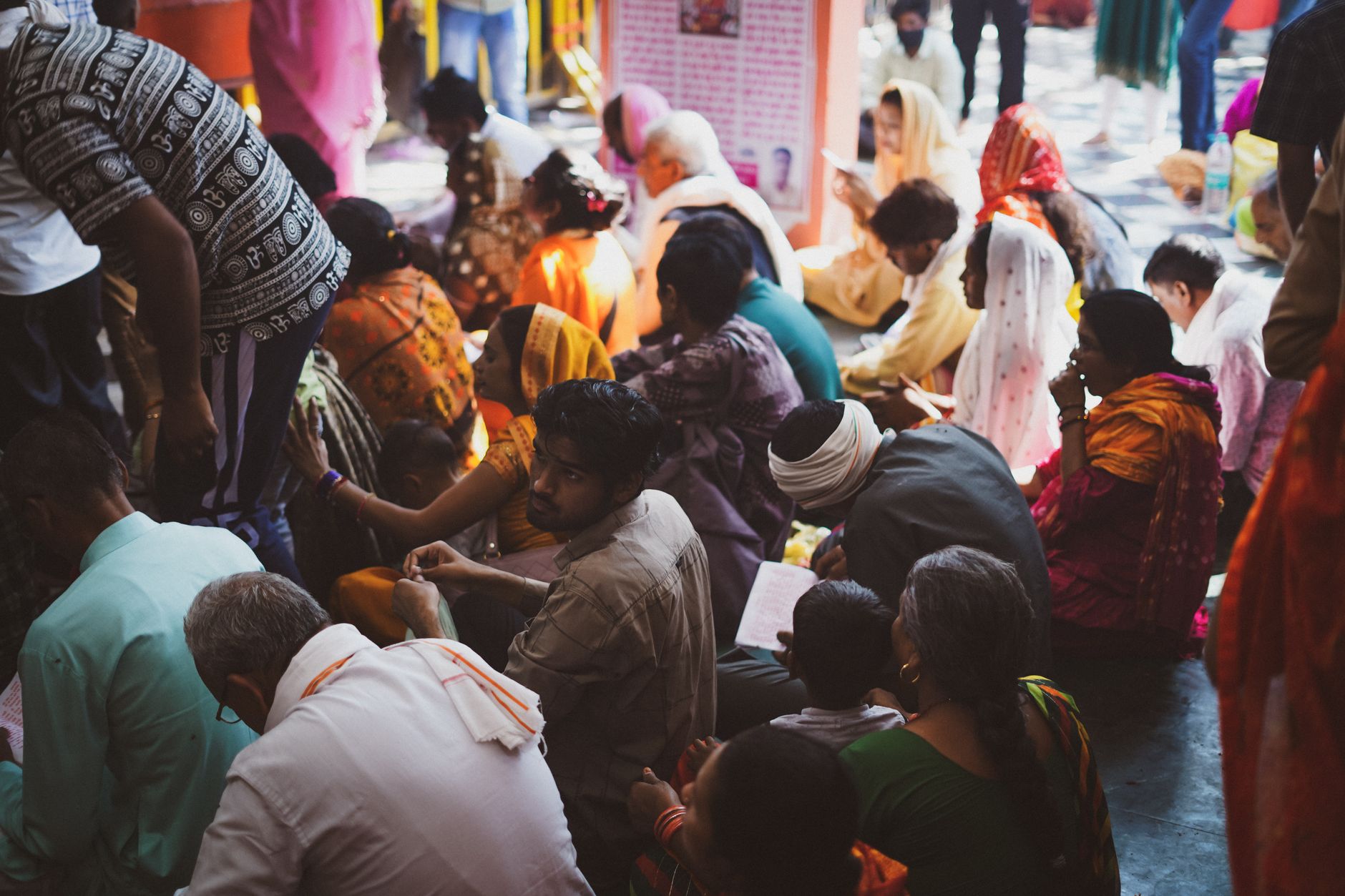
A new Pew Research Center projection of the world’s religious composition through 2070 finds that India will remain overwhelmingly Hindu but that the share of Hindus will fall from 79% in 2020 to 76% by the end of the decade. At the same time, the proportion of Muslims is expected to increase from 15% to 20% of the total population.
Why the shift is expected
The study attributes the gradual change to two demographic factors: a younger median age among Indian Muslims and a higher average fertility rate. In 2020, the median age of Muslims was 24, compared with 29 for Hindus. Between 2025 and 2030, Pew estimates Muslim women will have an average of 2.3 children, while Hindu women will average 1.8.
Even though overall fertility in India has fallen sharply, the gap between the two communities remains. Pew notes that Hindu fertility is already below the replacement level, whereas Muslim fertility is projected to stay above replacement for roughly another two decades. Over the 50‑year period, the Hindu population is still expected to grow by about 176 million, keeping Hindus at more than three‑quarters of the country’s total.
“We expect religious change in India to be driven almost entirely by long‑standing demographic differences between Hindus and Muslims: Muslims are younger and have higher fertility rates,” Stephanie Kramer of the Pew Research Center told the BBC. She added that the fertility gap has narrowed from more than one child per woman in 1992 to roughly half a child in recent years, and it is likely to keep shrinking.
South Asian context
The Indian figures sit within a broader South Asian demographic shift. Pakistan is projected to more than double its Muslim population to 461 million by 2070, overtaking Indonesia as the world’s largest Muslim‑majority nation. India would then rank second with an estimated 334 million Muslims. Bangladesh’s Muslim population is also set to rise, reaching 218 million.
Both India and Nepal will remain the only Hindu‑majority countries in the world, according to the Pew analysis. The report underscores that the demographic momentum in Pakistan, India and Bangladesh will keep South Asia at the centre of the global religious story.
Global religious landscape
Beyond South Asia, Pew’s projections paint a picture of shifting balances worldwide. By 2035, Muslims are expected to overtake Christians as the world’s largest religious group, and by 2070 their numbers could reach 3.64 billion, up from 2.02 billion in 2020. Christians are projected to fall just short of three billion, representing 26% of the global population compared with 36% for Muslims.
Africa emerges as a new focal point for Christianity. The continent is expected to host more than half of the world’s Christians by 2070, up from 31% in 2020, while Europe’s share is projected to halve from 22% to 11%. The United States may lose its Christian majority by 2065, though Christians will remain the largest religious group there.
The “religiously unaffiliated” are projected to become the majority in the United Kingdom and France by 2070, and later in South Korea. However, their share of the global population is expected to fall from 24% to 17% because of a projected decline in China’s overall population, which currently accounts for about two‑thirds of the unaffiliated worldwide.
Other notable forecasts include the United States becoming the world’s fifth‑largest Hindu population, driven largely by immigration, and Australia’s unaffiliated population overtaking Christians as the nation’s largest group. Buddhism, meanwhile, faces a demographic squeeze, with its adherents projected to fall by more than half in China, Japan and South Korea, and to lose majority status in Laos and Mongolia.
Expert commentary and limitations
Indian demographer KS James, based at Princeton University, said the findings align with established patterns. “The fertility gap between Muslims and Hindus is well established and it means Muslim population growth is likely to remain faster for the next few decades. But fertility is declining across all religious communities and the gap is expected to narrow further,” he told the BBC. He emphasized that the projections do not signal any dramatic departure from India’s overall demographic trajectory.
Demographers also push back against alarmist narratives from some Hindu right‑wing groups that claim Muslims will eventually outnumber Hindus. The Pew report finds no evidence of large‑scale religious conversion influencing the numbers, and the projected shares suggest a continued Hindu majority for the foreseeable future.
It is important to note that the Pew analysis is based on assumptions that current trends in fertility, migration and religious switching will continue. The study acknowledges that wars, natural disasters, epidemics or major socioeconomic shifts could alter the trajectory. Additionally, India’s baseline for 2020 was derived from the 2011 census because the 2021 census was delayed.
Nevertheless, the overall direction is clear: South Asia will remain a pivotal region in the world’s religious makeup, with India’s massive Hindu base tempered by a growing Muslim minority, while Africa reshapes the future of Christianity and Europe’s share continues to shrink.






Be First to Comment