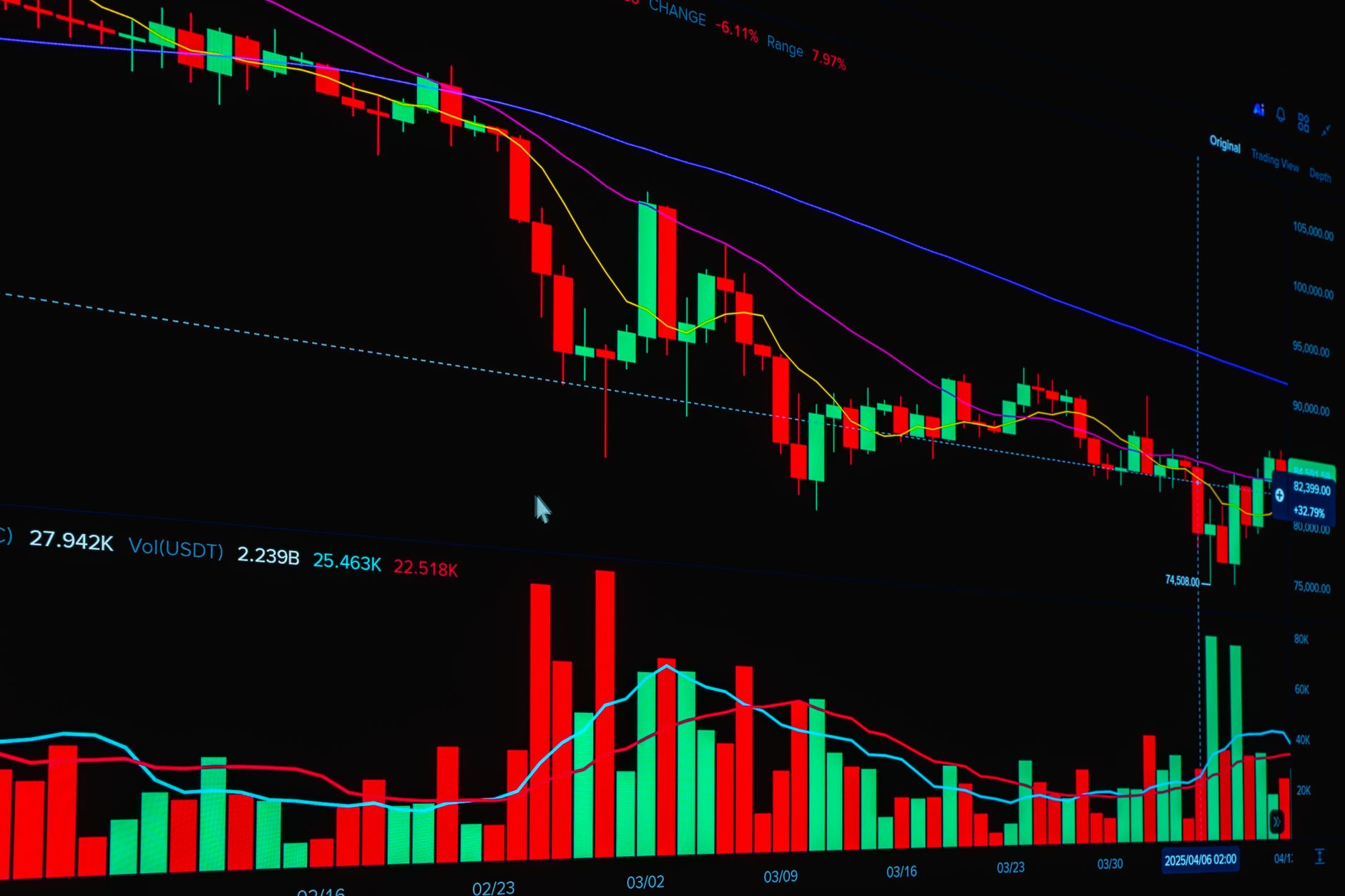
On Monday, major Asian equity benchmarks posted steep losses as market participants grew uneasy about the sustainability of the artificial‑intelligence surge that has driven massive capital inflows into technology firms. The sell‑off extended a broader regional decline that began on Friday, and it coincided with a sharp drop in U.S. technology shares that pushed the Nasdaq Composite into negative territory for the year.
Regional market moves reflect AI‑related anxiety
South Korea’s flagship Korea Composite Stock Price Index (Kospi) experienced a volatile session, sliding as much as 5.8 % before settling down 3.3 % at the close. The decline was led by the two dominant memory‑chip manufacturers, Samsung Electronics and SK Hynix, which fell 3.1 % and 2.5 % respectively. Both companies are central players in the global AI hardware race, supplying the high‑capacity DRAM and NAND chips required for training large language models.
In Hong Kong, the Hang Seng Index dipped 0.1 % after an earlier near‑2 % drop, while Shanghai’s CSI 300 Index managed a modest 0.1 % gain, reversing a prior loss of more than 1 %. Across the strait, Taiwan’s Taiex rose 2.2 % after opening lower, ending the day in positive territory.
Japan’s markets were closed for Labour Thanksgiving Day, leaving the regional picture incomplete for the day. Nevertheless, the combined effect of the Korean and Hong Kong moves contributed to a broader perception that the AI‑driven rally is losing steam.
U.S. markets enter correction as tech leads the decline
In the United States, the S&P 500 closed 3.7 % lower on Friday, crossing the threshold that analysts use to label a market correction— a decline of 10 % or more from recent highs. The Nasdaq Composite, heavily weighted toward the so‑called “Magnificent Seven” AI‑focused firms, fell 5.3 %, erasing all gains recorded in 2026.
Despite the Friday rout, futures trading on Monday indicated a potential rebound, with S&P 500 futures up 2.2 % and Nasdaq futures rising 2.9 %. Analysts suggested that investors were weighing whether the correction had overshot its target.
Rajat Agarwal, an Asia equity strategist at Societe Generale, told Al Jazeera that markets appeared to be searching for a footing after a “massive sell‑off in the US on Friday, a more than three‑standard‑deviation event in tech indices.” His comment underscored the heightened volatility surrounding technology stocks after a period of unprecedented inflows.
Investor outlook: AI spending, regulatory pressure and geopolitical risk
Global AI‑related investment is projected to reach $2.7 trillion this year, rising to $3.6 trillion by 2027, according to Gartner. The scale of capital directed toward data‑centre expansion, chip development and software platforms has sparked debate about a possible bubble reminiscent of the dot‑com era of the early 2000s.
Adding to the uncertainty are calls for tighter regulation of the AI sector. In the United States, the Democratic Party’s sweeping victory in the recent midterm elections is expected to slow the pace of data‑centre construction, according to market observers. Meanwhile, an alleged espionage scandal involving chip maker Nvidia and its former chief executive Jensen Huang has intensified scrutiny over China’s access to advanced semiconductor technology.
Khoon Goh, head of Asia research at ANZ, told Al Jazeera that AI‑related concerns would dominate the week ahead as investors try to gauge whether the market bottom is near. He highlighted a positive note: U.S. equity futures were higher, and South Korea reported exceptionally strong semiconductor exports for the first 20 days of November, up 294.4 % year‑on‑year.
The mixed signals—strong export data on one hand and steep equity declines on the other—illustrate the tension between real‑economy performance and market sentiment. While semiconductor shipments suggest robust demand for AI‑enabling hardware, the sharp pull‑back in equity valuations reflects doubts about whether the current level of investment can be sustained without triggering a correction.
Overall, the episode underscores the sensitivity of Asian equity markets to developments in the United States and to broader narratives about AI financing. As investors monitor futures, earnings reports and policy developments, the coming weeks are likely to determine whether the recent sell‑off represents a temporary overreaction or the beginning of a more prolonged adjustment in AI‑driven valuations.






Be First to Comment