Federal Reserve Chairman Kevin Warsh has called for a fundamental shift in how the central bank operates, suggesting that financial markets should serve as the primary source of information to guide the Fed’s policy decisions, rather than the Fed dictating market direction.
Speaking at a press conference on Wednesday, Warsh stated that financial market prices are “probably the most important source of information to guide central bankers.” However, he expressed concern that when markets merely reflect the Fed’s own pronouncements, the central bank becomes “blind” to this crucial data.
Warsh aims to establish a system where the Federal Reserve removes these “blinders” and allows markets to independently assess and reflect reliable economic data. Wil Stith, senior bond portfolio manager at Wilmington Trust, explained that Warsh desires financial markets to offer an unbiased perspective on risk, potential economic weakness, and inflation, free from the constant signaling from the Fed.
Moving Away From Forward Guidance
This proposed change implies a move away from “forward guidance,” a communication strategy where the central bank signals its potential future policy actions based on economic developments. This approach marks a departure from the recent trend toward greater transparency regarding the Federal Reserve’s internal thinking.
The shift reportedly echoes the philosophy of former Fed Chair Alan Greenspan, whom Warsh referenced. Krishna Guha, head of central banking policy at Evercore ISI, suggested that Warsh views market volatility as an acceptable cost to achieve a market that forms an independent opinion on the appropriate path for interest rates. However, Guha questioned whether this independent view is currently occurring.
Guha raised concerns that the market might be reacting to perceptions of a more hawkish stance from Warsh and the wider Federal Reserve, leading to expectations of rate hikes. He posited that Warsh could intentionally place himself in a “credibility trap” if market expectations for rate increases are not met by Fed action.
Inflation Target and Market Bets
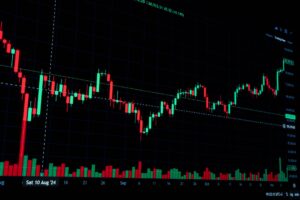
Warsh reiterated this week that the Federal Reserve’s objective is to return inflation to the 2% target. While he provided no new specific insights into monetary policy, economic outlook, or interest rates beyond the official statement, nine of his colleagues have indicated expectations for at least one rate hike this year. This has fueled a surge in market bets, with a rate hike now fully priced in by October.
Guha indicated that if upcoming inflation data does not show sufficient improvement to temper market expectations for hikes, Warsh might feel compelled to advocate for a rate increase as early as September, or possibly July, to maintain his credibility.

Helene Elliott is the Lead Science & Space Reporter at News Raise. She reports on aerospace missions, astrophysics discoveries, quantum research, and environmental technology.