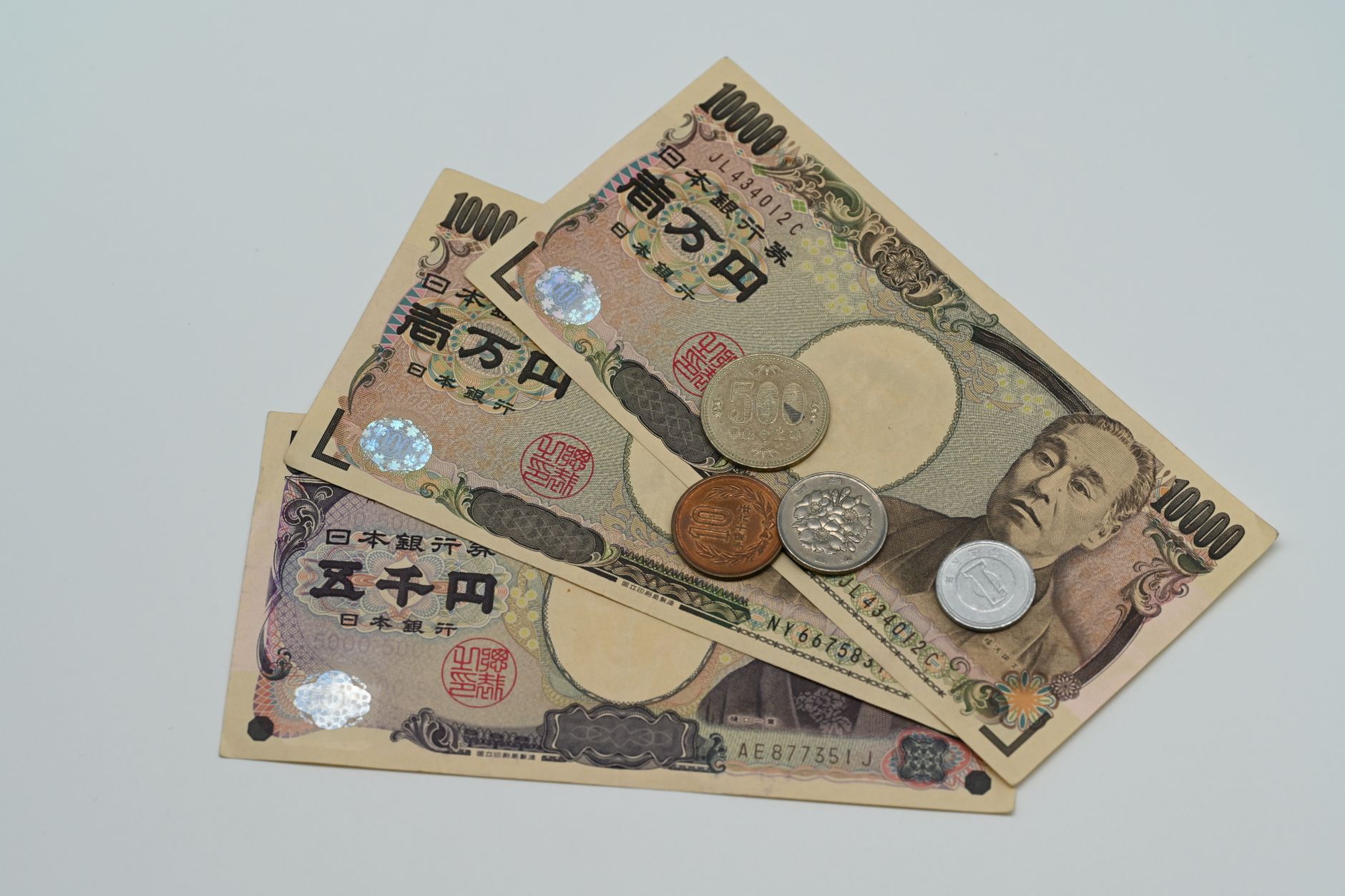
The Japanese yen depreciated to its weakest point against the U.S. dollar since 1986, intensifying speculation that Japanese authorities might intervene to support the currency. The yen fell to 162.19 per dollar on Tuesday, marking a four-decade low, according to LSEG data.
Government Prepared for Action
Japan’s Finance Minister Satsuki Katayama stated on Tuesday that the government is prepared to take appropriate measures against excessive currency fluctuations. She indicated this includes decisive action, a stance previously confirmed with the U.S.
Chief Cabinet Secretary Minoru Kihara echoed this sentiment, announcing that the government would work to create an economy less susceptible to foreign-exchange volatility while maintaining readiness to intervene if necessary. Kihara declined to comment on the yen’s specific current level.
Julia Wang, North Asia chief investment officer at Nomura, noted that while Japan could intervene, any impact on broader markets might be short-lived. She explained that intervention is not strictly tied to a specific exchange rate level but that reaching a new cycle low for the yen could amplify domestic concerns about currency weakness, thus increasing the likelihood of official action.
“Intervention shouldn’t be dependent on a certain level. It depends on the nature of the currency move, the nature of dollar-yen… This is a cycle high; it’s a new cycle high. It probably is a sensitive level, it will re-ignite some of the anxiety around currency weakness domestically,” Wang said.
Underlying Weakness Factors
Wang attributed the yen’s continued weakness to significant interest-rate and real-yield differentials between Japan and the U.S. These disparities favor carry trades, where investors borrow in yen at low rates to invest in higher-yielding assets elsewhere, exerting downward pressure on the Japanese currency.
She added that any intervention is unlikely to alter the currency’s longer-term trajectory, stating, “I don’t think it will be a material factor that derails the market.”
Japan previously deployed over 11.7 trillion yen (approximately $72.8 billion) in foreign reserves between April and May to bolster the yen. A notable appreciation occurred on April 30, when the yen moved sharply from 160.39 to 156.6 against the dollar, leading to speculation of market intervention. The currency then strengthened to around 155 the following day before resuming its downward trend.
Bank of Japan Rate Hike and Yields
In recent monetary policy moves, the Bank of Japan raised its benchmark interest rate to 1%, the highest in over three decades, as part of its normalization process that began in 2024. This quarter-point increase, the first since December when rates were lifted to 0.75%, brought borrowing costs to their highest level since 1995.
The rate hike occurred as Japan faced increasing inflationary pressures, partly influenced by higher energy prices amid the Iran conflict. In response, Japanese government bond yields saw a sharp increase across the super-long end, with the 40-year yield rising 7 basis points to 3.779% and the 30-year yield gaining nearly 8 basis points to 3.914%.

Helene Elliott is the Lead Science & Space Reporter at News Raise. She reports on aerospace missions, astrophysics discoveries, quantum research, and environmental technology.