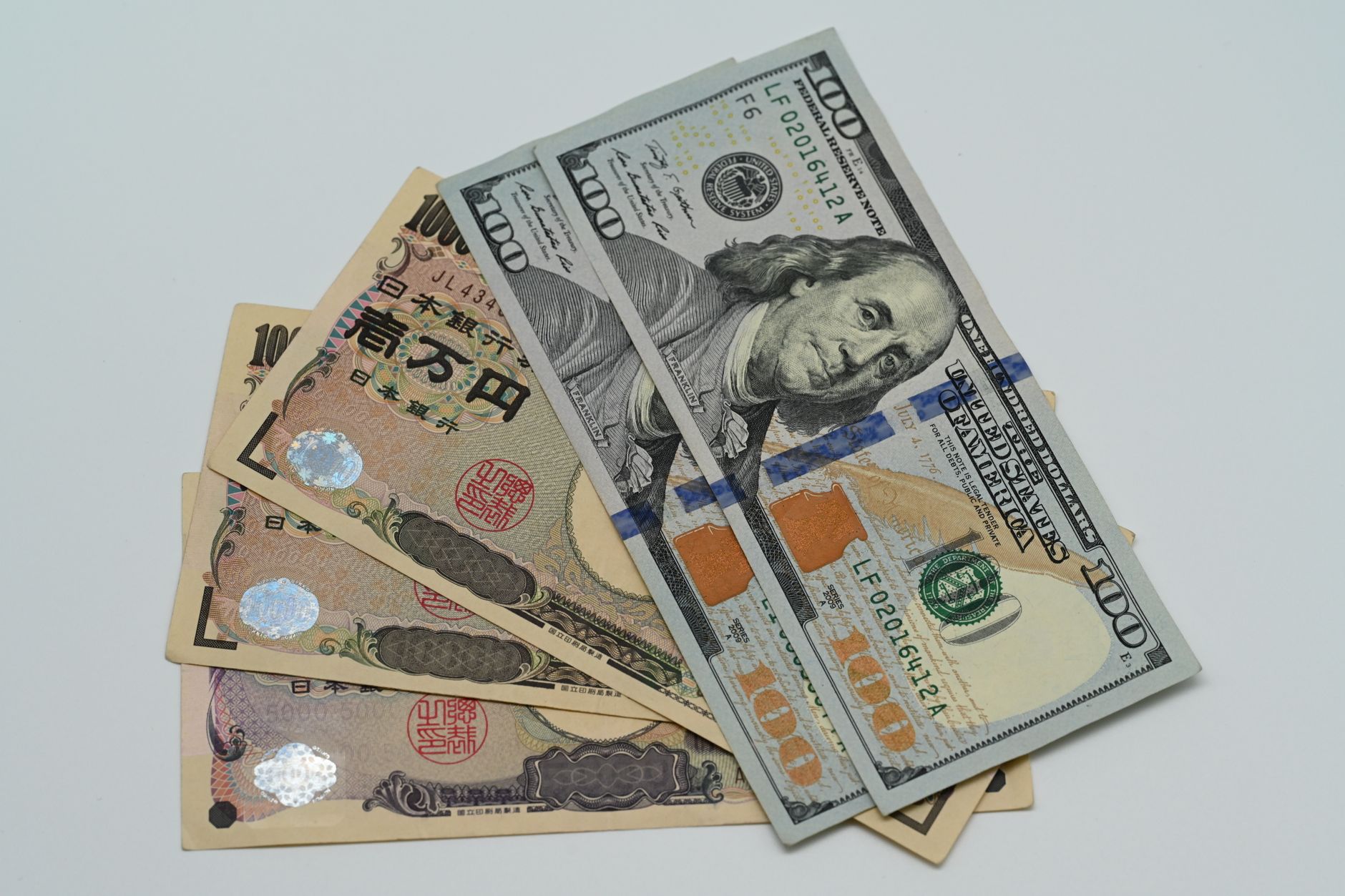
The U.S. dollar was trading near a two-week low on Monday, influenced by a reduction in market expectations for a Federal Reserve interest rate hike this year. Meanwhile, the Japanese yen remained close to a 40-year low, drawing significant attention from investors.
The dollar index, which tracks the U.S. currency against a basket of six major currencies, stood at 100.9 in early trading. The euro was positioned at $1.1435, close to its strongest level in two weeks, while sterling was trading at $1.3351.
Yen Remains Under Pressure Amid Intervention Fears
The yen was trading at 161.57 against the U.S. dollar, just above the 1986 low of 162.84 it reached last week. Traders are closely watching for potential intervention from Japanese authorities, especially after a brief surge in buying activity temporarily strengthened the yen on Thursday. Analysts, however, are skeptical about the lasting impact of any such intervention.
According to OCBC strategists, intervention risk is more likely to cause temporary volatility and corrections in the USD/JPY pair rather than a sustained reversal. They noted that without significant changes in underlying economic fundamentals, verbal warnings or direct intervention alone are unlikely to alter the pair’s broader trajectory.
Concerns are also present regarding Japanese officials potentially shifting from their practice of signaling risks to a more targeted approach aimed at curbing speculators and increasing the cost of betting against the yen. Marc Chandler, chief market strategist at Bannockburn Global Forex, observed that the market is aware of the intervention risk, with signs in the options market indicating that substantial capital has purchased short-dated dollar puts to hedge long dollar positions against intervention.
Shifting Fed Expectations
The U.S. dollar experienced its largest weekly decline since April last week following the release of the U.S. payrolls report. This report indicated a significant slowdown in job growth for June, which subsequently eased market expectations for another interest rate hike from the Federal Reserve.
However, some analysts suggest that the labor market may still be tight. OCBC strategists pointed out that a declining unemployment rate indicates a robust labor market, which could help sustain expectations for continued Fed tightening. They maintain a constructive outlook for the broader U.S. dollar, projecting a moderate appreciation of 2-3% in the latter half of 2026.
The recent decrease in oil prices has also contributed to easing inflationary concerns. Investor focus this week is expected to be on the minutes from the Federal Reserve’s June meeting, which should offer insights into policymakers’ thinking regarding the future path of interest rates.
Strategists at Commonwealth Bank of Australia noted that the meeting minutes might be less detailed or provide fewer insights than usual, reflecting Federal Reserve Chair Kevin Warsh’s past views on the central bank providing excessive guidance.

Helene Elliott is the Lead Science & Space Reporter at News Raise. She reports on aerospace missions, astrophysics discoveries, quantum research, and environmental technology.