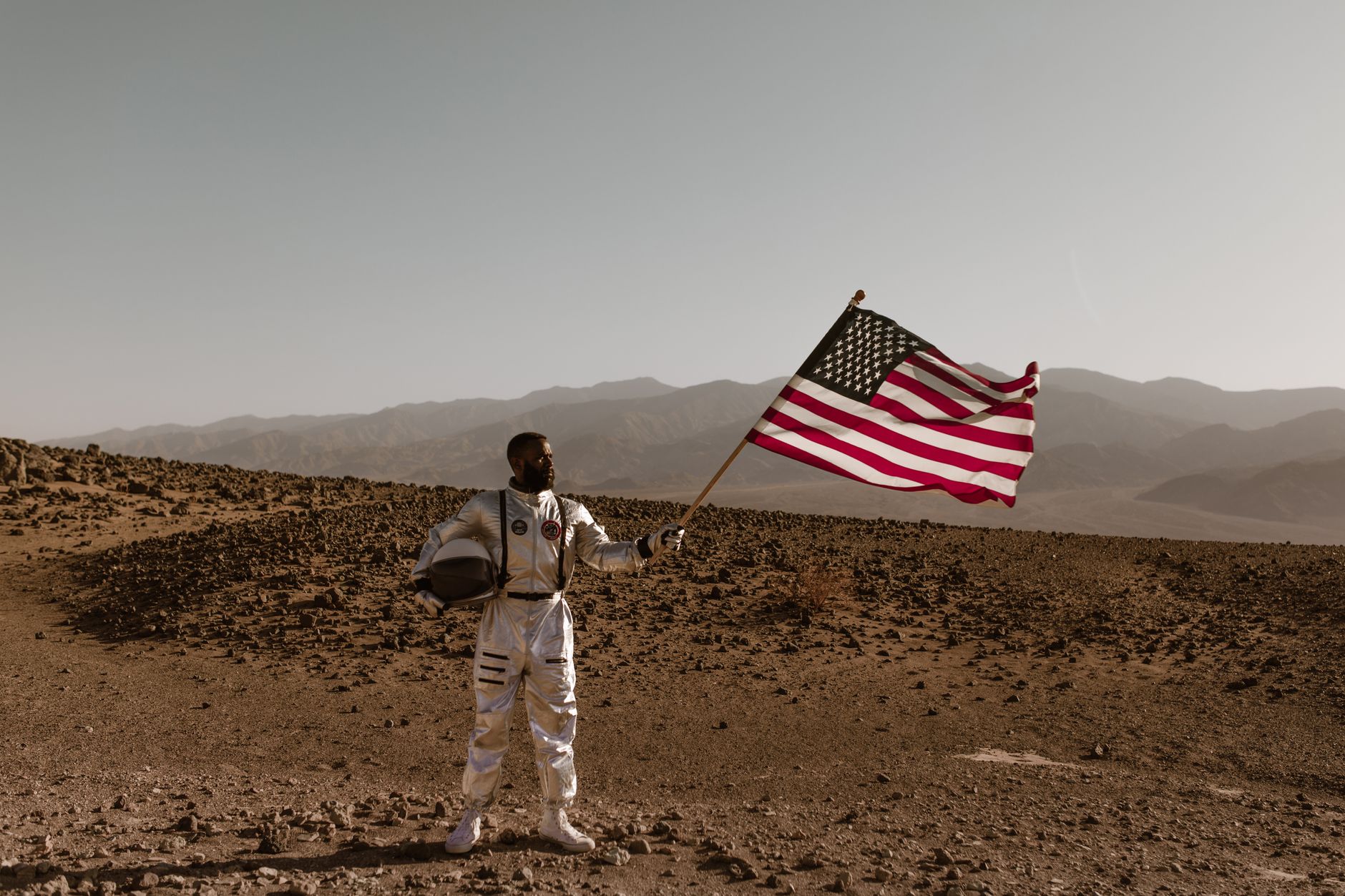
NASA is seeking U.S. citizens or green card holders to volunteer for a year-long simulated mission to Mars or the Moon, an experience designed to test technologies and protocols for future deep space expeditions. The program, known as the Moon and Mars Exploration Analog mission, is scheduled to begin no sooner than August 2027 at Johnson Space Center in Houston.
Simulated Deep Space Exploration
Participants will live and work in isolation and confinement for 12 months, simulating interplanetary transit and planetary surface operations, including mock spacewalks. This mission integrates elements from NASA’s previous HERA (Human Exploration Research Analog) and CHAPEA (Crew Health and Performance Exploration Analog) missions into a single, comprehensive campaign. The findings are expected to inform plans for sustained lunar presence through NASA’s Moon Base initiative and future Artemis missions.
The analog mission will utilize two distinct facilities. The first, a two-story, four-port habitat previously used in the HERA mission, will serve as the simulated transit spacecraft, mimicking deep-space travel conditions with a workspace, living area, sleeping quarters, and a hygiene module. The second facility, the surface habitat currently used by CHAPEA, is a one-story, 3D-printed structure designed to simulate living on another planet. It features private crew quarters, a communal workspace, recreation room, crop cultivation area, medical room, food preparation area, airlock, two bathrooms, and a sandbox for simulated planetary surface walks.
Assessing Crew Health and Performance
During the surface habitat phase, researchers will evaluate crew performance under the constraints of limited resources and mission demands anticipated on other planetary surfaces. The volunteers will help NASA assess and validate hardware, technologies, protocols, requirements, and other systems intended to support crew health and performance during long-duration deep space missions, all while remaining on Earth.
To qualify for the mission, applicants must be between 30 and 55 years old, though those outside this range may be considered with additional approvals. Candidates must be no taller than 6 feet 2 inches, proficient in English, and willing to commit to an approximately 14-month period. This includes the 12 months in confinement, plus two months of pre- and post-mission training and data collection. Applicants must also be willing to participate in a multiday selection activity and pass NASA’s physical and psychological assessments.
Additionally, candidates need strong technical skills, no dietary restrictions, and no history of sleepwalking or using sleeping aids. Astronaut-like qualifications are required, including a bachelor’s degree in engineering, biological science, physical science, or mathematics from an accredited institution, with an emphasis on the quality of academic preparation. An advanced degree in a STEM field is preferred and can substitute for experience, with a master’s degree counting as one year of experience and a doctoral degree as three years. Military experience may also be considered equivalent years of experience. Research volunteers will be reimbursed for their participation.

Helene Elliott is the Lead Science & Space Reporter at News Raise. She reports on aerospace missions, astrophysics discoveries, quantum research, and environmental technology.